Love this? Save it for later!
Share the inspiration with your friends
My mother-in-law, a woman of strong opinions and even stronger kitchen instincts, did not believe in breakfast casseroles. She called them “soggy bread experiments” and would politely decline any version placed before her. So when I told her I was making an Easy Sausage Egg and Cheese Breakfast Casserole for our holiday brunch, she gave me that look. You know the one. The look that says “I’ll eat a slice of ham and call it a win.”
I honestly thought she had a point for a while. Most breakfast casseroles I’d tried were exactly that—soggy, bland, and heavy in a way that sat in your stomach like a brick. They felt like a compromise, not a celebration. But I kept tinkering because I wanted something that could feed a crowd without me standing at the stove flipping pancakes for an hour. Something that looked impressive but was secretly the easiest thing on the menu.
The first time I made this version, I used day-old brioche and a trick my grandmother used for her bread pudding—letting the bread soak up the custard overnight. The result was a casserole that was golden on top, creamy in the middle, and packed with savory sausage and melty cheese. My mother-in-law took a bite, paused, and asked for the recipe. That was seven years ago. She has made it for every family gathering since.
Why You’ll Love This Recipe
This isn’t just another breakfast casserole that leaves you wondering why you bothered. This is the one that disappears before the coffee finishes brewing.
- Make-Ahead Magic : Assemble it the night before, pop it in the fridge, and bake it fresh in the morning. No early morning chaos required.
- Simple, Affordable Ingredients : Eggs, milk, cheese, bread, sausage—nothing fancy. You probably have most of this in your kitchen right now.
- Feeds a Crowd Without the Fuss : Perfect for Christmas morning, Easter brunch, or a lazy Sunday when the whole family is over. One dish feeds 8 to 10 people easily.
- Customizable to Your Taste : Swap the sausage for bacon or ham. Use pepper jack for heat. Add mushrooms or bell peppers. It bends to whatever you have on hand.
- Always Impressive, Never Stressful : It comes out of the oven golden, puffed, and bubbling with cheese. People will think you worked way harder than you did.
What makes this recipe different is the overnight soak. That extra time in the fridge lets the bread absorb every drop of the egg mixture, creating a texture that’s custard-like in the center and perfectly crisp around the edges. No dry spots. No soggy middle. Just consistent, delicious layers in every bite.
And honestly? It’s the kind of dish that makes holiday mornings feel special without the stress. You pour your coffee, slide the casserole in the oven, and actually get to sit down with your guests instead of sweating over a hot stove.
What Ingredients You Will Need
This recipe uses straightforward ingredients that work together to create something that tastes far more complex than it is. The magic is in the balance—rich eggs, savory sausage, sharp cheese, and bread that soaks up every bit of flavor.
- 1 pound breakfast sausage : I recommend Jimmy Dean or a locally sourced pork sausage from your butcher. If you want a leaner option, turkey sausage works beautifully. Just make sure it’s well-seasoned.
- 10 large eggs : Room temperature eggs blend more smoothly into the custard. If you forgot to take them out of the fridge, place them in a bowl of warm water for 5 minutes before cracking.
- 2 cups whole milk : Whole milk gives the richest texture, but 2% works in a pinch. Avoid skim milk—it makes the casserole watery. Half-and-half takes it over the top if you’re feeling indulgent.
- 1 cup heavy cream : This adds that luxurious, velvety texture that makes the casserole feel special. You can substitute with an additional cup of whole milk if needed, but the cream really makes a difference.
- 8 cups day-old bread, cubed : Brioche, challah, or French bread work best. The slightly stale texture absorbs the custard without turning to mush. If your bread is fresh, cube it and leave it out on a baking sheet for an hour or two.
- 2 cups shredded sharp cheddar cheese : Sharp cheddar provides the most flavor. I’ve also used a mix of cheddar and Monterey Jack for a milder, creamier melt. Always shred your own—pre-shredded cheese has anti-caking agents that prevent smooth melting.
- 1 cup shredded mozzarella cheese : This adds that stretchy, gooey pull that makes every bite satisfying. Low-moisture mozzarella works best.
- 1 small yellow onion, diced : Onion adds a subtle sweetness that balances the savory sausage. If you’re not a fan, you can leave it out or substitute with a shallot.
- 1 teaspoon garlic powder : Don’t use fresh garlic here—it can become bitter during the long bake. Garlic powder distributes evenly and gives a consistent flavor.
- 1 teaspoon mustard powder : This is my secret ingredient. It doesn’t make the casserole taste like mustard. It just makes the cheese taste cheesier and the eggs taste richer. Trust me on this one.
- 1/2 teaspoon black pepper : Freshly ground is best. Skip the salt—the sausage and cheese provide plenty.
- 2 tablespoons unsalted butter, melted : Brushed on top before baking for that golden, crispy crust. (optional but highly recommended)
- Fresh chives or parsley for garnish : Adds a pop of color and freshness. Completely optional but pretty.
For the bread, I’ve tested this with whole wheat and sourdough too. Sourdough adds a nice tang that cuts through the richness. Whole wheat works but makes the casserole denser. Stick with brioche or challah for the best texture.
Equipment Needed
You don’t need a professional kitchen to pull this off. Most of these tools are probably already in your cabinets.
- 9×13-inch baking dish : Glass or ceramic works best. Metal pans can react with the eggs and leave a metallic taste. I use a Pyrex dish and it’s never let me down.
- Large skillet : For browning the sausage and cooking the onion. A cast-iron skillet gives the best browning, but any non-stick pan works.
- Large mixing bowl : You need enough room to whisk the eggs and milk together without splashing. I use a 4-quart bowl.
- Whisk : A sturdy whisk makes blending the custard effortless. A fork works in a pinch but takes longer.
- Measuring cups and spoons : Precision matters for the custard ratio. Too much milk and it won’t set. Too little and it’s dry.
- Rubber spatula : For folding the bread cubes into the custard without breaking them apart.
- Aluminum foil : For covering the casserole during the first half of the bake. This prevents the top from burning before the center is set.
- Cooling rack : Letting the casserole rest on a rack after baking prevents the bottom from getting soggy from trapped steam.
If you don’t have a 9×13 dish, you can use two 8×8 dishes or even a deep-dish pie plate. Just adjust the baking time accordingly—smaller dishes bake faster.
Preparation Method
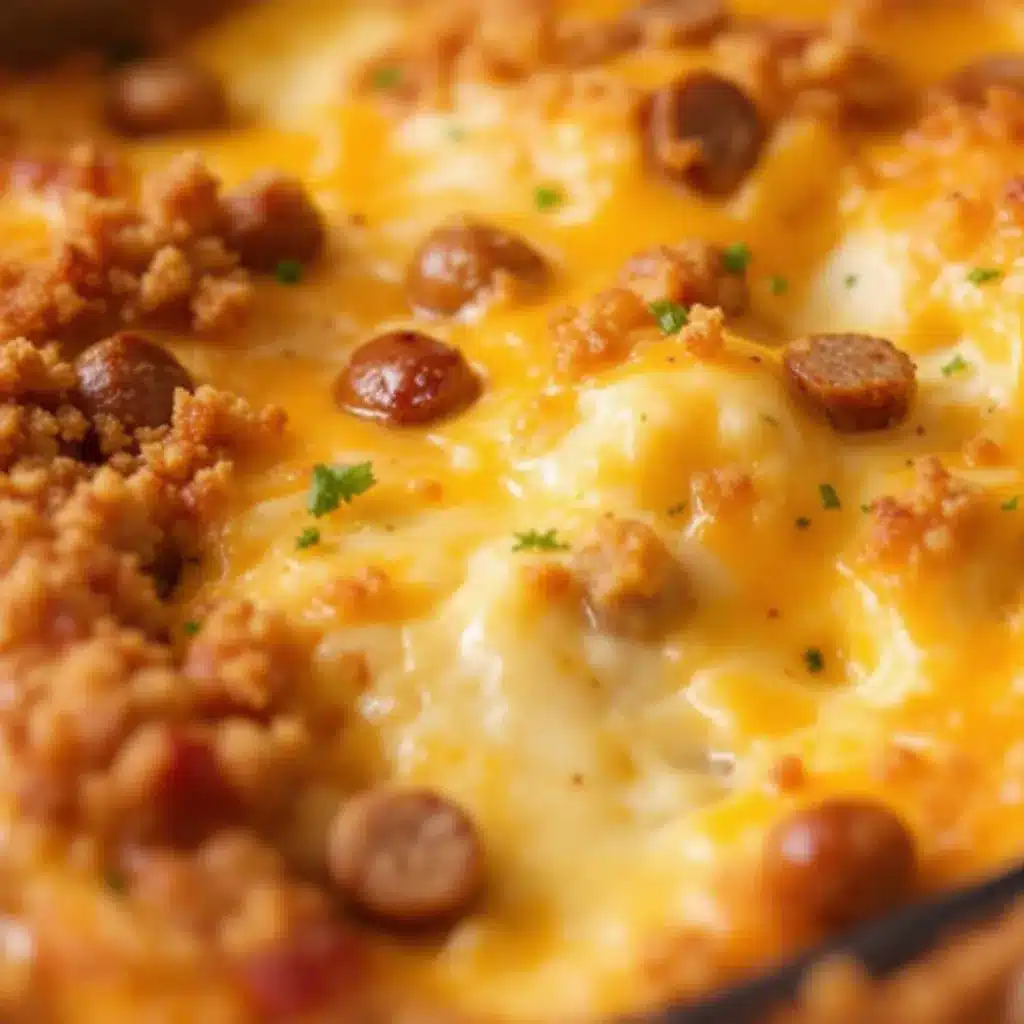
This recipe comes together in three phases: the prep, the assembly, and the bake. The overnight rest is where the real magic happens, so plan ahead.
Step 1: Cook the Sausage
Heat your large skillet over medium-high heat. Add the breakfast sausage and break it apart with a wooden spoon as it cooks. You want small, crumbly pieces—not big chunks. Cook for 6 to 8 minutes until the sausage is browned and cooked through. Use a slotted spoon to transfer the sausage to a plate lined with paper towels. Leave about 1 tablespoon of drippings in the pan.
Step 2: Cook the Onion
Add the diced onion to the same skillet with the reserved drippings. Cook over medium heat for 3 to 4 minutes until the onion is soft and translucent. You’re not looking for color here—just sweetness. Scrape the onion into the bowl with the sausage and let everything cool while you prepare the custard.
Step 3: Make the Custard
In your large mixing bowl, crack all 10 eggs. Whisk them vigorously for about 30 seconds until the yolks and whites are completely combined and slightly frothy. Add the whole milk, heavy cream, garlic powder, mustard powder, and black pepper. Whisk again until everything is smooth and uniform. The mustard powder will look like it’s floating on top at first—keep whisking. It will incorporate.
Step 4: Layer the Casserole
Spread half of the bread cubes evenly across the bottom of your 9×13 baking dish. Sprinkle half of the cooked sausage and onion mixture over the bread. Top with half of the shredded cheddar and half of the mozzarella. Repeat the layers with the remaining bread, sausage mixture, and both cheeses. This double-layering ensures every bite has a little bit of everything.
Step 5: Pour the Custard
Slowly pour the egg mixture evenly over the layered casserole. Use a rubber spatula to gently press down on the bread cubes, encouraging them to soak up the custard. Don’t stir—just press. Cover the dish tightly with plastic wrap and refrigerate for at least 4 hours, but preferably overnight. The longer it sits, the better the texture.
Step 6: Bake
When you’re ready to bake, preheat your oven to 350°F. Remove the casserole from the fridge and let it sit on the counter while the oven heats up—about 15 to 20 minutes. This takes the chill off and helps it bake more evenly. Brush the top with melted butter if you’re using it. Cover the dish with aluminum foil and bake for 35 minutes. Remove the foil and bake for another 20 to 25 minutes, until the top is golden brown and the center is set. You’ll know it’s done when a knife inserted in the center comes out clean and the edges are pulling away from the sides of the dish.
Step 7: Rest and Serve
Let the casserole rest on a cooling rack for 10 minutes before slicing. This is crucial—if you cut into it too soon, the layers will slide apart and you’ll end up with a messy plate. After 10 minutes, slice into squares, garnish with fresh chives or parsley, and serve warm.
Cooking Tips & Techniques
I’ve made this casserole more times than I can count, and I’ve learned a few things the hard way. Here’s what I wish someone had told me.
Don’t skip the overnight rest. I know it’s tempting to rush, but the bread needs time to fully absorb the custard. Four hours is the minimum. Eight to twelve hours is ideal. If you bake it right away, you’ll end up with pockets of dry bread and pools of liquid egg. Not great.
Watch your oven temperature. Every oven runs differently. If your casserole is browning too quickly on top but still jiggly in the center, tent it with foil for the remaining bake time. Conversely, if it’s not browning at all after removing the foil, bump the temperature up to 375°F for the last 10 minutes.
Let the sausage cool before layering. Hot sausage can start cooking the eggs when you pour the custard, leading to a grainy texture. Give it 10 to 15 minutes to cool down. I usually cook the sausage while I’m cubing the bread, so by the time I’m ready to layer, everything is at room temperature.
Use day-old bread. Fresh bread is too soft and will turn into paste. If you only have fresh bread, cube it and spread it on a baking sheet in a 300°F oven for 10 minutes. This dries it out enough to absorb the custard without disintegrating.
Press down gently after pouring the custard. This ensures the top layer of bread gets fully saturated. I use the back of a spatula and press just enough to see the custard rise up around the bread cubes. Don’t mash it—just encourage it.
Variations & Adaptations
This recipe is a backbone. You can build almost any flavor profile on top of it.
Spicy Southwest Version: Swap the breakfast sausage for chorizo. Use pepper jack cheese instead of cheddar. Add a can of drained diced green chiles and a handful of chopped cilantro to the layers. Serve with a dollop of sour cream and a drizzle of hot sauce. This version is my husband’s favorite.
Vegetarian Option: Skip the meat entirely and sauté 8 ounces of cremini mushrooms with the onion. Add a cup of chopped spinach (frozen and squeezed dry works great) and a diced red bell pepper. The mushrooms provide that savory, umami depth that replaces the sausage beautifully.
Low-Carb / Keto Adaptation: Replace the bread with 4 cups of frozen hash browns (thawed and patted dry) or 6 cups of cauliflower florets (roasted until tender). The texture is different—denser and more like a frittata—but it’s still delicious and satisfying. Use full-fat dairy and add an extra egg to help everything bind together.
Bacon Lover’s Twist: Replace the sausage with 12 slices of cooked, crumbled bacon. Add a layer of caramelized onions between the bread layers. The smoky, salty flavor of bacon pairs perfectly with the creamy custard and sharp cheddar.
I once made a version with leftover ham from Easter dinner and added a handful of frozen peas. It was a complete accident—I was cleaning out the fridge—but it turned into one of my favorite variations. Sometimes the best recipes come from necessity.
Serving & Storage Suggestions
This casserole is at its best warm from the oven, but it’s surprisingly forgiving when it comes to leftovers.
Serving: Slice into 8 to 10 squares and serve on warm plates. I like to add a side of fresh fruit or a simple green salad to balance the richness. A pitcher of fresh-squeezed orange juice or a pot of strong coffee rounds out the meal perfectly. For brunch spreads, I pair this with easy lazy morning breakfast board ideas for a no-cook addition that keeps things simple.
Storage: Leftovers keep in the refrigerator for up to 4 days. Store them in an airtight container or cover the baking dish tightly with plastic wrap. The flavors actually deepen overnight—the sausage and cheese meld together into something even more delicious.
Reheating: For individual portions, the microwave works in a pinch—30 to 45 seconds on high. But for the best texture, reheat in a 350°F oven for 10 to 12 minutes. The top gets crispy again, and the interior stays creamy. If you’re reheating the whole dish, cover it with foil for the first 5 minutes, then uncover for the last 5.
Freezing: This casserole freezes beautifully. Bake it completely, let it cool to room temperature, then wrap the entire dish in plastic wrap followed by a layer of aluminum foil. Freeze for up to 3 months. To serve, thaw overnight in the refrigerator and reheat in a 350°F oven until warmed through, about 20 to 25 minutes.
I’ve also frozen unbaked casseroles with great success. Assemble everything, cover tightly, and freeze. When you’re ready to bake, thaw in the fridge overnight and bake as directed. It’s a lifesaver for holiday mornings when you want to prepare everything in advance.
Nutritional Information & Benefits
This is comfort food, so I’m not going to pretend it’s a health food. But it does have some redeeming qualities.
Estimated nutrition per serving (based on 8 servings):
- Calories: 485
- Protein: 28g
- Fat: 32g
- Carbohydrates: 22g
- Fiber: 1g
- Sugar: 6g
- Sodium: 780mg
Key benefits: Eggs provide high-quality protein and choline, which supports brain health. Breakfast sausage (especially from pasture-raised pork) offers B vitamins and zinc. The dairy in this recipe is a good source of calcium and vitamin D. If you use whole wheat bread, you’ll add a bit of fiber to the mix.
Dietary considerations: This recipe contains gluten, dairy, and eggs. For a gluten-free version, use gluten-free bread or the cauliflower option mentioned in the variations section. For a dairy-free version, substitute the milk and cream with unsweetened almond or oat milk, and use a dairy-free cheese alternative. The texture will be slightly less creamy, but it still works.
I personally love that this casserole keeps me full for hours. On busy mornings, one slice and a cup of coffee carry me straight through to lunch without the mid-morning slump.
Conclusion
This Easy Sausage Egg and Cheese Breakfast Casserole has become my go-to for every holiday, gathering, and lazy weekend when I want to feel like I’ve got my act together. It’s the recipe that turned my mother-in-law into a believer and the one I turn to when I need to feed a crowd without losing my mind.
The best part? It’s completely forgiving. You can swap ingredients, adjust the seasonings, or double the recipe for a larger crowd, and it still comes out beautifully. It’s the kind of dish that makes you look like a hero in the kitchen with half the effort.
I’d love to hear how it turns out for you. Did you add your own twist? Try a different cheese? Make it for a holiday brunch? Drop a comment below and let me know. And if you’re looking for another crowd-pleasing breakfast option, try my savory loaded deviled eggs for a perfect party appetizer that pairs beautifully with this casserole.
Now go make some breakfast magic. You’ve got this.
Frequently Asked Questions
Can I use different types of bread?
Absolutely. Brioche, challah, French bread, sourdough, and even whole wheat all work. Just make sure it’s day-old or slightly stale. Fresh bread will turn mushy. If you only have fresh bread, cube it and toast it in a 300°F oven for 10 minutes before using.
Can I make this casserole without meat?
Yes. The vegetarian version with mushrooms, spinach, and bell pepper is one of my favorite variations. You can also add 1 cup of cooked black beans or lentils for extra protein. Just make sure to season the vegetables well since you’re losing the saltiness from the sausage.
How do I know when the casserole is fully cooked?
Insert a knife or toothpick into the center of the casserole. If it comes out clean, it’s done. The edges should be golden brown and pulling away from the sides of the dish. The center should be set—not jiggly—when you gently shake the pan.
Can I use pre-shredded cheese?
You can, but I don’t recommend it. Pre-shredded cheese is coated with anti-caking agents like cellulose or potato starch, which prevent it from melting smoothly. Your casserole will still taste good, but the texture won’t be as creamy. Shredding your own cheese takes 5 minutes and makes a noticeable difference.
How far in advance can I assemble this casserole?
You can assemble it up to 24 hours in advance. Any longer than that and the bread can become too soft and the texture will suffer. If you need to prep further ahead, cook the sausage and onion, shred the cheese, and cube the bread separately. Assemble everything the night before you plan to bake it.
Pin This Recipe!
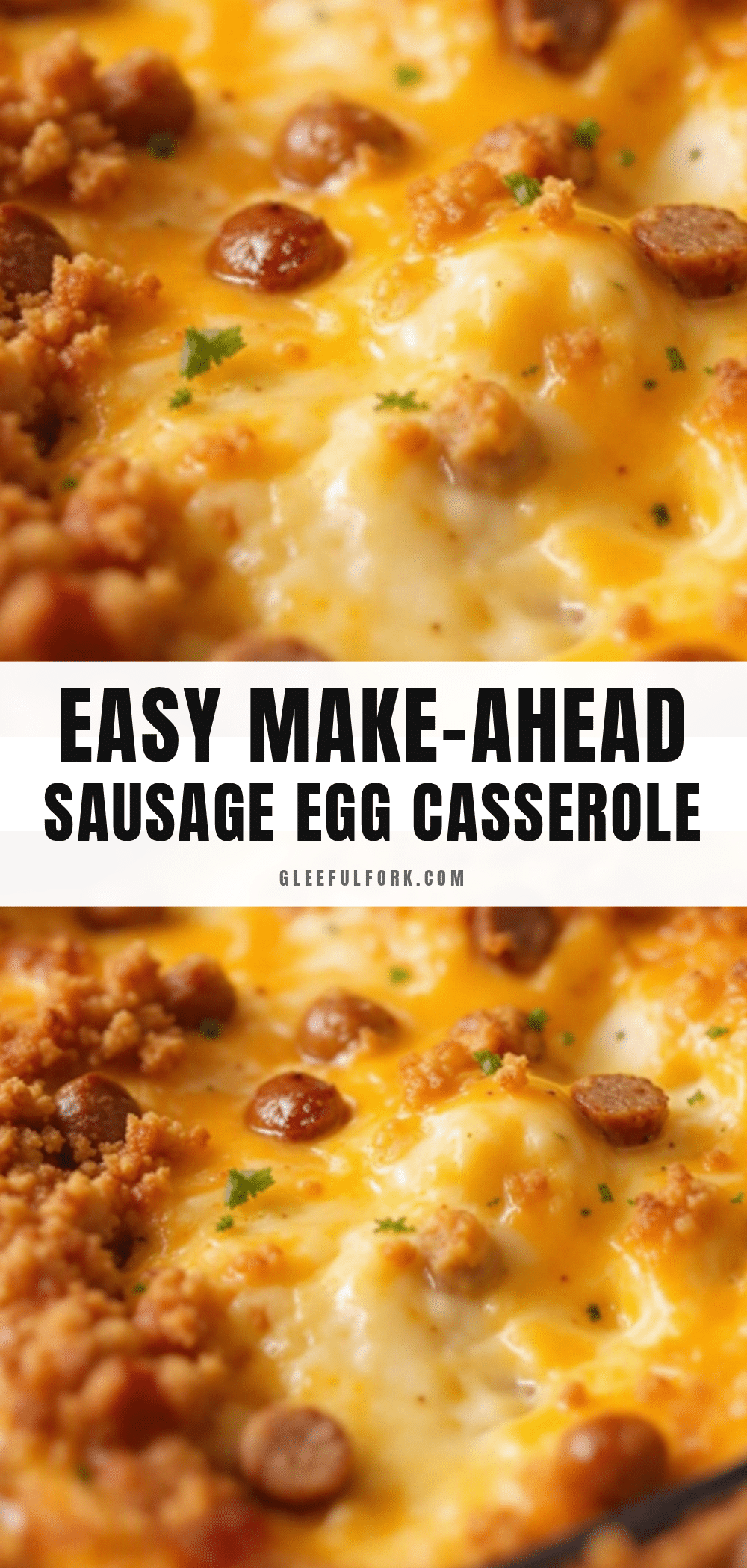
Easy Sausage Egg and Cheese Breakfast Casserole Recipe (Best!)

This make-ahead breakfast casserole features layers of day-old bread, savory sausage, sharp cheddar, and a creamy custard. It’s perfect for feeding a crowd on holiday mornings or lazy weekends.
- Prep Time: 20 minutes
- Cook Time: 55 minutes
- Total Time: 1 hour 15 minutes (plus overnight refrigeration)
- Yield: 8 to 10 servings 1x
- Category: Breakfast / Brunch
- Cuisine: American
Ingredients
- 1 pound breakfast sausage
- 10 large eggs, room temperature
- 2 cups whole milk
- 1 cup heavy cream
- 8 cups day-old bread, cubed (brioche, challah, or French bread)
- 2 cups shredded sharp cheddar cheese
- 1 cup shredded mozzarella cheese
- 1 small yellow onion, diced
- 1 teaspoon garlic powder
- 1 teaspoon mustard powder
- 1/2 teaspoon black pepper, freshly ground
- 2 tablespoons unsalted butter, melted (optional)
- Fresh chives or parsley for garnish (optional)
Instructions
- Cook the sausage: Heat a large skillet over medium-high heat. Add the breakfast sausage and break it apart with a wooden spoon. Cook for 6 to 8 minutes until browned and cooked through. Transfer to a plate lined with paper towels using a slotted spoon. Leave about 1 tablespoon of drippings in the pan.
- Cook the onion: Add the diced onion to the same skillet with the reserved drippings. Cook over medium heat for 3 to 4 minutes until soft and translucent. Scrape the onion into the bowl with the sausage and let cool.
- Make the custard: In a large mixing bowl, whisk the 10 eggs vigorously for about 30 seconds until combined and slightly frothy. Add the whole milk, heavy cream, garlic powder, mustard powder, and black pepper. Whisk until smooth and uniform.
- Layer the casserole: Spread half of the bread cubes evenly in a 9×13-inch baking dish. Sprinkle half of the cooked sausage and onion mixture over the bread. Top with half of the shredded cheddar and half of the mozzarella. Repeat the layers with the remaining bread, sausage mixture, and both cheeses.
- Pour the custard: Slowly pour the egg mixture evenly over the layered casserole. Use a rubber spatula to gently press down on the bread cubes, encouraging them to soak up the custard. Do not stir. Cover tightly with plastic wrap and refrigerate for at least 4 hours, preferably overnight.
- Bake: Preheat the oven to 350°F. Remove the casserole from the fridge and let it sit on the counter for 15 to 20 minutes. Brush the top with melted butter if using. Cover with aluminum foil and bake for 35 minutes. Remove the foil and bake for another 20 to 25 minutes, until the top is golden brown and the center is set (a knife inserted in the center comes out clean).
- Rest and serve: Let the casserole rest on a cooling rack for 10 minutes before slicing. Slice into squares, garnish with fresh chives or parsley, and serve warm.
Notes
For best texture, let the casserole rest overnight in the fridge. Use day-old bread to avoid mushiness. Shred your own cheese for smoother melting. Let the casserole rest 10 minutes after baking before slicing.
Nutrition
- Serving Size: 1 square (1/8 to 1/1
- Calories: 485
- Sugar: 6
- Sodium: 780
- Fat: 32
- Carbohydrates: 22
- Fiber: 1
- Protein: 28
Keywords: breakfast casserole, sausage egg and cheese casserole, make-ahead breakfast, holiday brunch, easy breakfast recipe