Love this? Save it for later!
Share the inspiration with your friends
“It was nearly midnight, and honestly, I wasn’t even sure what I wanted to eat. But my stomach was doing those annoying little flips that only a craving for something tangy and crunchy can fix. I rummaged through the fridge and realized I barely had anything fresh—just some sad-looking carrots, a half head of cabbage, and a lonely cucumber. I thought, ‘Maybe I could try fermenting these for gut health?’ I’d heard about fermented foods but never had the patience or know-how to make them myself.”
That night, armed with a jar, some salt, and a sprinkle of curiosity, I gave it a shot. I didn’t expect much; I just wanted a quick fix. But, you know, to my surprise, a few days later I popped open that jar and was greeted by the most vibrant, tangy, crunchy vegetables I’d ever tasted. It was like a tiny probiotic party in a jar—my gut felt happier, and honestly, so did my taste buds.
Maybe you’ve been there too—wanting to boost your gut health but thinking it’s too complicated or time-consuming. Well, that night was a game-changer for me. This easy quick fermented vegetables recipe became my go-to for a natural gut health boost, and I keep coming back to it, especially when life gets hectic and I need a healthy snack that practically makes itself.
Why You’ll Love This Recipe
After experimenting with various fermentation methods and recipes—some that took weeks—I found this easy quick fermented vegetables recipe to be a lifesaver for busy folks who want real gut health benefits without the fuss. I’ve tested it over and over, tweaking salt levels and fermentation times, and it’s always delivered consistent, delicious results.
- Quick & Easy: Comes together in under 15 minutes of prep, and you just wait for nature to do its magic.
- Simple Ingredients: No exotic items here—just fresh veggies, salt, and water (plus any spices you like), all probably sitting in your kitchen now.
- Perfect for Gut Health: Naturally packed with probiotics that help balance your digestive system.
- Crowd-Pleaser: Tangy, crunchy, and addictive, this recipe always gets raves at potlucks or casual dinners.
- Versatile: Customize with your favorite veggies or spice blends to fit the season or your mood.
This isn’t just another pickle recipe. The magic here is the balance—just enough salt to invite the good bacteria while keeping things crunchy and fresh. Plus, you don’t have to babysit it or have a special setup. Honestly, it’s the kind of recipe that makes you feel like a fermentation pro without the stress.
It’s comfort food for your gut, easy to whip up, and perfect for anyone who wants to enjoy real food that supports their wellbeing. If you love the tangy crispness of crispy garlic chicken or the fresh zest of a homemade salad, this quick fermented veggie recipe fits right in as a flavorful, healthy sidekick.
What Ingredients You Will Need
This recipe uses simple, wholesome ingredients to deliver bold flavor and satisfying texture without the fuss. You’ll find these are mostly pantry staples or fresh produce that’s easy to source. Feel free to swap in seasonal veggies or tweak the spices to keep it exciting.
- Vegetables for Fermentation:
- 1 medium head of cabbage, shredded (Napa or green cabbage both work well)
- 2 large carrots, peeled and julienned
- 1 cucumber, sliced thin (optional for extra crunch)
- 1 small daikon radish, sliced (adds a subtle peppery note)
- For the Brine:
- 2 tablespoons sea salt or kosher salt (non-iodized is best for fermentation)
- 4 cups filtered or spring water (chlorine-free to avoid killing good bacteria)
- Optional Flavor Boosters:
- 2 cloves garlic, thinly sliced (adds a savory punch)
- 1 teaspoon whole black peppercorns
- 1 teaspoon mustard seeds
- A few sprigs of fresh dill or thyme
- 1 small chili pepper, sliced (for a spicy kick)
I personally recommend using a high-quality sea salt like Redmond Real Salt to get the best fermentation results. When choosing your vegetables, go for firm, fresh produce—if the veggies are limp or bruised, the final ferment won’t taste quite as bright. In summer, I sometimes swap in fresh green beans or bell peppers for a colorful twist.
Equipment Needed
Luckily, you don’t need fancy tools to make these easy quick fermented vegetables. Here’s what I use and recommend:
- Glass Mason Jars: Quart-sized jars work perfectly. Glass doesn’t react with the acid, keeping flavors pure.
- Fermentation Weights or Clean Stones: These keep your veggies submerged in the brine, crucial for avoiding mold.
- Non-Metallic Lid or Fermentation Airlock: A simple lid you can loosen works fine, but an airlock lid helps release gases without letting air in.
- Mixing Bowl: For tossing your veggies with salt before packing into jars.
If you don’t have fermentation weights, a small, clean zip-top bag filled with brine can act as a weight. For budget-friendly options, reuse clean glass jars from store-bought pickles or sauces. Just make sure everything is sterilized before use!
Preparation Method
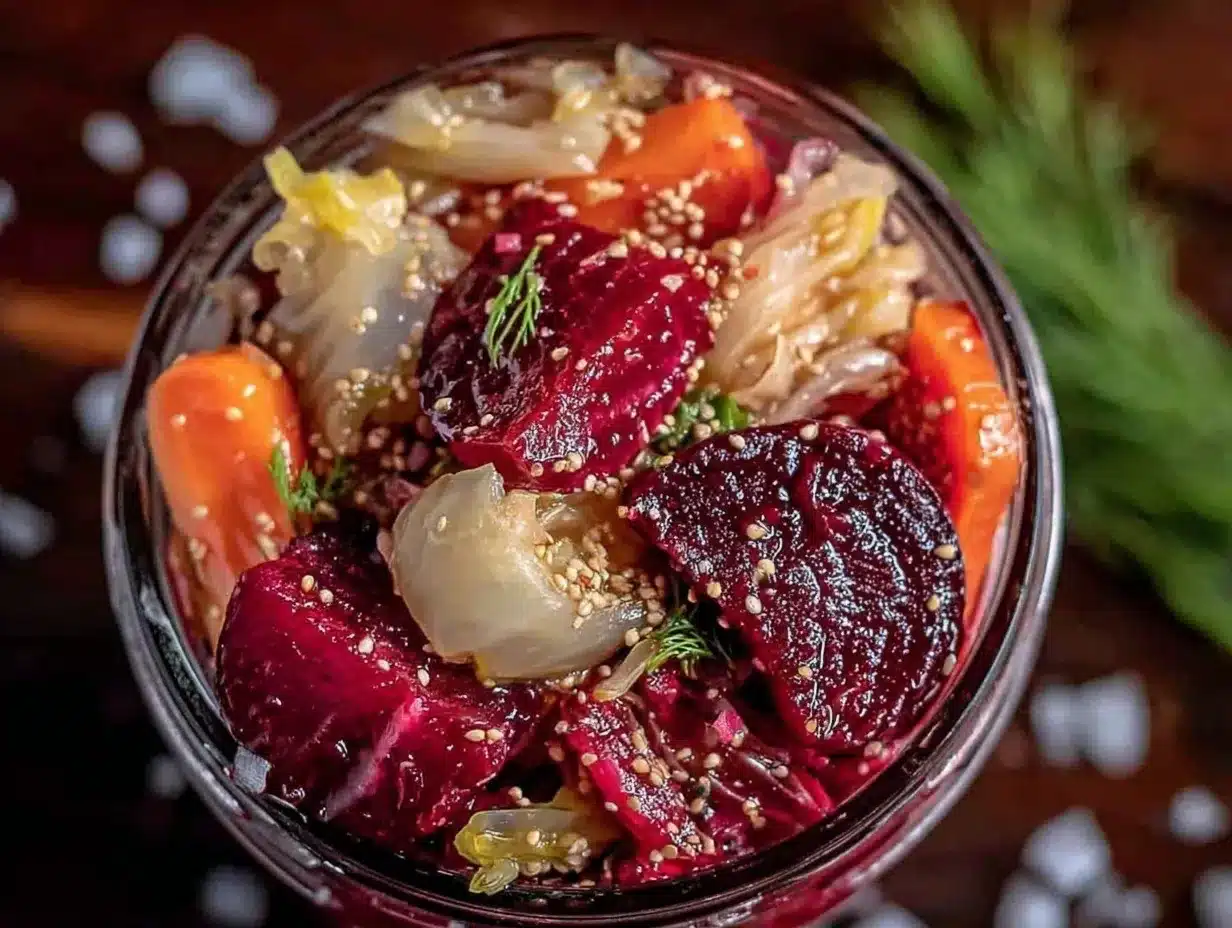
- Prepare the Vegetables (10 minutes): Wash all vegetables thoroughly. Shred the cabbage finely, peel and julienne carrots, slice cucumber and daikon radish thinly. Toss them all together in a large bowl.
- Mix the Brine: In a separate bowl, dissolve 2 tablespoons of sea salt in 4 cups of filtered water. Stir well until fully dissolved.
- Massage the Veggies: Sprinkle about 1 tablespoon of salt evenly over the shredded vegetables and massage with your hands for 5 minutes. You’ll notice the cabbage starts to soften and release its natural juices—this is key for a good ferment.
- Add Flavorings: Toss in your garlic slices, peppercorns, mustard seeds, herbs, and chili pepper if using. Mix everything gently to distribute.
- Pack into Jars: Firmly press the vegetable mixture into your clean jars, leaving about 1 to 2 inches of headspace at the top. Press down so the brine rises above the veggies; if needed, pour some brine from your bowl to ensure everything is submerged.
- Add Weights and Seal: Place fermentation weights or a small brine-filled bag on top to keep veggies submerged. Loosely cover the jars with lids or use fermentation lids to allow gases to escape.
- Ferment: Leave jars at room temperature (65-75°F / 18-24°C) away from direct sunlight. After 2 days, start tasting your veggies daily. The ideal ferment takes 3-7 days depending on your preference for tanginess.
- Store: Once fermented to your liking, tighten lids and move jars to the fridge to slow fermentation. Your fermented veggies will keep for several weeks chilled.
Watch out for surface bubbles and a pleasant sour smell—these are good signs your veggies are alive and thriving. If you ever see mold or an off-putting smell, it’s best to discard and try again. Oh, and don’t forget to label your jars with the date—you’ll thank yourself later!
Cooking Tips & Techniques
Fermentation sounds intimidating, but honestly, it’s more about patience than precision. Here are some tips I’ve learned the hard way:
- Salt is Your Friend: Too little salt and you risk unwanted bacteria; too much and your veggies get too salty. Stick to about 2% salt by weight of your vegetables.
- Keep Veggies Submerged: Oxygen is the enemy of fermentation here, so make sure your veggies are always under the brine to avoid mold.
- Room Temperature Matters: If it’s too cold, fermentation slows down, too warm and it speeds up too fast (sometimes making mushy veggies). A steady 70°F (21°C) is ideal.
- Be Patient with Taste Tests: Start tasting around day 3. The flavor changes daily, so you can catch it exactly when you like its tang and crunch.
- Don’t Panic Over Bubbles: Fizzing and bubbling mean your ferment is alive and well. Just open lids carefully to release gas pressure.
One time, I forgot about a jar in the back of the pantry for two weeks and it turned into my favorite batch—tangy, crunchy, and complex. So trust the process, but keep an eye on it.
Variations & Adaptations
Fermented vegetables are wonderfully flexible. Here are some ways to switch things up:
- Seasonal Veggie Swap: Use radishes, green beans, or bell peppers instead of cucumber and daikon for a fresh seasonal twist.
- Spice It Up: Add ginger slices and turmeric powder for an anti-inflammatory boost and a vibrant color.
- Make It Low-Sodium: Reduce salt slightly but expect a slower ferment and softer texture.
- Allergen-Friendly: This recipe is naturally gluten-free and vegan—perfect for many diets.
- Quick Pickle Version: If you’re in a hurry, try a quick pickle by soaking veggies in vinegar, salt, and sugar mix for an instant tang, but know it lacks the probiotic benefits of fermentation.
I once added sliced apples and cinnamon sticks for a fall-themed batch that was surprisingly addictive. The possibilities are endless—you can really make this recipe your own.
Serving & Storage Suggestions
Fermented vegetables are best served chilled or at room temperature as a crunchy side or snack. They pair beautifully with hearty dishes like crispy garlic chicken or a warm grain bowl. For a simple lunch, toss a handful on top of your salad for that zesty bite.
Store ferment jars tightly sealed in the fridge to slow down the fermentation process. They usually last 3-4 weeks, but the flavor deepens the longer they sit. Reheat isn’t really recommended since heat kills the probiotics, but you can add them to hot dishes right before serving.
If you ever notice the veggies drying out, just add a splash of brine or filtered water to keep them submerged. Over time, the tanginess will grow, so it’s a good idea to taste frequently once refrigerated.
Nutritional Information & Benefits
Fermented vegetables offer a powerhouse of nutrition, especially for gut health. A typical serving (about 1/4 cup or 60g) contains:
- Low calories (around 20-30 kcal)
- Rich in probiotics—beneficial bacteria that support digestion and immunity
- High in fiber, aiding regularity
- Vitamins C and K from fresh vegetables
- Natural antioxidants from herbs and spices
Because this recipe is gluten-free, dairy-free, and vegan, it fits many dietary needs. Just watch the salt content if you’re on a low-sodium diet. Personally, I find these quick fermented veggies a delicious way to support my gut without relying on supplements or complicated regimens.
Conclusion
If you’ve been curious about fermented foods but worried it’s too involved, this easy quick fermented vegetables recipe is your perfect starting point. It’s simple, forgiving, and packs a serious gut health punch with minimal effort. I keep coming back to it because, honestly, it tastes amazing and makes me feel great inside.
Try customizing it with your favorite veggies and spices—you’ll be surprised how satisfying and fun fermentation can be. I’d love to hear what variations you come up with, so please share your experiences or questions in the comments below. Let’s keep the conversation—and the fermentation—going!
Remember, healthy eating doesn’t have to be complicated. Sometimes, the simplest recipes bring the most joy and wellness.
Frequently Asked Questions About Easy Quick Fermented Vegetables
How long does it take for vegetables to ferment?
Typically, 3 to 7 days at room temperature (65-75°F / 18-24°C) is enough for a tasty ferment. You can taste daily to find your preferred level of tanginess.
Can I use table salt instead of sea salt?
It’s best to use non-iodized salt like sea salt or kosher salt because iodine can inhibit fermentation. Table salt often contains additives that affect the process.
Do I need to keep the vegetables submerged in brine?
Yes! Keeping the veggies under the salty water prevents bad bacteria and mold. Use fermentation weights or a clean small bag filled with brine as a weight.
What if I see mold on top of my ferment?
If mold appears, it’s safest to discard that batch and start fresh. Mold usually means oxygen got in or veggies weren’t fully submerged.
Can I ferment other vegetables besides cabbage and carrots?
Absolutely! Many veggies ferment well, including radishes, green beans, beets, and peppers. Feel free to experiment with your favorites.
Pin This Recipe!

Easy Quick Fermented Vegetables Recipe for Perfect Gut Health Boost

A simple and quick fermented vegetables recipe that boosts gut health with natural probiotics, using fresh veggies and salt. Perfect for a tangy, crunchy, and healthy snack.
- Prep Time: 15 minutes
- Cook Time: 0 minutes
- Total Time: 3 to 7 days fermentation time
- Yield: About 4 cups of fermented vegetables 1x
- Category: Side Dish
- Cuisine: Fermented Foods
Ingredients
- 1 medium head of cabbage, shredded (Napa or green cabbage both work well)
- 2 large carrots, peeled and julienned
- 1 cucumber, sliced thin (optional for extra crunch)
- 1 small daikon radish, sliced
- 2 tablespoons sea salt or kosher salt (non-iodized)
- 4 cups filtered or spring water (chlorine-free)
- 2 cloves garlic, thinly sliced (optional)
- 1 teaspoon whole black peppercorns (optional)
- 1 teaspoon mustard seeds (optional)
- A few sprigs of fresh dill or thyme (optional)
- 1 small chili pepper, sliced (optional)
Instructions
- Wash all vegetables thoroughly. Shred the cabbage finely, peel and julienne carrots, slice cucumber and daikon radish thinly. Toss them all together in a large bowl.
- In a separate bowl, dissolve 2 tablespoons of sea salt in 4 cups of filtered water. Stir well until fully dissolved.
- Sprinkle about 1 tablespoon of salt evenly over the shredded vegetables and massage with your hands for 5 minutes until the cabbage softens and releases its natural juices.
- Toss in garlic slices, peppercorns, mustard seeds, herbs, and chili pepper if using. Mix gently to distribute.
- Firmly press the vegetable mixture into clean quart-sized glass jars, leaving 1 to 2 inches of headspace at the top. Press down so the brine rises above the veggies; add brine if needed to keep submerged.
- Place fermentation weights or a small brine-filled bag on top to keep veggies submerged. Loosely cover the jars with lids or use fermentation lids to allow gases to escape.
- Leave jars at room temperature (65-75°F / 18-24°C) away from direct sunlight. Start tasting after 2 days. Fermentation takes 3-7 days depending on desired tanginess.
- Once fermented to your liking, tighten lids and move jars to the fridge to slow fermentation. Keep refrigerated for several weeks.
Notes
Use non-iodized salt like sea salt or kosher salt for best fermentation results. Keep vegetables fully submerged under brine to avoid mold. Ferment at a steady room temperature around 70°F (21°C). Taste daily after day 2 to find preferred tanginess. Discard if mold or off smells appear. Label jars with date.
Nutrition
- Serving Size: 1/4 cup (about 60g)
- Calories: 25
- Sugar: 2
- Sodium: 600
- Carbohydrates: 5
- Fiber: 2
- Protein: 1
Keywords: fermented vegetables, gut health, probiotics, quick fermentation, easy fermented veggies, healthy snack, fermented cabbage, fermented carrots