Love this? Save it for later!
Share the inspiration with your friends
I did not trust roasted butternut squash soup to be anything more than a watery disappointment. Honestly, I thought blending raw squash sounded like a mistake until I actually tasted the first spoonful of this version. For years, I stuck to the traditional method of boiling chunks of orange vegetable in stock. You know how it goes—you peel the hard skin, chop the messy cubes, and boil them until they fall apart. The result was always thin, lacking depth, and frankly, a bit boring. I wanted creaminess without the heavy dairy load, and sweetness without the cloying sugar rush. It felt like a paradox I couldn’t solve.
The turning point came on a rainy Tuesday in November. I was tired, cold, and desperate for something warm that didn’t involve standing over a stirring pot for an hour. A friend insisted I try roasting the squash first. I rolled my eyes. Roasting just dries things out, I argued. But she handed me a bowl of the finished soup, and before I could protest further, I took a sip. The flavor was intense, caramelized, and deeply savory. It wasn’t just soup; it was comfort in a bowl. That moment changed how I view winter vegetables entirely.
The secret wasn’t in the technique itself, but in the Maillard reaction that happens when squash meets high heat. The natural sugars concentrate, creating a nutty base that boiling simply cannot achieve. I realized I had been shortchanging myself by skipping that crucial step. Now, this creamy roasted butternut squash soup is my go-to when the temperature drops. It’s not fancy, but it is deeply satisfying. I make it often enough that my kitchen smells like autumn every single week. There is a quiet reliability to it that I have come to depend on.
I no longer feel like I am settling for a side dish when I serve this. It stands on its own as a complete meal, especially with the right toppings. The texture is velvety smooth, not gluey or overly thick. It feels like a hug on a cold day, but without the guilt of heavy cream. I keep a steady supply of spices ready for when the mood strikes. It is the kind of recipe that sticks with you because it works every single time. You don’t have to guess if it will turn out right.
Why You’ll Love This Recipe
This isn’t just another winter soup recipe that you’ll find buried in a cookbook from 2005. It is the result of testing dozens of variations to get the balance just right. I wanted something that felt elevated but required minimal effort. The key here is the roasting step, which brings out a depth of flavor that boiling never can. It transforms the humble squash into something rich and complex. You get that caramelized sweetness without adding any extra sugar.
- Quick & Easy: While roasting takes time, active prep is under 20 minutes. This makes it perfect for busy weeknights when you want something wholesome but don’t have hours to spare.
- Simple Ingredients: No fancy grocery trips needed. You likely already have squash, onion, garlic, and basic spices in your kitchen. It relies on pantry staples rather than hard-to-find items.
- Perfect for Meal Prep: This soup tastes even better the next day. Make a big batch on Sunday, and you have healthy lunches ready for the week ahead. It freezes beautifully too.
- Crowd-Pleaser: Even the pickiest eaters who claim they hate vegetables usually love this. The sweetness appeals to kids, while the savory notes satisfy adults.
- Unbelievably Delicious: The texture is next-level comfort food. It is silky, smooth, and incredibly satisfying without being heavy or sluggish.
What makes this recipe different is the focus on roasting the aromatics along with the squash. Most recipes just throw everything in a pot. Here, we roast the onions and garlic with the squash to develop a nutty, toasted flavor profile. It adds a layer of complexity that you won’t find in standard versions. It is the kind of soup that makes you close your eyes after the first bite. It’s comfort food reimagined—healthier, faster, but with the same soul-soothing satisfaction. Perfect for impressing guests without stress, or turning a simple meal into something memorable.
What Ingredients You Will Need
This recipe uses simple, wholesome ingredients to deliver bold flavor and satisfying texture without the fuss. The magic happens because we let the ingredients speak for themselves. Roasting concentrates the natural sugars in the squash, while the aromatics add savory depth. You don’t need exotic spices or expensive cheeses. Just a few quality items that come together to create something greater than the sum of its parts. Here is what you will need to get started.
- Butternut Squash: One large squash, peeled, seeded, and cut into 1-inch cubes. Look for a squash that feels heavy for its size; this indicates moisture and freshness. (I prefer buying pre-cut cubes if I am short on time, but fresh tastes better.)
- Yellow Onion: One medium onion, roughly chopped. This provides the savory backbone of the soup. Do not skip this; it adds essential body.
- Garlic: Three cloves, peeled. Roasting the garlic makes it sweet and spreadable, removing any sharp bite.
- Olive Oil: Two tablespoons of extra virgin olive oil. I recommend California Olive Ranch for its consistent quality and fresh taste. This helps the squash brown properly.
- Vegetable Broth: Four cups of low-sodium vegetable broth. Using low-sodium allows you to control the salt level at the end. (Use homemade broth if you have it for best results.)
- Heavy Cream or Coconut Milk: Half a cup of heavy cream for dairy lovers, or full-fat coconut milk for a vegan option. Coconut milk adds a subtle tropical note that pairs well with squash.
- Ground Nutmeg: Half a teaspoon of freshly grated nutmeg. This is the secret weapon. It adds warmth and complexity that defines the flavor profile.
- Salt and Black Pepper: To taste. Always season in layers, not just at the end.
- Butter: One tablespoon of unsalted butter for finishing. This adds a luxurious mouthfeel and shine to the final product.
If you are watching your sugar intake, you can reduce the amount of squash slightly or balance it with more cauliflower. For a gluten-free option, this recipe is naturally safe, but always check your broth labels. In summer, you might swap in roasted pumpkin, but butternut is the gold standard for this specific texture.
Equipment Needed
You do not need a fancy kitchen to make this soup. Most of the work is done by the oven. You will need two large rimmed baking sheets to hold the squash and aromatics. Make sure they are big enough so the pieces are not crowded; overcrowding leads to steaming instead of roasting. A sharp chef’s knife and a sturdy cutting board are essential for peeling and chopping the squash. Peeling a whole squash can be tricky, so take your time to avoid slipping.
For blending, a high-speed blender like a Vitamix or Ninja works best for that ultra-smooth texture. If you do not have one, an immersion blender is a great alternative. It allows you to blend the soup directly in the pot, saving you from transferring hot liquid. Just be careful not to fill the pot too high when blending to avoid splatters. A large stockpot or Dutch oven is needed for simmering the soup after roasting. I prefer a heavy-bottomed pot because it distributes heat evenly and prevents scorching.
Measuring cups and spoons are standard, but a kitchen scale is helpful if you want precision. For serving, wide-rimmed bowls look elegant and hold the toppings well. If you are using an immersion blender, ensure it is fully submerged before turning it on to reduce splashing. These tools are likely already in your kitchen, so no special shopping is required. Keep your blender clean immediately after use to avoid scrubbing dried-on squash later.
Preparation Method

- Preheat and Prep (5 minutes): Set your oven to 400°F (200°C). Line two large baking sheets with parchment paper for easy cleanup. This step is crucial for preventing sticky residue from burning on your pans.
- Roast the Squash (35-40 minutes): Place the cubed butternut squash on one baking sheet. Drizzle with one tablespoon of olive oil and toss to coat evenly. Spread them in a single layer. Roast until tender and slightly browned at the edges. You should be able to pierce a cube easily with a fork. This caramelization is where the flavor develops.
- Roast the Aromatics (20 minutes): While the squash roasts, place the chopped onion and garlic cloves on the second baking sheet. Drizzle with the remaining olive oil, salt, and pepper. Roast these for about 20 minutes until softened and fragrant. Do not burn the garlic; you want it sweet, not charred.
- Simmer (10 minutes): Transfer the roasted squash, onions, and garlic into a large stockpot. Pour in the vegetable broth. Bring the mixture to a gentle simmer over medium heat. Let it cook for about 10 minutes to allow the flavors to meld together. The squash will absorb some of the liquid.
- Blend (3 minutes): Remove the pot from the heat. Carefully transfer the mixture to a blender in batches, or use an immersion blender directly in the pot. Blend until completely smooth. If using a standard blender, vent the lid to let steam escape and cover with a towel to prevent explosions. Blend for at least one minute to ensure no lumps remain.
- Finish and Season (2 minutes): Return the smooth soup to the pot over low heat. Stir in the heavy cream (or coconut milk) and the tablespoon of butter. Add the nutmeg, salt, and pepper. Taste and adjust seasoning as needed. The soup should be creamy, warm, and well-balanced.
- Serve (1 minute): Ladle into bowls. Top with pumpkin seeds, a drizzle of olive oil, or fresh herbs if desired. Serve immediately while hot.
Watch the soup closely when it returns to the pot. It can boil over quickly if the heat is too high. Keep it on low to medium-low. If the soup is too thick, add more broth a quarter cup at a time. If it is too thin, simmer it a bit longer to reduce. The consistency should coat the back of a spoon.
Cooking Tips & Techniques
Roasting is the most critical step in this recipe, and there are common mistakes people make here. The biggest error is overcrowding the baking sheet. If the squash pieces are touching, they will steam instead of roast. This prevents the Maillard reaction, resulting in a bland, watery soup. Give each piece space to breathe. If you have a small oven, roast in two batches.
Another tip is to not skimp on the salt during the roasting phase. Salt helps draw out moisture and enhances the natural sweetness of the squash. Season the vegetables before they go into the oven, not just after. I once made this soup without salting the squash first, and it tasted flat. Adding salt later did not fix the lack of depth. Always taste your broth before adding it; if it is bland, your soup will be too.
When blending hot soup, be cautious. Steam buildup can cause blenders to explode or leak. If using a standard blender, blend in small batches and hold the lid down firmly. An immersion blender is much safer for this reason. Also, let the soup cool slightly before blending if you are worried about pressure. Do not fill the blender more than halfway.
For extra creaminess without dairy, add a cooked potato or cauliflower to the mix. These vegetables blend smoothly and add body. I often add a small potato if my squash is on the drier side. It creates a thicker, more satisfying texture. Multitask by chopping the vegetables while the oven preheats. This saves valuable time during the active cooking phase. Consistency comes from patience during the roasting step.
Variations & Adaptations
This recipe is highly adaptable to different dietary needs and flavor preferences. You can easily modify it to suit your pantry or health goals. Here are a few ways to change it up.
- Vegan Option: Skip the butter and heavy cream. Use full-fat coconut milk instead. The coconut flavor pairs surprisingly well with the nutmeg and squash. It creates a rich, dairy-free creaminess.
- Spicy Kick: Add a diced jalapeño or a pinch of red pepper flakes while sautéing the aromatics. This adds a nice heat that cuts through the sweetness. It balances the flavor profile perfectly.
- Green Twist: Stir in a handful of fresh spinach or kale at the end. It adds color and nutrients without altering the taste significantly. It makes the soup look more vibrant.
- Gluten-Free: This recipe is naturally gluten-free. Just ensure your vegetable broth is certified gluten-free. Most broths are, but labels vary.
- Personal Variation: I sometimes add a teaspoon of curry powder for an Indian-inspired twist. It changes the profile entirely but remains delicious. It is a great way to use up leftover spices.
You can also swap the squash for pumpkin or sweet potato. Pumpkin has a slightly earthier taste, while sweet potato is sweeter. Adjust the liquid accordingly, as sweet potatoes may require more broth. For a low-carb version, increase the cauliflower content. It keeps the volume high while reducing carbs. These variations keep the recipe fresh and exciting.
Serving & Storage Suggestions
This soup is best served hot in wide-rimmed bowls. The presentation matters because it makes the dish feel special. Top it with toasted pumpkin seeds for crunch. A drizzle of high-quality olive oil or coconut cream adds visual appeal and richness. Fresh herbs like parsley or chives provide a pop of color. Pair it with crusty bread or a grilled cheese sandwich for a complete meal. The crunch of the bread contrasts nicely with the smooth soup.
For storage, let the soup cool completely before transferring it to an airtight container. It will last in the refrigerator for up to four days. The flavors actually improve after a day or two as they meld together. To freeze, leave out the cream before freezing. Store the base soup in freezer-safe bags or containers for up to three months. Thaw it in the refrigerator overnight.
When reheating, do so over low heat on the stove. High heat can cause the cream to separate or the soup to scorch. Stir frequently to ensure even heating. If the soup thickens in the fridge, add a splash of broth or water to thin it out. You can also reheat it in the microwave, stirring every minute to prevent hot spots. The texture should remain smooth and creamy.
Consider serving this with a light side salad to balance the heaviness. A vinaigrette dressing cuts through the richness. It is also great for meal prep lunches. Pack it in a thermos for a warm lunch on a cold day. The portability makes it a practical choice for work or school. It keeps well for hours without losing flavor.
Nutritional Information & Benefits
This soup is not only delicious but also packed with nutrients. Butternut squash is rich in Vitamin A, which supports eye health and immune function. It is also a good source of Vitamin C and fiber. The fiber aids in digestion and helps keep you feeling full longer. Using vegetable broth keeps the sodium content lower than canned alternatives.
By using olive oil and optional coconut milk, you get healthy fats that help absorb the fat-soluble vitamins in the squash. These fats are essential for brain health and hormone regulation. The recipe is naturally gluten-free, making it safe for those with celiac disease or gluten sensitivity. It is also low in calories if you skip the heavy cream.
For those watching their sugar intake, the natural sweetness comes from the vegetable itself, not added sugar. This provides a steady energy release rather than a spike. The nutmeg adds antioxidants and anti-inflammatory properties. Overall, this is a wholesome dish that supports wellness. It is a great way to incorporate more vegetables into your diet. I find it helps me stay balanced during the colder months.
Conclusion
This creamy roasted butternut squash soup is worth trying because it combines simplicity with incredible flavor. It proves that healthy eating does not have to be boring or complicated. The roasting step transforms ordinary ingredients into something extraordinary. I love this recipe because it is reliable and comforting. It always turns out perfect, no matter the season.
I encourage you to customize it based on your preferences. Add spices, swap creams, or change the toppings. Make it your own. This recipe has become a staple in my kitchen for a reason. It warms me up and satisfies my cravings. Please try it and let me know how it turns out for you. Share your variations in the comments below. I love reading about your adaptations.
Thank you for stopping by. I hope this recipe brings you joy and warmth. Happy cooking!
Frequently Asked Questions
Can I make this soup ahead of time?
Yes, this soup tastes even better the next day. Make it up to three days in advance and store it in the refrigerator. Reheat gently on the stove before serving.
How do I store leftover soup?
Store leftovers in an airtight container in the refrigerator for up to four days. For longer storage, freeze the soup base (without cream) for up to three months.
Can I use a different type of squash?
Absolutely. Pumpkin, acorn squash, or sweet potato work well. Adjust the cooking time slightly, as some squashes may cook faster or slower than butternut.
Is this soup gluten-free?
Yes, the recipe is naturally gluten-free. Just ensure your vegetable broth is certified gluten-free to avoid cross-contamination.
Can I freeze this soup?
Yes, but do not add the cream before freezing. Freeze the base soup, then thaw and add fresh cream when reheating to maintain the best texture.
Pin This Recipe!
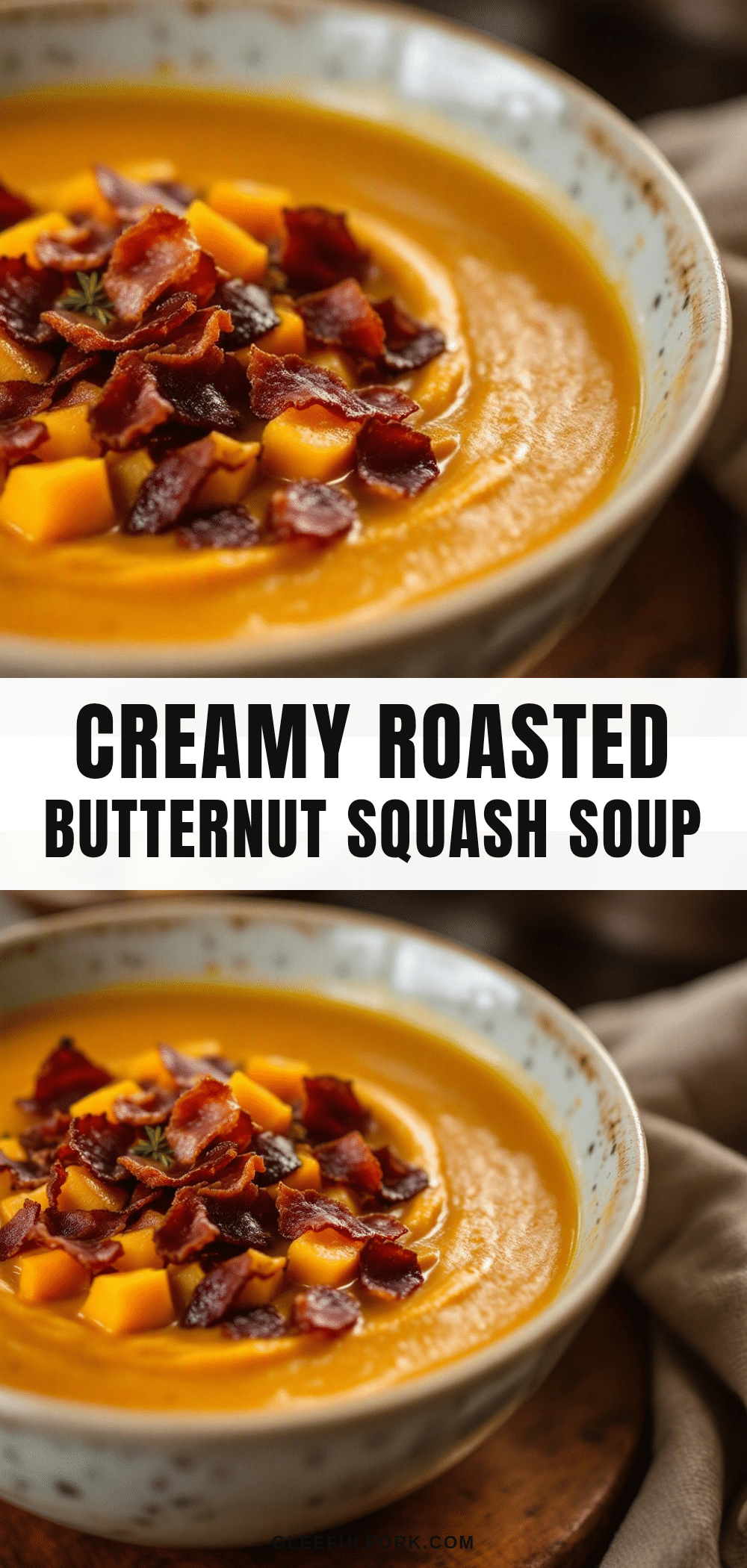
Creamy Roasted Butternut Squash Soup

A velvety smooth, deeply savory soup made by roasting butternut squash and aromatics to concentrate flavor, resulting in a comforting, dairy-light winter meal.
- Prep Time: 20 minutes
- Cook Time: 45 minutes
- Total Time: 65 minutes
- Yield: 4 servings 1x
- Category: Main Course
- Cuisine: American
Ingredients
- 1 large butternut squash, peeled, seeded, and cut into 1-inch cubes
- 1 medium yellow onion, roughly chopped
- 3 cloves garlic, peeled
- 2 tablespoons extra virgin olive oil, divided
- 4 cups low-sodium vegetable broth
- 1/2 cup heavy cream or full-fat coconut milk
- 1/2 teaspoon ground nutmeg
- Salt and black pepper, to taste
- 1 tablespoon unsalted butter
Instructions
- Preheat oven to 400°F (200°C). Line two large baking sheets with parchment paper.
- Place cubed butternut squash on one baking sheet. Drizzle with 1 tablespoon olive oil, toss to coat, and spread in a single layer. Roast for 35-40 minutes until tender and browned.
- Place chopped onion and garlic cloves on the second baking sheet. Drizzle with remaining olive oil, salt, and pepper. Roast for 20 minutes until softened and fragrant.
- Transfer roasted squash, onions, and garlic to a large stockpot. Pour in vegetable broth and bring to a gentle simmer over medium heat for 10 minutes.
- Remove from heat and blend until completely smooth using a blender or immersion blender.
- Return soup to pot over low heat. Stir in cream (or coconut milk), butter, nutmeg, salt, and pepper. Adjust seasoning to taste.
- Ladle into bowls and serve immediately, optionally topped with pumpkin seeds or fresh herbs.
Notes
Do not overcrowd the baking sheets to ensure proper roasting and caramelization rather than steaming. If using a standard blender, vent the lid and cover with a towel to prevent steam explosions. For a vegan option, substitute heavy cream with full-fat coconut milk and omit the butter. The soup freezes well without the cream added.
Nutrition
- Serving Size: 1 bowl
- Calories: 280
- Sugar: 10
- Sodium: 450
- Fat: 18
- Saturated Fat: 8
- Carbohydrates: 28
- Fiber: 6
- Protein: 4
Keywords: butternut squash soup, roasted vegetable soup, creamy soup, winter recipes, gluten-free, vegetarian, meal prep, healthy comfort food