Love this? Save it for later!
Share the inspiration with your friends
Third time this week I pulled that cast iron skillet out of the oven, and the butter was already browning before I even measured the cornmeal. Something about the way the honey hit that hot surface—it sizzled different this time, more insistent, like it knew I was finally getting close. I had been chasing this particular version of honey butter skillet cornbread since the first cool snap of October, when the light changes and you start craving something dense and sweet with a crackling crust. The first batch was too dry. The second was too sweet, like dessert pretending to be bread. But this one, the third one—I pulled it out and the kitchen went quiet except for that butter still bubbling around the edges.
I grew up eating cornbread from a box, the kind that crumbles into a thousand pieces the second you look at it. My grandmother made it from scratch, but she never wrote anything down, so her cornbread exists now only in memory. This honey butter skillet cornbread is my attempt to bridge that gap—the boxed stuff I knew and the golden, tender loaf I imagined she made. It took me a while to stop overthinking it, to let the cornmeal do what cornmeal does and trust the honey to find its own balance. Honestly, the best version came together on a Tuesday when I wasn’t trying to impress anyone but myself.
There is a specific moment when you flip a skillet cornbread out onto a cooling rack, and the bottom is this deep amber color, almost caramelized, and you know the honey butter did exactly what it was supposed to do. That is the moment this recipe became the one I reach for every fall. Not because it is fancy, but because it works. Every single time.
Why You’ll Love This Recipe
This honey butter skillet cornbread hits that sweet spot between rustic and refined without making you work for it. I have made it for casual weeknight dinners and for Thanksgiving tables loaded with sides, and it holds its own every time. Here is why it deserves a permanent spot in your fall rotation:
- Quick & Easy: From mixing bowl to table in under 40 minutes. The skillet does most of the work for you.
- Simple Ingredients: Cornmeal, flour, buttermilk, eggs, butter, and honey. That is it. No weird specialty items.
- Perfect for Fall Dinners: Pairs naturally with chili, roasted chicken, braised greens, or a simple bowl of soup. It is the side dish that makes the meal feel complete.
- Crowd-Pleaser: I have watched people who claim they do not like cornbread go back for seconds. The honey butter glaze wins everyone over.
- Unbelievably Delicious: The contrast between the crisp, golden crust and the tender, moist interior is exactly what good cornbread should be. The honey adds a floral sweetness that does not overpower the corn flavor.
What makes this recipe different from the dozens of cornbread recipes out there is the technique. Melting the butter in the hot skillet first, then pouring the batter directly into that sizzling pool—it creates a crust that is almost fried, like the best edges of a pancake but better. And the honey butter gets brushed on twice: once when the cornbread is still warm, so it soaks in, and once right before serving, so it glistens. It sounds like a small thing, but that double application makes a noticeable difference in flavor and texture.
This is the kind of cornbread that makes you slow down. It is not just fuel for the chili you are eating alongside it. It is the part of the meal you remember the next day, the thing you wish you had saved a second piece of. And honestly, that is the highest compliment I can give any recipe.
What Ingredients You Will Need
This recipe relies on a handful of pantry staples, but each one plays a specific role in creating that perfect texture and flavor. I have tested this with different brands and substitutions, so I will share what works best.
- Yellow cornmeal (1 cup / 160g): Use medium-grind cornmeal for the best texture. Too fine and the cornbread loses its rustic character. Too coarse and it becomes gritty. I prefer Bob’s Red Mill medium-grind cornmeal, but any brand works as long as it is not the super-fine masa harina type.
- All-purpose flour (1 cup / 125g): The flour softens the cornmeal and gives the crumb structure. You can substitute a gluten-free 1:1 blend if needed, but the texture will be slightly more delicate.
- Granulated sugar (1/4 cup / 50g): Just enough to complement the honey without making this taste like cake. Northern-style cornbread leans slightly sweet, and this amount hits the right note.
- Baking powder (2 teaspoons): Fresh baking powder is non-negotiable here. If yours has been sitting in the cabinet for a year, replace it. Flat cornbread is sad cornbread.
- Baking soda (1/2 teaspoon): Works with the buttermilk to create lift and tenderness.
- Salt (1 teaspoon): Do not skip this. Salt sharpens the sweetness of the honey and keeps the cornbread from tasting flat.
- Buttermilk (1 1/4 cups / 300ml): This is what gives the cornbread its tender crumb and slight tang. If you do not have buttermilk, you can make a quick version by adding 1 tablespoon of lemon juice or white vinegar to 1 1/4 cups of whole milk and letting it sit for 5 minutes.
- Large eggs (2): Room temperature eggs incorporate more evenly into the batter. If you forgot to take them out of the fridge, place them in a bowl of warm water for 5 minutes.
- Unsalted butter (1/2 cup / 113g, plus 2 tablespoons for honey butter): I use unsalted so I can control the salt level. The butter melts in the skillet before the batter goes in, creating that signature crispy crust.
- Honey (1/4 cup / 85g for batter, plus 2 tablespoons for glaze): Use a mild, floral honey for the batter—clover or orange blossom works beautifully. Save a stronger honey, like buckwheat, for the glaze if you want a more pronounced flavor.
For the honey butter glaze, you just need the extra honey and butter mentioned above, plus a pinch of flaky sea salt if you are feeling fancy. The salt on top is optional but highly recommended—it makes the sweetness pop in a way that feels intentional.
Equipment Needed
You do not need much for this recipe, which is part of its charm. But the right tools make the process smoother and the results more consistent.
- 10-inch cast iron skillet: This is the star of the show. Cast iron holds heat evenly and creates that deeply browned crust you cannot get from a glass or ceramic dish. If you do not have a cast iron skillet, a 10-inch oven-safe nonstick skillet works, but the crust will not be as dramatic.
- Mixing bowls: One large bowl for dry ingredients, one medium bowl for wet ingredients.
- Whisk: For combining the dry ingredients and for mixing the wet ingredients until smooth.
- Rubber spatula: For folding the wet ingredients into the dry without overmixing.
- Pastry brush: For applying the honey butter glaze. A silicone brush is easiest to clean, but a natural bristle brush works fine too.
- Cooling rack: Lets air circulate under the cornbread so the bottom does not get soggy.
If you are new to cooking with cast iron, do not be intimidated. A well-seasoned skillet is naturally nonstick, and the more you use it, the better it gets. I have had my skillet for years, and it has developed a patina that makes everything taste a little more seasoned. Budget-friendly cast iron options from Lodge work just as well as expensive vintage brands.
Preparation Method
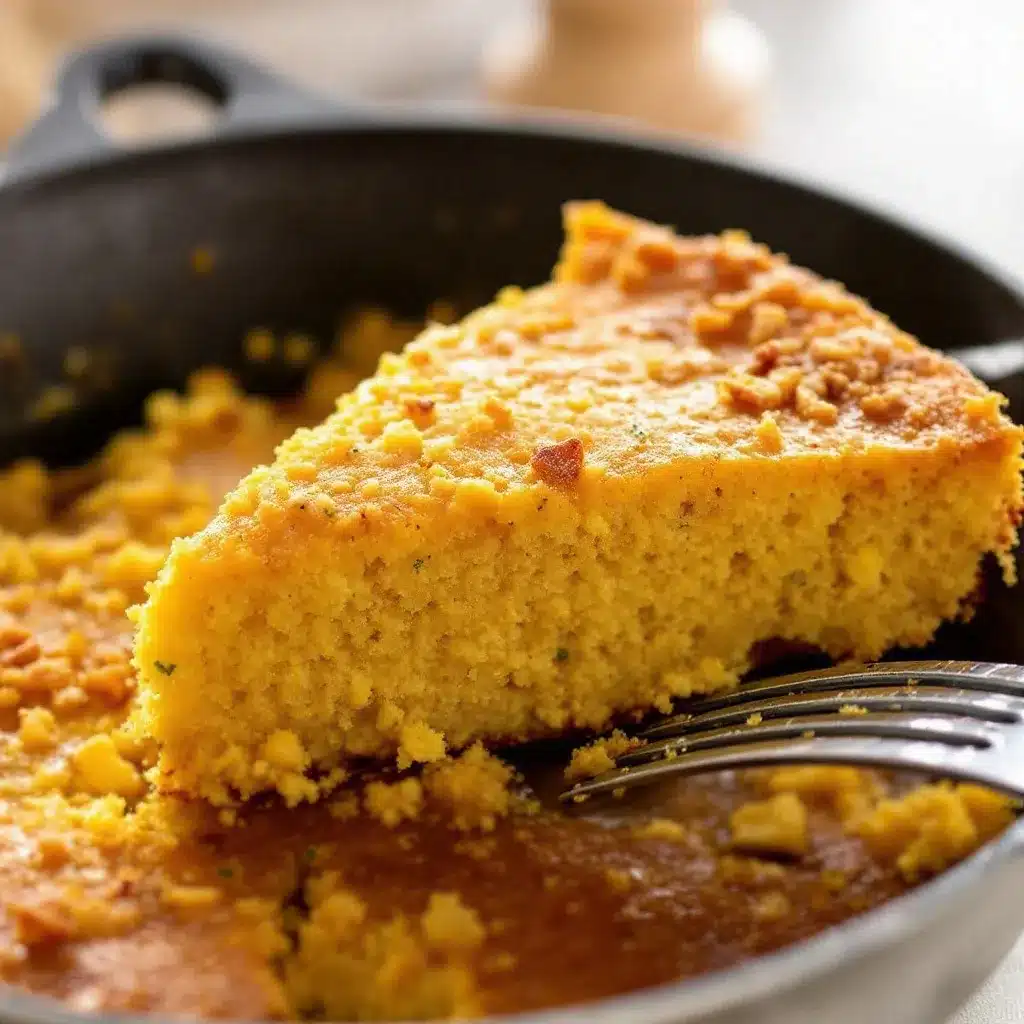
This method is designed to be straightforward, but I have included all the little details that make the difference between good cornbread and great cornbread. Read through the steps once before you start so you know what is coming.
- Preheat your oven to 400°F (200°C). Place your 10-inch cast iron skillet inside the oven while it preheats. This step is crucial—you want the skillet screaming hot when the butter hits it.
- Melt the butter for the skillet. In a small saucepan or microwave-safe bowl, melt 1/2 cup (113g) of unsalted butter. Set it aside but keep it warm. You will use this to coat the hot skillet.
- Mix the dry ingredients. In a large mixing bowl, whisk together 1 cup (160g) yellow cornmeal, 1 cup (125g) all-purpose flour, 1/4 cup (50g) granulated sugar, 2 teaspoons baking powder, 1/2 teaspoon baking soda, and 1 teaspoon salt. Make sure the baking powder and soda are evenly distributed—lumps here mean uneven rising later.
- Combine the wet ingredients. In a separate medium bowl, whisk together 1 1/4 cups (300ml) buttermilk, 2 large eggs, and 1/4 cup (85g) honey. Whisk until the eggs are fully incorporated and the mixture is smooth and pale yellow.
- Carefully remove the hot skillet from the oven. Use oven mitts—this thing is dangerously hot. Pour the melted butter into the skillet and swirl it around to coat the bottom and sides completely. The butter should sizzle and foam immediately. That is exactly what you want.
- Pour the wet ingredients into the dry ingredients. Use a rubber spatula to fold them together gently. Stop as soon as the flour streaks disappear. A few small lumps are fine—overmixing develops gluten and makes the cornbread tough. The batter should be thick but pourable, like a loose muffin batter.
- Pour the batter into the hot skillet. It will sizzle when it hits the butter. Do not stir it. Just pour it in and let it spread naturally. The butter will rise up around the edges of the batter, which is what creates that crispy crust.
- Bake for 20-25 minutes. Start checking at 20 minutes. The cornbread is done when the top is golden brown and a toothpick inserted into the center comes out clean or with a few moist crumbs. The edges should be pulling away slightly from the sides of the skillet.
- Make the honey butter glaze while the cornbread bakes. In a small saucepan over low heat, combine 2 tablespoons (28g) unsalted butter and 2 tablespoons (42g) honey. Stir until the butter melts and the mixture is smooth. Remove from heat and keep warm.
- Brush the warm cornbread with half the honey butter. As soon as the cornbread comes out of the oven, use a pastry brush to apply a thin layer of the glaze over the entire top. Let it soak in for 2-3 minutes.
- Turn the cornbread out onto a cooling rack. Run a knife around the edge of the skillet to loosen it, then carefully invert the skillet onto the rack. The cornbread should release easily. If it sticks, give the bottom of the skillet a gentle tap.
- Brush the bottom and sides with the remaining honey butter. This step ensures every surface gets that sweet, buttery finish. Sprinkle with a pinch of flaky sea salt if using.
- Let it cool for at least 10 minutes before slicing. This resting period allows the crumb to set so your slices hold together instead of crumbling. Use a serrated knife for clean cuts.
Cooking Tips & Techniques
I have made this cornbread probably two dozen times over the past two months, and I have learned a few things the hard way. Here are the tips that consistently produce the best results.
Do not skip preheating the skillet. I know it is tempting to just melt the butter in the skillet on the stovetop and pour the batter in, but the oven preheat method creates a more intense, even heat. The butter needs to be smoking hot when the batter hits it. That initial burst of heat is what creates the crackling crust.
Let the buttermilk come to room temperature. Cold buttermilk will seize the melted butter when you combine them, creating a lumpy batter that does not rise evenly. Take the buttermilk out of the fridge 30 minutes before you start, or warm it gently in the microwave for 15 seconds.
Do not overmix the batter. This is the most common mistake I see. Mix until the dry ingredients are just moistened. A few streaks of flour are okay. Overmixing develops gluten, which makes cornbread dense and rubbery instead of tender and light.
Check for doneness with a toothpick, not the clock. Ovens vary wildly. My oven runs hot, so 20 minutes is perfect. My friend’s oven takes a full 25 minutes. The toothpick test is more reliable than any timer. Insert it into the center of the cornbread—if it comes out clean or with a few moist crumbs, it is done. If there is wet batter on it, give it another 2-3 minutes.
Brush the glaze while the cornbread is still hot. The warmth helps the honey butter absorb into the crust rather than just sitting on top. If you wait too long, the glaze will slide off instead of soaking in. I learned this the hard way when I got distracted by a phone call and ended up with a slick, unabsorbed glaze.
Use a serrated knife for slicing. A straight-edge knife tends to compress the crumb and create ragged edges. A serrated knife saws through cleanly, especially if you are slicing it while it is still slightly warm.
Variations & Adaptations
This recipe is forgiving enough to adapt to different tastes and dietary needs. Here are a few variations I have tried and loved.
Jalapeño Cheddar Cornbread: Fold 1/2 cup (60g) shredded sharp cheddar cheese and 1-2 diced jalapeños (seeds removed for less heat) into the batter just before pouring it into the skillet. The cheese gets melty and browned on the edges, and the jalapeño adds a subtle kick that pairs beautifully with the honey. This version is my go-to for game day or alongside a bowl of vegan BBQ jackfruit sandwiches.
Gluten-Free Version: Substitute the all-purpose flour with a 1:1 gluten-free baking blend that contains xanthan gum. I have tested this with King Arthur Measure for Measure flour, and the texture was remarkably close to the original. The crumb is slightly more tender, so handle the cornbread gently when turning it out of the skillet.
Herb and Black Pepper Cornbread: Add 1 tablespoon of fresh chopped rosemary or thyme and 1 teaspoon of freshly cracked black pepper to the dry ingredients. The herbs add an earthy, savory note that balances the honey. This version is excellent alongside roasted chicken or a crispy Southern fried green tomato BLT sandwich.
Dairy-Free Adaptation: Substitute the buttermilk with 1 1/4 cups of unsweetened almond milk mixed with 1 tablespoon of lemon juice. Use a high-quality vegan butter stick (like Miyoko’s) instead of regular butter. The texture is slightly less tender, but the flavor is still excellent.
Sweet Potato Cornbread: Fold 1 cup (225g) of mashed roasted sweet potato into the wet ingredients before combining with the dry. Reduce the honey to 2 tablespoons since the sweet potato adds natural sweetness. This version is incredibly moist and has a beautiful orange hue. It pairs perfectly with a tender Instant Pot pulled pork for a fall-inspired dinner.
Serving & Storage Suggestions
This cornbread is at its absolute best served warm, within an hour of baking. The crust is still crisp, the interior is tender, and the honey butter glaze is glossy and fragrant.
Serving Temperature: Serve it slightly warm or at room temperature. If you have leftovers, reheat individual slices in a 350°F (175°C) oven for 5-7 minutes, or in a toaster oven. The microwave works in a pinch, but it will soften the crust.
Presentation: I like to serve the cornbread directly from the cast iron skillet for a rustic, family-style presentation. Place the skillet on a trivet in the center of the table and let everyone tear off pieces. Alternatively, slice it into wedges and arrange them on a wooden board.
What to Serve With It: This cornbread is a natural partner for chili, stews, and braised meats. It also works beautifully as a breakfast bread, toasted and slathered with additional butter and honey. For a full fall dinner menu, serve it alongside crispy beer can chicken and a simple green salad.
Storage: Store leftover cornbread in an airtight container at room temperature for up to 2 days. After that, the crust will start to soften. For longer storage, wrap the cornbread tightly in plastic wrap and then in aluminum foil, and freeze for up to 3 months. Thaw overnight in the refrigerator and reheat in the oven before serving.
Flavor Development: Interestingly, the honey flavor becomes more pronounced on the second day. The cornbread loses some of its crust crispness, but the interior becomes even more moist and the honey taste deepens. I have been known to make a batch specifically to eat the next day for breakfast with my morning coffee.
Nutritional Information & Benefits
While cornbread is not exactly health food, this version uses wholesome ingredients that offer some nutritional value. Here is an approximate breakdown per serving (1/8 of the recipe):
- Calories: 310
- Total Fat: 14g
- Saturated Fat: 8g
- Carbohydrates: 42g
- Fiber: 2g
- Sugar: 16g
- Protein: 6g
- Sodium: 420mg
Cornmeal is a good source of complex carbohydrates and provides fiber that supports digestive health. It also contains B vitamins, iron, and magnesium. Buttermilk adds calcium and probiotics, which are beneficial for gut health. Honey offers antioxidants and has antibacterial properties, though it is still a sugar and should be enjoyed in moderation.
For those watching their sugar intake, you can reduce the honey in the batter to 2 tablespoons and skip the glaze. The cornbread will be less sweet but still delicious, especially if you pair it with savory dishes. This recipe is naturally nut-free and can be made dairy-free and gluten-free with the substitutions mentioned above.
Conclusion
This honey butter skillet cornbread has become my fall baking anchor. It is the recipe I turn to when the weather turns cool and I want something that feels both familiar and special. The crispy edges, the tender crumb, the way the honey butter soaks into every warm crevice—it is simple food done right.
I hope you make this cornbread your own. Add jalapeños if you like heat. Stir in cheese if you want it savory. Leave it plain and let the corn and honey speak for themselves. However you make it, I think you will find yourself coming back to it again and again, the way I have.
If you try this recipe, I would love to hear about it. Leave a comment below and let me know how it turned out, what you served it with, or any variations you tried. Your feedback helps other readers and inspires me to keep testing and sharing. And if you have a favorite fall dinner that pairs perfectly with cornbread, share that too—I am always looking for new combinations to try.
Until next time, keep your skillet hot and your honey close.
Frequently Asked Questions
Can I make this cornbread in a different pan if I do not have a cast iron skillet?
Yes, you can use a 10-inch oven-safe nonstick skillet or a 9×9-inch baking dish. The crust will not be as crisp, and the baking time may vary slightly. If using a glass or ceramic dish, reduce the oven temperature to 375°F (190°C) and bake for 25-30 minutes, as these materials hold heat differently.
Why did my cornbread turn out dry?
Dry cornbread is usually the result of overbaking or overmixing the batter. Check your cornbread at the minimum baking time and use the toothpick test. Also, make sure you are measuring your cornmeal correctly—spoon it into the measuring cup and level it off rather than scooping directly, which can pack the cornmeal and throw off the ratio.
Can I use milk instead of buttermilk?
You can, but the cornbread will be less tender and have a milder flavor. Buttermilk provides acidity that reacts with the baking soda for lift and creates a softer crumb. If you do not have buttermilk, make a quick substitute by adding 1 tablespoon of lemon juice or white vinegar to 1 1/4 cups of whole milk and letting it sit for 5 minutes.
How do I reheat leftover cornbread without drying it out?
The best way is to wrap individual slices in aluminum foil and reheat them in a 350°F (175°C) oven for 5-7 minutes. The foil traps steam and prevents the cornbread from drying out. You can also reheat slices in a toaster oven or in a skillet with a pat of butter over medium-low heat.
Can I freeze this cornbread?
Absolutely. Let the cornbread cool completely, then wrap it tightly in plastic wrap followed by a layer of aluminum foil. Freeze for up to 3 months. To thaw, leave it in the refrigerator overnight, then reheat in a 350°F (175°C) oven for 10-15 minutes. The crust will not be as crisp as fresh, but the flavor will still be excellent.
Pin This Recipe!
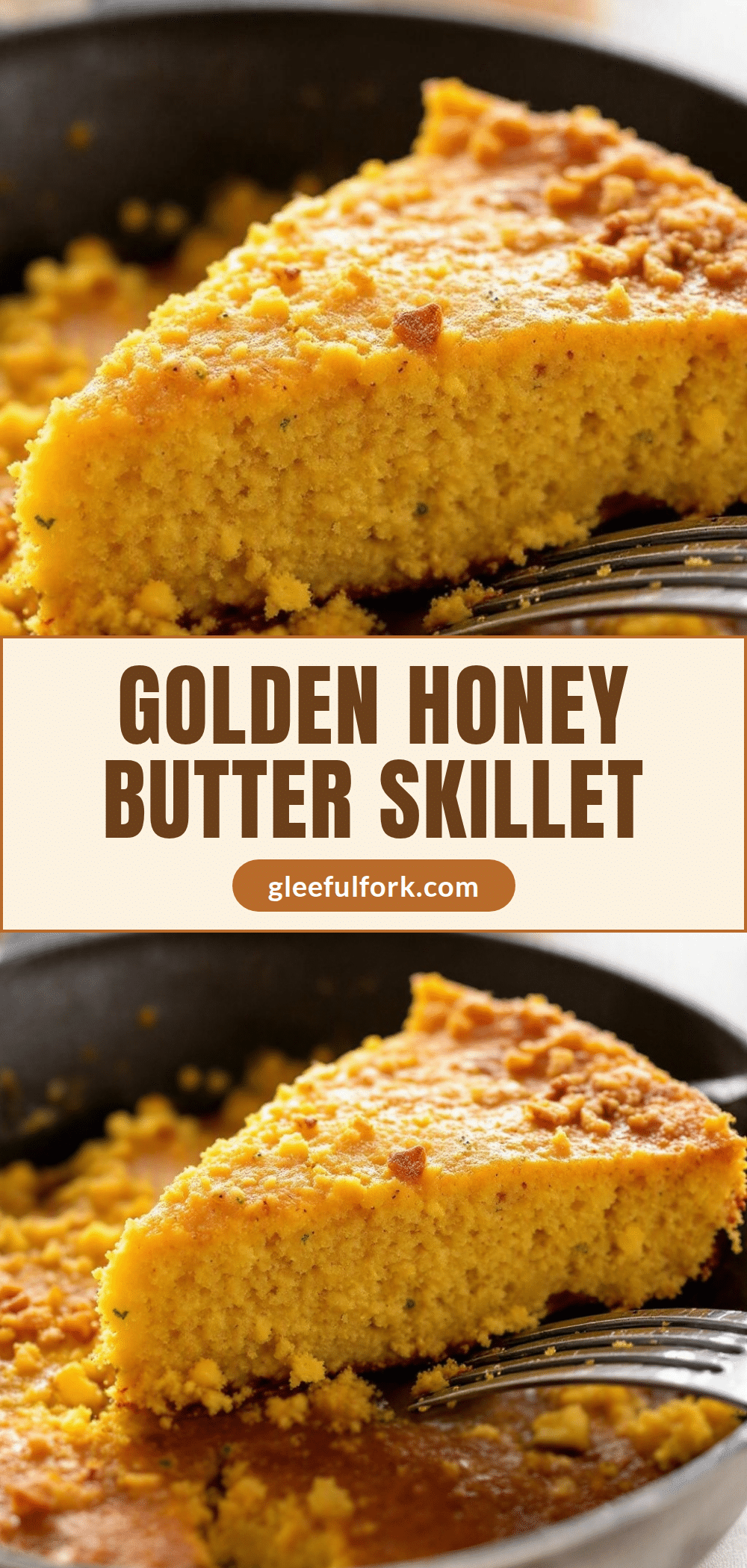
Best Honey Butter Skillet Cornbread for Fall Dinners
This honey butter skillet cornbread hits that sweet spot between rustic and refined without making you work for it. The contrast between the crisp, golden crust and the tender, moist interior is exactly what good cornbread should be, with honey adding a floral sweetness that does not overpower the corn flavor.
- Prep Time: 15 minutes
- Cook Time: 25 minutes
- Total Time: 40 minutes
- Yield: 8 servings 1x
- Category: Side Dish
- Cuisine: American
Ingredients
- 1 cup (160g) yellow cornmeal
- 1 cup (125g) all-purpose flour
- 1/4 cup (50g) granulated sugar
- 2 teaspoons baking powder
- 1/2 teaspoon baking soda
- 1 teaspoon salt
- 1 1/4 cups (300ml) buttermilk
- 2 large eggs
- 1/2 cup (113g) unsalted butter (for skillet)
- 1/4 cup (85g) honey (for batter)
- 2 tablespoons (28g) unsalted butter (for honey butter glaze)
- 2 tablespoons (42g) honey (for honey butter glaze)
- Flaky sea salt (optional, for garnish)
Instructions
- Preheat your oven to 400°F (200°C). Place your 10-inch cast iron skillet inside the oven while it preheats.
- Melt 1/2 cup (113g) of unsalted butter in a small saucepan or microwave-safe bowl. Set aside but keep warm.
- In a large mixing bowl, whisk together 1 cup (160g) yellow cornmeal, 1 cup (125g) all-purpose flour, 1/4 cup (50g) granulated sugar, 2 teaspoons baking powder, 1/2 teaspoon baking soda, and 1 teaspoon salt.
- In a separate medium bowl, whisk together 1 1/4 cups (300ml) buttermilk, 2 large eggs, and 1/4 cup (85g) honey until smooth and pale yellow.
- Carefully remove the hot skillet from the oven using oven mitts. Pour the melted butter into the skillet and swirl to coat the bottom and sides completely.
- Pour the wet ingredients into the dry ingredients and fold together gently with a rubber spatula until just combined. Do not overmix.
- Pour the batter into the hot skillet. It will sizzle. Do not stir.
- Bake for 20-25 minutes, until the top is golden brown and a toothpick inserted into the center comes out clean or with a few moist crumbs.
- While the cornbread bakes, make the honey butter glaze: In a small saucepan over low heat, combine 2 tablespoons (28g) unsalted butter and 2 tablespoons (42g) honey. Stir until smooth and keep warm.
- As soon as the cornbread comes out of the oven, brush the top with half the honey butter glaze. Let it soak in for 2-3 minutes.
- Run a knife around the edge of the skillet to loosen the cornbread, then carefully invert onto a cooling rack.
- Brush the bottom and sides with the remaining honey butter glaze. Sprinkle with flaky sea salt if using.
- Let cool for at least 10 minutes before slicing with a serrated knife.
Notes
Do not skip preheating the skillet. Let buttermilk come to room temperature. Do not overmix the batter. Brush glaze while cornbread is still hot. Use a serrated knife for slicing. For variations: add jalapeño and cheddar, use gluten-free flour blend, add herbs and black pepper, make dairy-free with almond milk and vegan butter, or add mashed sweet potato.
Nutrition
- Serving Size: 1 slice (1/8 of reci
- Calories: 310
- Sugar: 16
- Sodium: 420
- Fat: 14
- Saturated Fat: 8
- Carbohydrates: 42
- Fiber: 2
- Protein: 6
Keywords: honey butter cornbread, skillet cornbread, fall cornbread, homemade cornbread, cast iron cornbread, honey cornbread, buttermilk cornbread