Love this? Save it for later!
Share the inspiration with your friends
I ruined salmon four different ways before this sheet pan dinner ever saw the inside of my oven. Overcooked it until it flaked into sad little pebbles. Underseasoned it so badly my husband asked if I’d forgotten to add anything. Tried a sticky glaze that burned onto the pan so hard I had to soak it overnight. And once—this still makes me cringe—I used a dark baking sheet that turned the whole thing into a smoky mess that set off the fire alarm at 6:30 PM on a Tuesday. The neighbors probably thought I was running a crematorium out of my kitchen.
But here’s the thing about failure in cooking. It teaches you exactly what not to do. And after enough burnt, bland, and rubbery salmon fillets, I finally figured out what actually works. This Easy Sheet Pan Maple Dijon Salmon with Asparagus is the result of all those mistakes. It’s the dinner I wish I’d known how to make years ago.
The trick isn’t fancy technique or expensive ingredients. It’s timing. It’s knowing that the asparagus needs a head start in the oven before the salmon goes in, because nobody wants floppy, sad vegetables alongside their perfectly cooked fish. It’s understanding that the maple-Dijon glaze needs to be brushed on halfway through cooking, not dumped on at the beginning where it’ll just slide off into the pan. Little things. But they make all the difference.
Now this sheet pan meal is my go-to when I need something that looks impressive but takes almost no effort. The kind of dinner that makes you look like you have your life together, even when you absolutely do not.
Why You’ll Love This Recipe
Let me tell you why this particular sheet pan dinner has earned a permanent spot in my weekly rotation. It’s not because it’s fancy—though it does look pretty on the plate. It’s because it solves the real problem of getting a healthy, delicious dinner on the table when you’re tired and hungry and the last thing you want to do is wash a mountain of dishes.
- 30 Minutes Start to Finish: From the moment you pull the salmon out of the fridge to the moment you’re sitting down with a fork in your hand, you’re looking at about half an hour. That’s faster than takeout delivery in most neighborhoods.
- One Pan, Minimal Cleanup: Everything cooks on a single sheet pan. Line it with parchment paper and you barely have to scrub anything. This is the kind of meal that makes you actually want to cook on a weeknight.
- Simple Pantry Ingredients: Maple syrup, Dijon mustard, salmon, asparagus, olive oil, salt, pepper. That’s it. No trips to specialty grocery stores, no hunting down obscure ingredients you’ll use once and forget about.
- Healthy Without Trying Hard: Salmon is packed with omega-3 fatty acids and protein. Asparagus is full of fiber and vitamins. The maple-Dijon glaze adds flavor without drowning everything in sugar or fat. It’s the kind of meal that makes you feel good after eating it, not heavy and sluggish.
- Impressive Enough for Company: The glossy, caramelized glaze on the salmon looks like something from a restaurant kitchen. Serve this with a simple side of rice or crusty bread and your guests will think you spent way more effort than you actually did.
This isn’t just another salmon recipe. The balance of sweet maple and tangy Dijon creates a glaze that caramelizes beautifully without burning, and the asparagus roasts until it’s tender-crisp with slightly charred edges. It’s the kind of meal that makes you close your eyes after the first bite, not because it’s complicated, but because it’s just so satisfyingly right.
What Ingredients You Will Need
This recipe uses simple, wholesome ingredients that work together to create something genuinely delicious. Here’s what you’ll need and why each one matters.
For the Salmon and Glaze
- 4 salmon fillets (6 ounces each) – Look for fillets that are roughly the same thickness so they cook evenly. I prefer wild-caught when it’s available, but good-quality farmed salmon works perfectly too. If the fillets have skin on, that’s fine—you can cook it skin-side down and it’ll get nice and crispy, or you can ask your fishmonger to remove it.
- 3 tablespoons pure maple syrup – Please use the real stuff, not pancake syrup. The flavor is deeper and more complex, and it caramelizes better in the oven. Grade A dark amber is my go-to for this recipe.
- 2 tablespoons Dijon mustard – I recommend Grey Poupon or Maille for that sharp, tangy kick that balances the sweetness of the maple. Whole grain Dijon works too if you want little pops of mustard seed texture.
- 1 tablespoon olive oil – Helps the glaze spread evenly and keeps the salmon moist during cooking.
- 2 cloves garlic, minced – Fresh garlic is non-negotiable here. The jarred stuff just doesn’t have the same punch.
- ½ teaspoon salt – I use fine sea salt for even distribution.
- ¼ teaspoon black pepper – Freshly ground, if you have it.
For the Asparagus
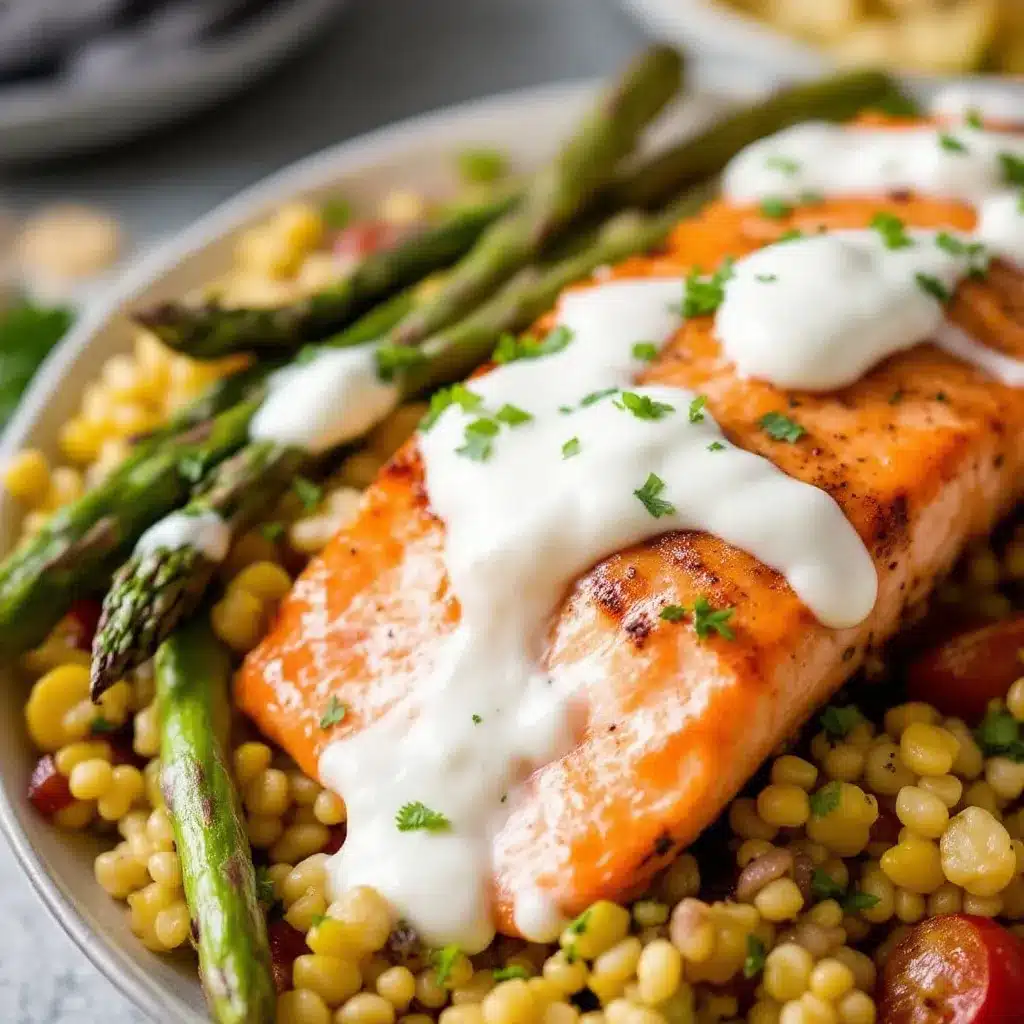
- 1 pound asparagus – Look for spears that are bright green with tight tips. Thicker spears hold up better to roasting and are less likely to get mushy. Snap off the woody ends—they’ll naturally break where the tender part begins.
- 1 tablespoon olive oil – Just enough to coat the asparagus so it roasts instead of steaming.
- ¼ teaspoon salt – Brings out the natural sweetness of the asparagus.
- Pinch of black pepper – A little goes a long way here.
- Optional: lemon wedges for serving – A squeeze of fresh lemon right before serving brightens everything up beautifully.
That’s genuinely all you need. No complicated marinades, no long lists of spices you’ll never use again. These are the kinds of ingredients that most of us already have hanging around the kitchen, which is exactly the point.
Equipment Needed
You don’t need a fancy kitchen to pull this off. Here’s what you’ll actually use:
- Sheet pan – A standard half-sheet pan (about 18×13 inches) is perfect. If you only have a smaller pan, use two or cook in batches. Crowding the pan leads to steaming instead of roasting, and nobody wants that.
- Parchment paper or aluminum foil – Lining the pan makes cleanup almost nonexistent. Parchment is my preference because nothing sticks to it.
- Small bowl – For whisking together the maple-Dijon glaze.
- Whisk or fork – For mixing the glaze until it’s smooth and uniform.
- Pastry brush or spoon – For brushing the glaze onto the salmon. A silicone brush works great and is easy to clean.
- Chef’s knife and cutting board – For trimming the asparagus and mincing the garlic.
- Instant-read thermometer – Not strictly necessary, but if you’re nervous about overcooking salmon, this takes the guesswork out. You’re looking for 125-130°F at the thickest part for perfectly cooked salmon.
I’ve made this recipe with a beat-up old sheet pan I got at a thrift store for three dollars. It still turned out great. Don’t let lack of fancy equipment stop you.
Preparation Method
Alright, let’s get cooking. Follow these steps and you’ll have dinner on the table in about 30 minutes flat.
- Preheat your oven to 400°F (200°C). Position the rack in the middle of the oven. While it’s heating up, line your sheet pan with parchment paper or foil for easy cleanup.
- Prep the asparagus. Rinse the asparagus under cold water and pat dry. Snap off the woody ends by holding a spear near the bottom and bending until it breaks naturally—this is way more accurate than trying to cut them at the right spot. Toss the asparagus with 1 tablespoon olive oil, ¼ teaspoon salt, and a pinch of pepper right on the sheet pan. Spread them out in a single layer on one side of the pan.
- Give the asparagus a head start. Roast the asparagus alone for 5 minutes. This is the step I learned the hard way. If you put the salmon in at the same time as the raw asparagus, you’ll end up with either overcooked fish or undercooked vegetables. That 5-minute head start makes all the difference.
- Make the maple-Dijon glaze. While the asparagus is getting its head start, whisk together the maple syrup, Dijon mustard, 1 tablespoon olive oil, minced garlic, ½ teaspoon salt, and ¼ teaspoon pepper in a small bowl. Taste it. It should be sweet, tangy, and a little punchy from the garlic. If it tastes flat, add another pinch of salt.
- Prep the salmon. Pat the salmon fillets dry with paper towels. This is important—dry salmon gets a better sear and the glaze will stick to it instead of sliding off. Place the fillets on the other side of the sheet pan, leaving a little space between each one so they cook evenly.
- Brush on the glaze. Using your pastry brush or a spoon, coat the top and sides of each salmon fillet with about half the glaze. Don’t drown them—you want a nice even layer. Reserve the remaining glaze for later.
- Roast for 8 minutes. Pop the whole pan back in the oven. Set a timer. This is not the time to get distracted by your phone or start chopping things for tomorrow’s lunch. Eight minutes, that’s all.
- Brush on the remaining glaze. After 8 minutes, pull the pan out and brush the remaining glaze over the salmon. This second coat is what gives you that gorgeous, glossy, caramelized finish. It also keeps the salmon from drying out during the final stretch of cooking.
- Roast for another 4-6 minutes. Return the pan to the oven and cook until the salmon is flaky and opaque in the center. The exact time depends on the thickness of your fillets. For 1-inch thick fillets, 4 minutes is usually perfect. For thicker pieces, go 6 minutes. The asparagus should be tender-crisp with slightly browned edges.
- Let it rest for 2 minutes. This is crucial. Pull the pan out of the oven and let everything rest on the pan for a couple of minutes. The salmon will finish cooking from residual heat, and the glaze will set up into a beautiful sticky coating instead of sliding off onto the plate.
- Serve immediately. Transfer the salmon and asparagus to plates. Squeeze fresh lemon over everything if you’re using it. The brightness of the lemon cuts through the richness of the glaze and makes everything taste even better.
That’s it. Eleven steps, most of which are just waiting for the oven to do its thing. This is the kind of dinner that makes you feel like you’ve got your act together, even on the chaos of a Tuesday night.
Cooking Tips & Techniques
I’ve made this recipe more times than I can count, and I’ve learned a few things along the way that’ll help you nail it on your first try.
Don’t skip patting the salmon dry. I know it seems like a small thing, but moisture is the enemy of a good glaze. If your salmon is wet, the glaze will slide right off and pool in the pan instead of coating the fish. Pat those fillets dry with paper towels and you’ll get a much better result.
Watch your oven temperature. Not all ovens run at the same temperature. If yours runs hot, check the salmon at the 10-minute mark instead of 12. If it runs cool, you might need an extra minute or two. An instant-read thermometer takes the guesswork out—you’re looking for 125-130°F at the thickest part.
Don’t crowd the pan. If you’re cooking for a crowd and need to double the recipe, use two sheet pans instead of trying to cram everything onto one. When the pan is overcrowded, the vegetables steam instead of roasting, and the salmon doesn’t get that beautiful caramelized exterior.
Line your pan. I cannot stress this enough. That maple-Dijon glaze is delicious, but it’s sticky. If it bakes onto an unlined pan, you’ll be scrubbing for 20 minutes. Parchment paper or foil makes cleanup a breeze.
Let the salmon rest. I know you’re hungry. I know it smells amazing. But give it those 2 minutes on the pan before you serve it. The carryover cooking finishes the salmon perfectly, and the glaze sets up into something truly special instead of running all over your plate.
I once forgot to line my pan and spent what felt like an eternity scrubbing caramelized maple syrup off a baking sheet. Learn from my mistakes. Line the pan.
Variations & Adaptations
This recipe is wonderfully flexible. Here are some ways to switch it up depending on what you have on hand or what you’re in the mood for.
Swap the vegetables. Asparagus is my favorite here because it roasts in the same amount of time as the salmon, but you can use broccoli florets, green beans, or even thick slices of zucchini. Just adjust the head-start time—broccoli needs about 5 minutes, green beans need 3, and zucchini doesn’t need any head start at all.
Try a different protein. This maple-Dijon glaze works beautifully on chicken thighs or pork chops too. For chicken, you’ll need to increase the cooking time—bone-in thighs take about 25-30 minutes total, and you’ll want to brush the glaze on during the last 10 minutes so it doesn’t burn.
Make it spicy. Add a pinch of red pepper flakes or a squeeze of sriracha to the glaze for a sweet-heat combination that’s absolutely addictive. Start with a little and taste as you go—you can always add more heat, but you can’t take it away.
Go dairy-free and gluten-free. This recipe is naturally both, as long as your Dijon mustard doesn’t contain any hidden gluten. Most brands are gluten-free, but it’s worth checking the label if you’re cooking for someone with celiac disease.
Add some crunch. Sprinkle toasted sesame seeds or crushed almonds over the salmon right after you brush on the final coat of glaze. The nuts toast in the oven and add a lovely texture contrast to the tender fish.
I personally love the spicy variation. Something about that sweet maple-heat combination just hits different. Give it a try if you’re feeling adventurous.
Serving & Storage Suggestions
This salmon is best served hot, right off the sheet pan, with a squeeze of fresh lemon and maybe a side of rice or crusty bread to soak up any extra glaze. But here’s how to handle leftovers if you have them—which, honestly, is rare in my house.
Serving temperature. Serve the salmon warm, not piping hot. Letting it rest for those 2 minutes after it comes out of the oven brings it to the perfect eating temperature. The asparagus should still have a little snap to it.
What to serve alongside. This dish is pretty complete on its own, but I love it with a simple side of steamed rice or quinoa to catch all that delicious glaze. A fresh honey mustard coleslaw with apple cider vinegar dressing adds a cool, crunchy contrast that balances the richness of the salmon beautifully. Or try it with crispy loaded twice-baked potato casserole for a more indulgent meal.
Storage. Store leftover salmon and asparagus in an airtight container in the refrigerator for up to 3 days. The salmon will lose a bit of its flaky texture, but the flavor will still be great. Keep the glaze separate if you can—it helps prevent the salmon from getting soggy.
Reheating. The oven is your friend here. Reheat on a lined sheet pan at 300°F for about 8-10 minutes, just until warmed through. The microwave will work in a pinch, but it tends to dry out the salmon and make the asparagus limp. If you’re in a hurry, a hot skillet with a splash of water works too—just cover it and let it steam for a couple of minutes.
Freezing. I don’t recommend freezing cooked salmon—the texture suffers too much. But you can freeze the glaze on its own for up to 3 months. Just thaw it in the refrigerator overnight and give it a good whisk before using.
The flavors actually meld together nicely overnight, so leftovers make a fantastic lunch the next day. I’ve been known to flake the cold salmon over a bed of greens with some of that leftover asparagus for a next-day salad that’s way better than anything I’d buy at a café.
Nutritional Information & Benefits
This isn’t just a delicious dinner—it’s genuinely good for you. Here’s the breakdown per serving (one salmon fillet plus about a quarter of the asparagus):
| Nutrient | Amount Per Serving |
|---|---|
| Calories | 385 |
| Protein | 38g |
| Fat | 18g |
| Saturated Fat | 3g |
| Carbohydrates | 18g |
| Fiber | 3g |
| Sugar | 12g |
| Sodium | 520mg |
| Omega-3 Fatty Acids | 2.5g |
| Vitamin D | 15mcg |
| Vitamin C | 8mg |
Salmon is one of the best sources of omega-3 fatty acids, which support heart and brain health. Asparagus is packed with fiber, folate, and vitamins A, C, and K. The maple syrup adds natural sweetness with a lower glycemic impact than refined sugar, though it’s still sugar, so enjoy in moderation.
This meal is naturally gluten-free, dairy-free, and low-carb friendly. If you’re watching your sodium, you can reduce the salt in the glaze and still get great flavor from the Dijon and garlic.
I love that this dinner feels indulgent but is actually packed with nutrients. It’s the kind of meal that makes you feel good about what you’re putting into your body, without sacrificing any of the pleasure of eating.
Conclusion
This Easy Sheet Pan Maple Dijon Salmon with Asparagus is the dinner I turn to when I need something reliable, delicious, and almost effortless. It’s proof that you don’t need complicated techniques or a dozen ingredients to make something genuinely memorable. Just good salmon, a simple glaze, and a little bit of timing know-how.
I’ve made this for quiet weeknight dinners when I’m eating alone at the counter, and I’ve made it for dinner parties where guests asked for the recipe before they finished their first bite. It works for both. That’s the beauty of a recipe that’s built on solid principles—simple ingredients, proper technique, and respect for the food itself.
Give it a try and make it your own. Add extra garlic if you’re a garlic lover like me. Squeeze on extra lemon. Throw in some red pepper flakes if you want heat. The recipe is a starting point, not a rulebook. And if you come up with a variation you love, I’d genuinely love to hear about it in the comments. That’s how recipes evolve—through people like you making them and making them better.
Happy cooking, friends. Go make something delicious.
Frequently Asked Questions
Can I use frozen salmon for this recipe?
Yes, but you’ll need to thaw it completely first. Pat it very dry before glazing—frozen salmon tends to hold more moisture, and excess water will prevent the glaze from sticking. Plan ahead and thaw it in the refrigerator overnight for best results.
What if I don’t have maple syrup?
Honey is the best substitute here. It has a similar sweetness and caramelizes beautifully in the oven. You’ll get a slightly different flavor profile—more floral, less woodsy—but it’s still delicious. Brown sugar dissolved in a tablespoon of warm water works in a pinch too.
How do I know when the salmon is done?
The most reliable method is an instant-read thermometer—125-130°F at the thickest part for perfectly cooked salmon. If you don’t have a thermometer, look for the fish to become opaque and flake easily when gently pressed with a fork. The center should still be slightly translucent when you pull it out; it’ll finish cooking during the rest.
Can I prep this ahead of time?
You can trim the asparagus and make the glaze up to 2 days in advance. Store the glaze in an airtight container in the refrigerator. When you’re ready to cook, just toss the asparagus with oil, arrange everything on the pan, and proceed with the recipe. I wouldn’t recommend glazing the salmon ahead of time, though—the acid in the mustard can start to “cook” the fish if it sits too long.
What’s the best way to reheat leftovers without drying out the salmon?
The oven is your best bet. Reheat on a lined sheet pan at 300°F for 8-10 minutes. If you’re in a hurry, use a skillet over medium-low heat with a splash of water or broth, cover it, and let it steam for 2-3 minutes. The microwave works but will definitely dry out the salmon and make the asparagus limp—use it only if you’re truly desperate.
Pin This Recipe!
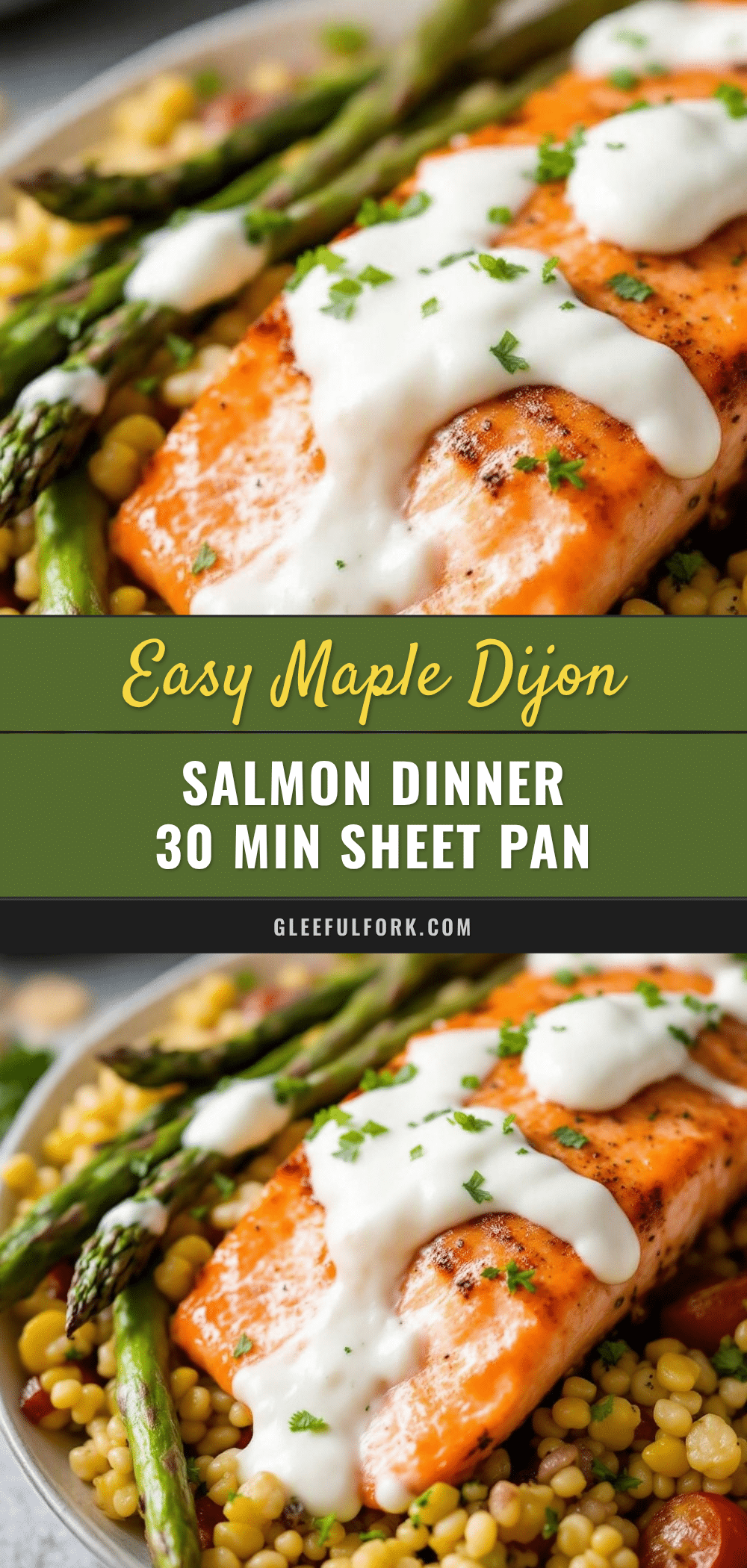
Easy Sheet Pan Maple Dijon Salmon (Best 30-Minute Dinner)

This Easy Sheet Pan Maple Dijon Salmon with Asparagus is a quick, healthy, and delicious 30-minute dinner. The sweet and tangy maple-Dijon glaze caramelizes beautifully on the salmon, while the asparagus roasts to tender-crisp perfection, all on a single pan for minimal cleanup.
- Prep Time: 10 minutes
- Cook Time: 20 minutes
- Total Time: 30 minutes
- Yield: 4 servings 1x
- Category: Main Course
- Cuisine: American
Ingredients
- 4 salmon fillets (6 ounces each)
- 3 tablespoons pure maple syrup
- 2 tablespoons Dijon mustard
- 1 tablespoon olive oil
- 2 cloves garlic, minced
- ½ teaspoon salt
- ¼ teaspoon black pepper
- 1 pound asparagus
- 1 tablespoon olive oil
- ¼ teaspoon salt
- Pinch of black pepper
- Optional: lemon wedges for serving
Instructions
- Preheat your oven to 400°F (200°C). Position the rack in the middle of the oven. Line your sheet pan with parchment paper or foil for easy cleanup.
- Prep the asparagus. Rinse the asparagus under cold water and pat dry. Snap off the woody ends by holding a spear near the bottom and bending until it breaks naturally. Toss the asparagus with 1 tablespoon olive oil, ¼ teaspoon salt, and a pinch of pepper right on the sheet pan. Spread them out in a single layer on one side of the pan.
- Give the asparagus a head start. Roast the asparagus alone for 5 minutes.
- Make the maple-Dijon glaze. While the asparagus is roasting, whisk together the maple syrup, Dijon mustard, 1 tablespoon olive oil, minced garlic, ½ teaspoon salt, and ¼ teaspoon pepper in a small bowl. Taste it and adjust seasoning if needed.
- Prep the salmon. Pat the salmon fillets dry with paper towels. Place the fillets on the other side of the sheet pan, leaving a little space between each one.
- Brush on the glaze. Using a pastry brush or spoon, coat the top and sides of each salmon fillet with about half the glaze. Reserve the remaining glaze for later.
- Roast for 8 minutes. Pop the whole pan back in the oven and set a timer.
- Brush on the remaining glaze. After 8 minutes, pull the pan out and brush the remaining glaze over the salmon.
- Roast for another 4-6 minutes. Return the pan to the oven and cook until the salmon is flaky and opaque in the center. For 1-inch thick fillets, 4 minutes is usually perfect. For thicker pieces, go 6 minutes. The asparagus should be tender-crisp with slightly browned edges.
- Let it rest for 2 minutes. Pull the pan out of the oven and let everything rest on the pan for a couple of minutes.
- Serve immediately. Transfer the salmon and asparagus to plates. Squeeze fresh lemon over everything if using.
Notes
Don’t skip patting the salmon dry—moisture prevents the glaze from sticking. Watch your oven temperature; if it runs hot, check the salmon at the 10-minute mark. Don’t crowd the pan; use two sheet pans if doubling the recipe. Line your pan with parchment paper or foil for easy cleanup. Let the salmon rest for 2 minutes after cooking to allow the glaze to set.
Nutrition
- Serving Size: 1 salmon fillet plus
- Calories: 385
- Sugar: 12
- Sodium: 520
- Fat: 18
- Saturated Fat: 3
- Carbohydrates: 18
- Fiber: 3
- Protein: 38
Keywords: sheet pan salmon, maple dijon salmon, 30 minute dinner, easy salmon recipe, healthy dinner, one pan meal, salmon with asparagus