Love this? Save it for later!
Share the inspiration with your friends
Introduction
“Last Thursday, I was halfway through a hectic workday when my phone buzzed with a message from my neighbor, Tom. He said, ‘You have to try this pasta I threw together—super quick and honestly, a game changer.’ I wasn’t expecting much because, you know, Tom’s usual cooking skills are… let’s say, experimental at best. But that evening, I found myself standing in his kitchen, watching him stir a single pot bubbling with vibrant green beans, cherry tomatoes, and bright ribbons of zucchini all mingling with tender pasta in a fragrant broth. It wasn’t fancy, but the way those fresh seasonal veggies soaked up the flavors blew me away.
It turns out, this easy one-pot pasta primavera was born from Tom’s late-night craving for something fresh and filling, without the fuss of washing a mountain of dishes. He joked about how it was basically a “kitchen lazy day” recipe, but honestly, it’s stuck with me ever since. Maybe you’ve been there—wanting all the flavor without the mess or hours of prep. That’s exactly why this recipe stayed on my mind, and why I keep making it on those busy nights when a comforting, veggie-packed pasta is just what the soul needs.”
Why You’ll Love This Recipe
Let me tell you, this one-pot pasta primavera is the kind of recipe that makes you feel like a kitchen pro without breaking a sweat. I’ve tested it countless times—on rushed weeknights, lazy Sundays, and even when friends popped over unexpectedly. It delivers every time, and here’s why you’ll want to keep it in your rotation:
- Quick & Easy: Ready in about 30 minutes, this recipe is perfect for busy evenings or last-minute plans.
- Simple Ingredients: Uses fresh, seasonal veggies and pantry staples—you probably have them all on hand right now.
- Perfect for Any Occasion: Whether it’s a casual dinner or a light lunch, this dish fits right in.
- Crowd-Pleaser: Even picky eaters love the fresh, bright flavors and tender pasta.
- Unbelievably Delicious: The veggies soak up the garlic-infused broth, creating a comforting, flavorful meal you’ll want seconds of.
This isn’t just another pasta primavera recipe, honestly. The secret lies in cooking everything together in one pot, which lets the pasta absorb all those fresh veggie flavors while keeping cleanup to a minimum. Plus, using fresh seasonal veggies means those natural flavors shine through—no heavy sauces needed. It’s a fresh take on comfort food that feels like a hug on a plate.
What Ingredients You Will Need
This recipe keeps things simple but vibrant, highlighting the best of what’s fresh at your local market or garden. You’ll find the ingredients are easy to source and mostly pantry staples, with the magic coming from the fresh seasonal veggies.
- Pasta: 12 oz (340 g) of your favorite short pasta—penne, fusilli, or farfalle work beautifully here.
- Seasonal Veggies: About 3 cups total, chopped or sliced—think cherry tomatoes halved, zucchini ribbons, thinly sliced bell peppers, snap peas, or asparagus tips. (In spring, I love using fresh peas and asparagus; in summer, tomatoes and zucchini shine.)
- Garlic: 3 cloves, minced (adds that essential savoriness).
- Onion: 1 small yellow or white onion, finely chopped.
- Olive Oil: 2 tablespoons, preferably extra virgin (I trust Colavita or California Olive Ranch for consistent quality).
- Vegetable Broth: 4 cups (1 liter) for cooking the pasta and infusing flavor. Use low-sodium if possible.
- Lemon Juice: 2 tablespoons freshly squeezed (brightens everything up).
- Parmesan Cheese: ½ cup grated, plus extra for topping (optional but highly recommended for that salty finish).
- Fresh Herbs: A handful of chopped basil or parsley for garnish.
- Salt and Pepper: To taste, but start light—you can always adjust after cooking.
If you want to switch it up, feel free to swap the vegetable broth for chicken broth or use gluten-free pasta if needed. I once tried this with chickpea pasta, and it held up surprisingly well!
Equipment Needed
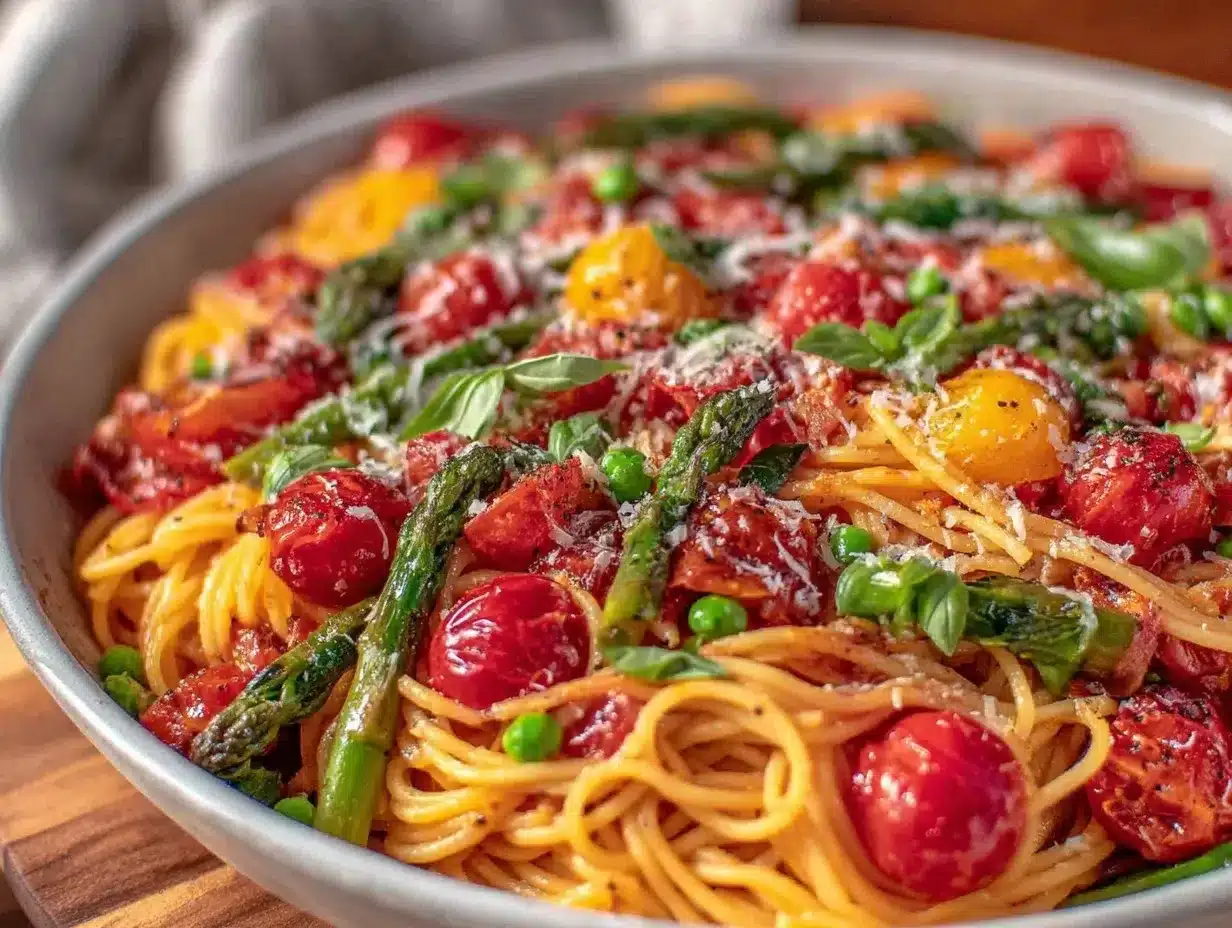
- Large Deep Skillet or Wide Pot: At least 12 inches in diameter and 3-4 quarts (3-4 liters) capacity to hold all ingredients comfortably. I prefer a heavy-bottomed non-stick pan to prevent sticking and easy cleanup.
- Sharp Chef’s Knife: For chopping the veggies precisely and safely.
- Cutting Board: A sturdy one to handle all your slicing and dicing.
- Wooden Spoon or Silicone Spatula: For stirring without scratching your cookware.
- Measuring Cups and Spoons: To get your broth, lemon juice, and cheese just right.
If you don’t have a wide skillet, a large saucepan works, but make sure it’s wide enough so the pasta can cook evenly. I once tried this in a narrow pot, and some noodles ended up sticking together, so a wider pan is a game changer here. For budget-friendly options, check local kitchen stores or online for non-stick skillet bundles—they’re a kitchen staple beyond this recipe!
Preparation Method
- Prep Your Veggies (10 minutes): Wash and chop about 3 cups of your seasonal vegetables. Slice zucchini into thin ribbons with a vegetable peeler, halve cherry tomatoes, and thinly slice onions and bell peppers. Set aside.
- Sauté Aromatics (5 minutes): Heat 2 tablespoons olive oil in your large skillet over medium heat. Add the chopped onion and minced garlic, stirring frequently until translucent and fragrant—about 3-4 minutes. Watch that garlic so it doesn’t burn (trust me, it happens!).
- Add Pasta and Broth (1 minute): Pour in the dry pasta and 4 cups (1 liter) of vegetable broth. Give everything a good stir to combine and make sure the pasta is submerged.
- Cook the Pasta (10-12 minutes): Bring the mixture to a boil, then reduce heat to a gentle simmer. Cook uncovered, stirring occasionally to prevent sticking. This is the crucial step where your pasta soaks up all the broth and flavor. If it looks dry before the pasta is tender, add a splash more broth or water.
- Add the Veggies (5 minutes): When the pasta is almost al dente (about 2-3 minutes before it’s done), stir in your fresh veggies. They’ll cook just enough to stay crisp-tender and vibrant.
- Finish with Lemon and Cheese (2 minutes): Turn off the heat. Stir in 2 tablespoons fresh lemon juice and ½ cup grated Parmesan cheese. Mix well until creamy and combined. Season with salt and pepper to taste. The lemon brightens the dish while the cheese adds a smooth, salty richness.
- Garnish and Serve: Sprinkle with chopped fresh basil or parsley before serving. Serve immediately while it’s warm and comforting.
Pro tip: If you’re worried about the pasta sticking, stir more often and keep an eye on the liquid level. I once got distracted by a barking dog and nearly ended up with pasta glue, so a watchful eye helps!
Cooking Tips & Techniques
Cooking pasta and veggies together might sound tricky, but with a few pointers, you’ll nail it every time.
- Choose the Right Pasta: Short shapes like penne or fusilli cook evenly and mix well with veggies. Long noodles like spaghetti can work but take more attention.
- Don’t Overcrowd the Pot: Too many veggies can slow cooking. Stick to about 3 cups to keep the balance.
- Stir Frequently: This prevents pasta from sticking and ensures even cooking. I tend to stir every couple of minutes especially as the broth reduces.
- Watch the Liquid: The pasta needs enough broth to cook but not so much that it turns soupy. Add small amounts if needed, but start with 4 cups as a good baseline for 12 oz pasta.
- Use Fresh Lemon Juice: Bottled lemon juice won’t give the same brightness. Fresh is non-negotiable here for that pop of flavor.
- Cheese Last: Add Parmesan off the heat to prevent it from clumping or becoming grainy.
One time, I accidentally added the veggies too early and they turned mushy. Lesson learned: timing is key to keep that perfect crisp-tender texture.
Variations & Adaptations
This one-pot pasta primavera is flexible, so you can make it your own easily:
- Seasonal Swaps: In fall, try roasted butternut squash or Brussels sprouts instead of summer veggies.
- Protein Boost: Add cooked chicken, shrimp, or cannellini beans for a heartier meal.
- Dairy-Free: Skip the Parmesan or swap for nutritional yeast for a cheesy flavor without dairy.
- Gluten-Free: Use gluten-free pasta varieties like brown rice or quinoa-based noodles.
- Spicy Kick: Toss in red pepper flakes when sautéing the garlic and onions for some heat.
Personally, I love adding a handful of fresh peas and a squeeze of orange juice once in a while for a springtime twist. It’s surprisingly refreshing!
Serving & Storage Suggestions
Serve this easy pasta primavera hot for the best taste and texture. It pairs wonderfully with a crisp green salad or crusty garlic bread for a complete meal. If you want to keep things light, a glass of chilled white wine or sparkling water with lemon is a great match.
For leftovers, store in an airtight container in the refrigerator for up to 3 days. Reheat gently on the stove with a splash of broth or water to loosen the sauce. Microwave works too but stir halfway through to avoid dry spots.
Flavors actually deepen the next day, so don’t be surprised if you find it even better after resting overnight. Just add a sprinkle of fresh herbs before serving again to brighten things up.
Nutritional Information & Benefits
Each serving of this one-pot pasta primavera offers roughly 350-400 calories, depending on portion size and cheese amount. It’s a balanced meal with complex carbs from pasta, fiber and vitamins from fresh vegetables, and healthy fats from olive oil.
The seasonal veggies provide antioxidants and essential nutrients like vitamin C, potassium, and folate, supporting overall health. Using olive oil adds heart-healthy monounsaturated fats, while the Parmesan contributes calcium and protein.
This recipe can easily fit into vegetarian, gluten-free, or dairy-free diets with simple swaps, making it a versatile choice for many eating preferences.
Conclusion
This easy one-pot pasta primavera with fresh seasonal veggies is proof that cooking doesn’t have to be complicated to be delicious. It’s a recipe that’s approachable, satisfying, and full of fresh flavor that feels like a little celebration of the season on your plate. Honestly, it’s become my go-to on busy nights when I want comfort food without the fuss or mess.
Feel free to tweak the veggies and seasonings to match what you love or what’s in your fridge. Let me know how you make it your own—I love hearing your twists and stories in the comments below! Give it a try tonight, and I bet you’ll find yourself coming back to this simple, fresh pasta dish again and again.
FAQs
Can I use dried herbs instead of fresh in this recipe?
You can, but fresh herbs add a brighter, more vibrant flavor. If using dried, add them earlier in the cooking process so they have time to release their aroma.
What if I don’t have vegetable broth?
Water works in a pinch, but the broth adds essential flavor. You can also use chicken broth if you’re not vegetarian.
Can I make this recipe vegan?
Absolutely! Skip the Parmesan or replace it with a vegan cheese or nutritional yeast for that cheesy note.
How do I keep the veggies from getting mushy?
Add them towards the end of the pasta’s cooking time and cook just until tender but still crisp.
Is this recipe freezer-friendly?
It’s best fresh or refrigerated. Freezing can affect the texture of the pasta and veggies, so I recommend eating leftovers within a few days.
Pin This Recipe!
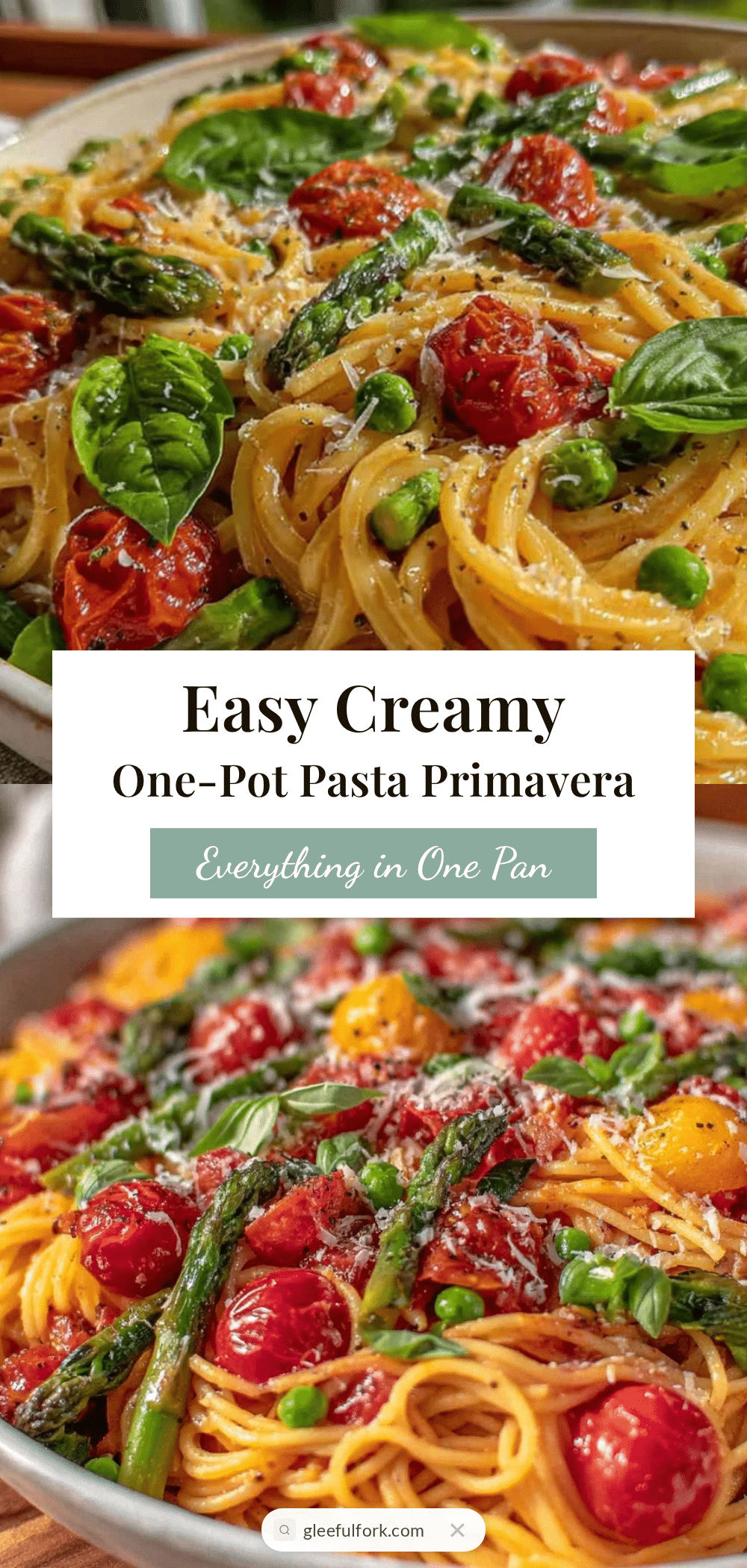
Easy One-Pot Pasta Primavera Recipe with Fresh Seasonal Veggies
A quick and easy one-pot pasta primavera featuring fresh seasonal vegetables cooked together in a garlic-infused broth for a flavorful, comforting meal with minimal cleanup.
- Prep Time: 10 minutes
- Cook Time: 20 minutes
- Total Time: 30 minutes
- Yield: 4 servings 1x
- Category: Main Course
- Cuisine: Italian
Ingredients
- 12 oz (340 g) short pasta (penne, fusilli, or farfalle)
- About 3 cups fresh seasonal veggies (cherry tomatoes halved, zucchini ribbons, thinly sliced bell peppers, snap peas, or asparagus tips)
- 3 cloves garlic, minced
- 1 small yellow or white onion, finely chopped
- 2 tablespoons extra virgin olive oil
- 4 cups (1 liter) vegetable broth (low-sodium preferred)
- 2 tablespoons freshly squeezed lemon juice
- ½ cup grated Parmesan cheese, plus extra for topping (optional)
- A handful of chopped fresh basil or parsley for garnish
- Salt and pepper to taste
Instructions
- Wash and chop about 3 cups of your seasonal vegetables. Slice zucchini into thin ribbons with a vegetable peeler, halve cherry tomatoes, and thinly slice onions and bell peppers. Set aside.
- Heat 2 tablespoons olive oil in a large deep skillet or wide pot over medium heat. Add the chopped onion and minced garlic, stirring frequently until translucent and fragrant, about 3-4 minutes. Avoid burning the garlic.
- Add the dry pasta and 4 cups (1 liter) of vegetable broth to the pot. Stir to combine and ensure the pasta is submerged.
- Bring the mixture to a boil, then reduce heat to a gentle simmer. Cook uncovered, stirring occasionally to prevent sticking, for 10-12 minutes until pasta is almost al dente. Add more broth or water if it looks dry before pasta is tender.
- Stir in the fresh veggies about 2-3 minutes before the pasta is done. Cook for 5 minutes until veggies are crisp-tender and vibrant.
- Turn off the heat. Stir in 2 tablespoons fresh lemon juice and ½ cup grated Parmesan cheese until creamy and combined. Season with salt and pepper to taste.
- Garnish with chopped fresh basil or parsley and serve immediately while warm.
Notes
Use fresh lemon juice for brightness; add Parmesan cheese off the heat to avoid clumping. Stir frequently to prevent pasta from sticking. Adjust broth quantity if pasta looks dry. For gluten-free option, use gluten-free pasta. For dairy-free, omit Parmesan or use nutritional yeast.
Nutrition
- Serving Size: 1 serving (approxima
- Calories: 375
- Sugar: 6
- Sodium: 400
- Fat: 12
- Saturated Fat: 2
- Carbohydrates: 52
- Fiber: 5
- Protein: 12
Keywords: one-pot pasta, pasta primavera, easy pasta recipe, seasonal vegetables, quick dinner, vegetarian pasta, healthy pasta dish