Love this? Save it for later!
Share the inspiration with your friends
“You know, I never thought rhubarb belonged in a lamb stew until that chilly Thursday afternoon in early spring,” I told my friend as we sat sipping tea in my cramped Brooklyn apartment. The city was still waking up, but the scent of something warm and tangy was already filling my kitchen. Honestly, it was a bit of a mess—I’d forgotten to soak the saffron earlier, and my cutting board was cluttered with stubborn stalks of rhubarb and pieces of lamb. But that tangy aroma? It was the kind you just can’t ignore.
That day, I was trying to recreate a dish I’d tasted once at a small Persian restaurant tucked between the subway and an old bookstore. The rhubarb’s tartness combined with tender lamb and a hint of cinnamon stayed with me for weeks, haunting my taste buds. The rice served alongside was no ordinary rice; it glowed golden with saffron threads, with a crisp bottom crust that made every bite a little celebration.
Maybe you’ve been there—hungry, curious, and slightly impatient to get dinner on the table. This Savory Persian Rhubarb and Lamb Khoresh Stew with Saffron Rice is that kind of recipe. It’s not just food; it’s a journey wrapped in fragrant spices and surprising textures. And honestly, it’s the kind of meal that sticks with you, making you want to cook it again and again, even if you make a mess or two along the way.
Why You’ll Love This Recipe
After testing this recipe multiple times (and yes, burning the rice once or twice), I can say it’s truly worth the effort. Here’s why this Savory Persian Rhubarb and Lamb Khoresh Stew with saffron rice deserves a spot in your dinner rotation:
- Quick & Easy: The stew simmers gently, but prep takes under 30 minutes, making it manageable for weeknights.
- Simple Ingredients: Most of what you need are pantry staples or easy finds at your local market, including fresh rhubarb if it’s in season.
- Perfect for Cozy Dinners: This dish brings warmth and comfort—ideal for chilly evenings or when you want something a little special.
- Crowd-Pleaser: The balance of savory lamb and tart rhubarb surprises and delights guests, even those skeptical about mixing fruit with meat.
- Unbelievably Delicious: The saffron rice adds a luxurious, fragrant touch that pairs perfectly with the stew’s rich flavors and melt-in-your-mouth texture.
What sets this recipe apart? It’s the unexpected use of rhubarb in a savory context, which brightens the stew without overpowering the lamb. Plus, slow-simmering the lamb with cinnamon and turmeric gives the dish layers of flavor that most lamb stews miss. I’ve tweaked the saffron rice technique to get that beautiful, golden crust—because honestly, that crunch is a game changer. This isn’t just any lamb stew; it’s a celebration of Persian flavors that feels both comforting and a little adventurous.
What Ingredients You Will Need
This recipe uses straightforward ingredients that come together for a complex flavor profile. Most are pantry staples, with fresh rhubarb adding a seasonal pop. Here’s what you’ll need:
- For the Khoresh (Stew):
- 1.5 lbs (700g) lamb shoulder, cut into 1-inch cubes (fatty cuts add richness)
- 3 cups fresh rhubarb, chopped into 1-inch pieces (adds tartness and balance)
- 1 large onion, thinly sliced (for sweetness and depth)
- 3 cloves garlic, minced (aroma builder)
- 2 tbsp tomato paste (adds umami and color)
- 1 tsp ground cinnamon (warm spice note)
- 1 tsp turmeric powder (earthy undertone)
- 1/2 tsp ground black pepper
- 1 tsp salt, adjust to taste
- 3 tbsp vegetable oil or sunflower oil (neutral flavor)
- 2 cups water or lamb broth (for simmering)
- For the Saffron Rice:
- 2 cups basmati rice, rinsed and soaked for 30 minutes (helps fluffiness)
- 1/4 tsp saffron threads, crushed and soaked in 2 tbsp hot water (luxury flavor and color)
- 3 tbsp unsalted butter or ghee (adds richness and helps crisp the rice)
- Salt to taste
- Optional: a pinch of sugar (to balance saffron’s earthiness)
Tip: I prefer buying basmati rice from Tilda for its consistent texture. For the saffron, a little goes a long way, so quality threads from a trusted source make all the difference. If you can’t find fresh rhubarb, frozen works in a pinch, though fresh gives that perfect tart snap.
Equipment Needed
- Heavy-bottomed Dutch oven or large deep skillet with lid (for slow simmering the stew)
- Medium saucepan with lid (for cooking the saffron rice)
- Fine mesh sieve or colander (to rinse the rice)
- Measuring cups and spoons (for precise ingredient amounts)
- Wooden spoon or silicone spatula (for stirring without scratching cookware)
- Small bowl (to soak and bloom the saffron)
If you don’t have a Dutch oven, a wide, heavy skillet with a tight-fitting lid works fine, but you’ll need to watch the liquid levels more closely. When it comes to saffron, soaking it in hot water really unlocks its flavor, so a small bowl or ramekin is handy. I’ve tried cooking the rice in an electric rice cooker, but the stove-top method gives better control for that prized golden crust, so I recommend sticking to a saucepan if you can.
Preparation Method
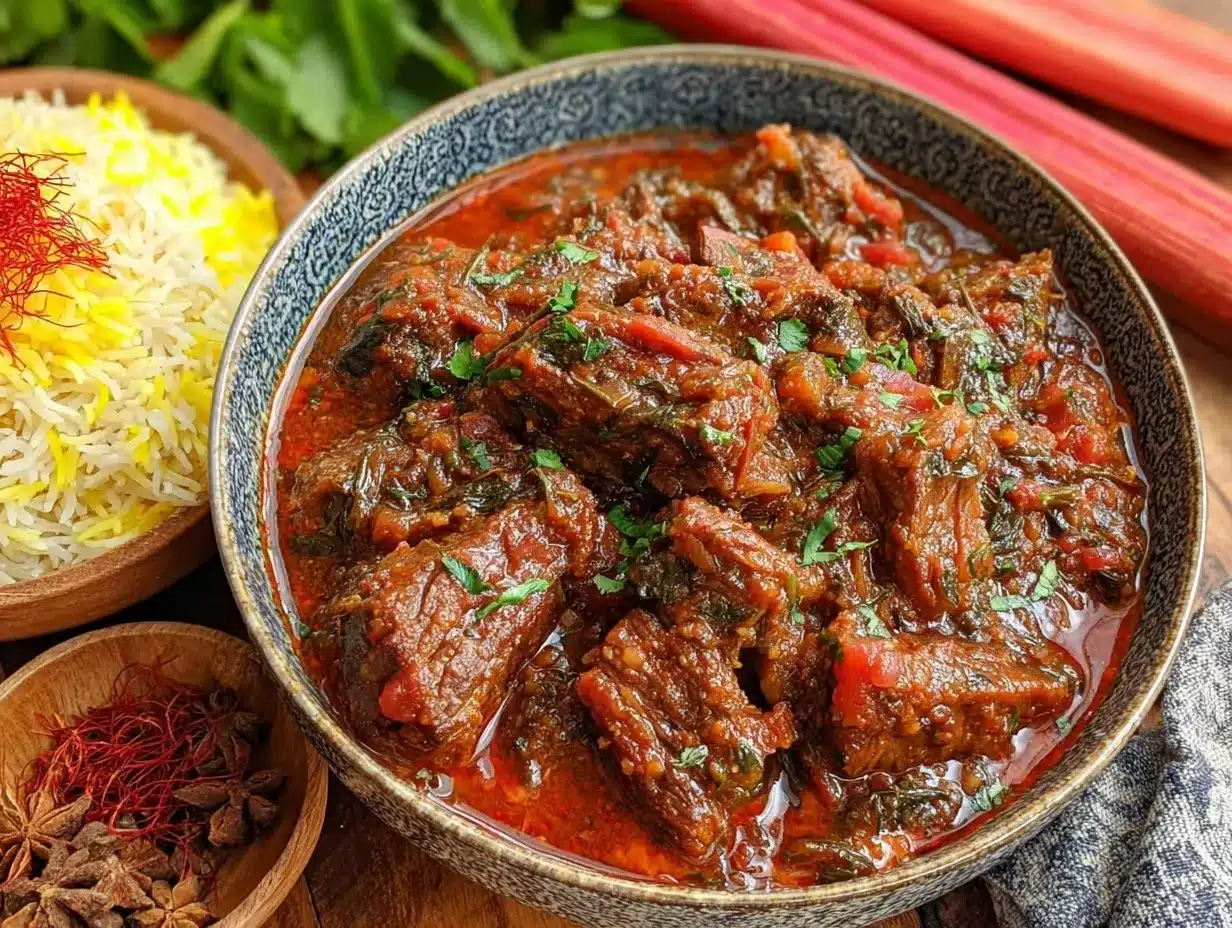
- Prep the ingredients: Rinse and soak the basmati rice in cold water for 30 minutes; drain before cooking. Chop the lamb into 1-inch cubes and pat dry. Slice the onion thinly and mince the garlic. Chop rhubarb into 1-inch pieces.
- Bloom the saffron: Place saffron threads in a small bowl and pour 2 tablespoons of hot (not boiling) water over them. Let sit for at least 15 minutes to release color and aroma.
- Brown the lamb: Heat 2 tablespoons of oil in the Dutch oven over medium-high heat. Add lamb cubes in batches (don’t crowd the pan) and brown on all sides, about 5 minutes per batch. Remove and set aside.
- Sauté onions and garlic: Lower heat to medium, add remaining oil, then add sliced onions. Cook, stirring occasionally, until soft and golden, about 8 minutes. Add minced garlic and cook 1 more minute until fragrant.
- Add spices and tomato paste: Stir in cinnamon, turmeric, black pepper, and salt. Add tomato paste and cook for 2 minutes, stirring to combine and deepen flavor.
- Return lamb and add liquid: Add browned lamb back to the pot with onions and spices. Pour in 2 cups water or broth. Bring to a gentle simmer, then cover and cook on low heat for 1 to 1.5 hours until lamb is tender.
- Add rhubarb: Stir in chopped rhubarb, cover, and simmer for an additional 20-30 minutes. The rhubarb should soften but keep a slight bite, and the stew will thicken and develop a tangy brightness.
- Cook the saffron rice: Bring 4 cups water to a boil in a saucepan with a pinch of salt. Add the drained rice and cook uncovered for 6 minutes until just tender but still firm in the center. Drain the rice in a fine mesh sieve.
- Make the tahdig (crispy rice crust): Melt butter or ghee in a clean saucepan over medium heat. Add half the rice, pressing down gently. Drizzle the saffron water over the butter. Layer remaining rice on top, cover tightly with lid wrapped in a clean kitchen towel (to catch steam), and cook on low for 30-40 minutes. Avoid lifting the lid during cooking.
- Serve: Carefully invert the rice onto a serving platter to reveal the golden crust. Ladle the hot khoresh stew alongside or over the rice. Garnish with fresh herbs if you like.
Note: If the stew seems too thick, add a splash of water. If the rhubarb dissolves completely, it’ll lose that wonderful tartness, so keep an eye on texture. The rice crust is delicate—patience is key here!
Cooking Tips & Techniques
- Browning the lamb properly is essential for flavor. Don’t rush this step—crowding the pan steams the meat instead of browning it.
- Low and slow simmering helps tenderize the lamb and blends spices beautifully. Resist the urge to turn up the heat.
- Handling rhubarb: Add it late in cooking to keep its texture intact and avoid bitterness.
- For the saffron rice: Soaking basmati rice ahead prevents clumping and results in fluffier grains.
- Tahdig perfection: Use a non-stick pan or well-seasoned saucepan, and wrap the lid with a towel to trap steam, ensuring a crisp crust without sogginess.
- Once, I forgot to soak the saffron and tossed it straight in boiling water; the color was pale, and flavor weak. Lesson learned—give saffron time!
- If multitasking, start the stew first since it needs hours to tenderize, then prepare the rice just before serving for best texture.
Variations & Adaptations
Looking to tweak this Persian stew? Here are a few ideas to fit your preferences or pantry:
- Vegetarian option: Swap lamb for hearty mushrooms or eggplant. Increase tomato paste and add a splash of pomegranate molasses for tang.
- Seasonal twist: In summer, replace rhubarb with tart green apples for a similar bright contrast.
- Spice level: Add a pinch of cayenne or use smoked paprika for a deeper smoky flavor.
- Gluten-free: This recipe is naturally gluten-free. Just check your tomato paste for additives.
- Quick version: Use lamb stew meat and pressure cook for 30 minutes to speed things up.
Personally, I once tried adding dried barberries to the stew—those little bursts of sourness complemented the rhubarb beautifully and made the dish pop at a potluck.
Serving & Storage Suggestions
This stew is best served warm, fresh off the stove, alongside the saffron rice with its crispy tahdig. Garnish with chopped fresh parsley or cilantro for brightness and a little cooling yogurt on the side to balance the tartness.
Pair it with a simple cucumber and tomato salad dressed in lemon juice for a refreshing contrast. A light Persian iced tea or pomegranate juice pairs wonderfully with the rich flavors.
Leftovers store well in an airtight container in the refrigerator for up to 3 days. The flavors actually deepen after resting overnight. Reheat gently on the stove with a splash of water or broth to loosen the sauce.
You can freeze the stew (without rice) for up to 2 months. Thaw overnight in the fridge and reheat slowly. For the rice, it’s best freshly made, but leftover rice can be crisped up in a hot skillet with a touch of butter.
Nutritional Information & Benefits
This Savory Persian Rhubarb and Lamb Khoresh Stew is rich in protein and iron from the lamb, essential for energy and muscle health. Rhubarb adds fiber, vitamin K, and a tangy dose of antioxidants.
Basmati rice is a good source of complex carbohydrates, providing lasting energy, and saffron offers mood-enhancing compounds. The dish is naturally gluten-free and balanced in fat content, especially if you trim excess lamb fat.
For those watching sodium, adjust salt levels and use low-sodium broth. This recipe is hearty enough to satisfy but doesn’t rely on heavy cream or added sugars, making it a wholesome comfort meal.
Conclusion
This Savory Persian Rhubarb and Lamb Khoresh Stew with Saffron Rice is more than just a recipe—it’s a warm invitation to taste a slice of Persian culinary tradition with a twist. The interplay of tart rhubarb and tender lamb, combined with fragrant saffron rice, creates a meal that’s both comforting and intriguingly fresh.
Feel free to tweak the spices or try the variations to make it your own. Honestly, this recipe is a kitchen keeper for me—I find myself coming back to it when I need something soothing yet exciting. If you try it, I’d love to hear how it turned out or what personal touches you added!
Go ahead, give this recipe a shot and bring a little Persian magic to your dinner table tonight.
FAQs
Can I use beef instead of lamb in this khoresh?
Yes! Beef chuck works well as a substitute. Just cook it a bit longer to get tender results similar to lamb.
What if I can’t find fresh rhubarb?
Frozen rhubarb is a good alternative. Just thaw and drain excess liquid before adding to the stew to avoid watering it down.
How do I prevent the saffron rice from sticking to the pan?
Use a non-stick or well-seasoned pan, and make sure to use enough butter or ghee. Also, keep the heat low and avoid lifting the lid while cooking tahdig.
Is this recipe suitable for slow cookers?
It is! Brown the lamb first, then transfer all ingredients to the slow cooker and cook on low for 6-8 hours. Add rhubarb in the last 30 minutes.
Can I make the rice ahead of time?
While you can cook the rice ahead, the crispy saffron tahdig is best fresh. To reheat, add a little butter to a skillet and warm the rice gently to revive some crunch.
For those interested in other rich meat dishes, you might enjoy my recipe for crispy garlic chicken or the fragrant saffron chicken and rice, which share similar flavor notes and cooking techniques.
Pin This Recipe!
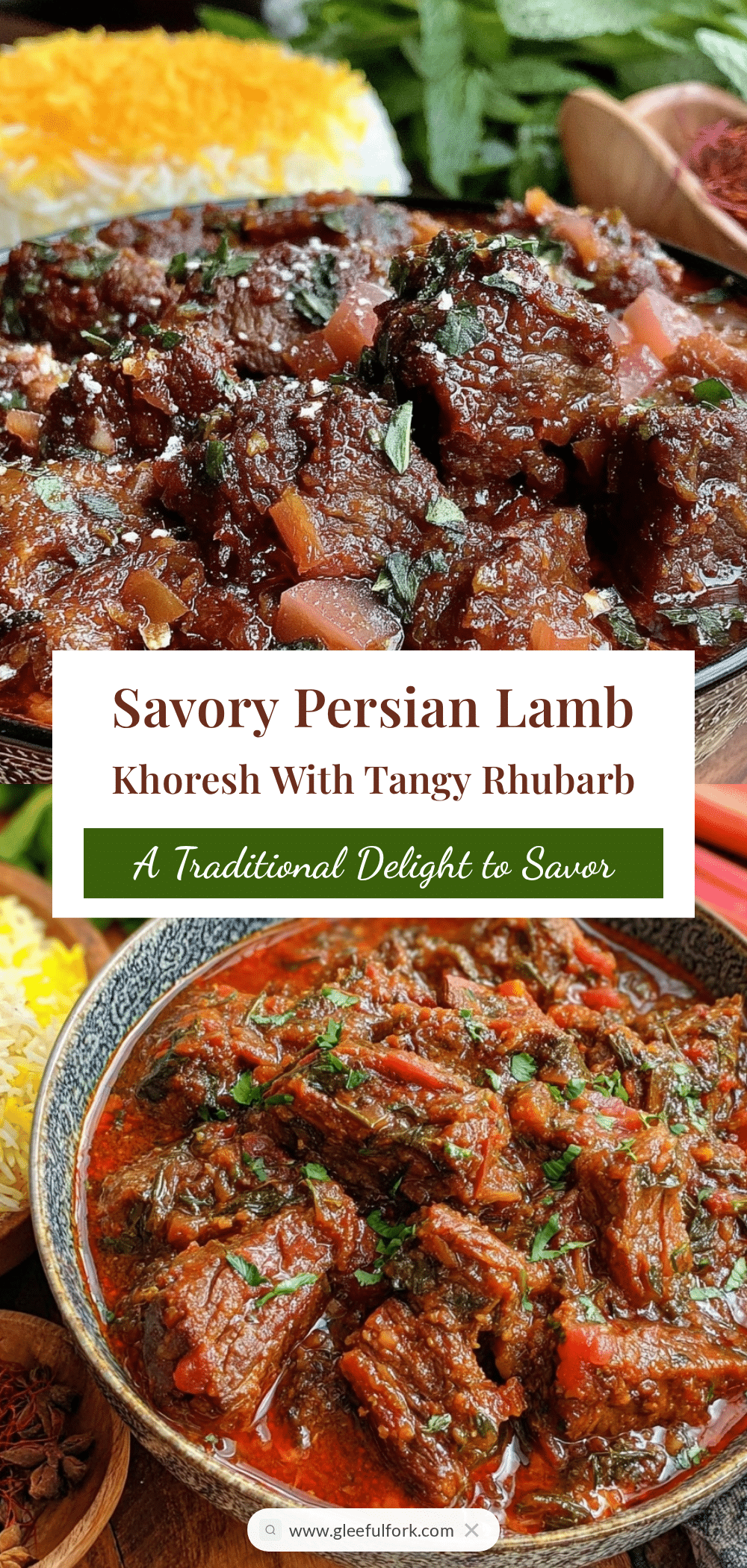
Savory Persian Rhubarb and Lamb Khoresh Stew Recipe with Perfect Saffron Rice
A comforting Persian lamb stew brightened with tart rhubarb and warm spices, served alongside fragrant saffron rice with a crispy golden crust.
- Prep Time: 30 minutes
- Cook Time: 1 hour 45 minutes
- Total Time: 2 hours 15 minutes
- Yield: 4 servings 1x
- Category: Main Course
- Cuisine: Persian
Ingredients
- 1.5 lbs lamb shoulder, cut into 1-inch cubes
- 3 cups fresh rhubarb, chopped into 1-inch pieces
- 1 large onion, thinly sliced
- 3 cloves garlic, minced
- 2 tbsp tomato paste
- 1 tsp ground cinnamon
- 1 tsp turmeric powder
- 1/2 tsp ground black pepper
- 1 tsp salt, adjust to taste
- 3 tbsp vegetable oil or sunflower oil
- 2 cups water or lamb broth
- 2 cups basmati rice, rinsed and soaked for 30 minutes
- 1/4 tsp saffron threads, crushed and soaked in 2 tbsp hot water
- 3 tbsp unsalted butter or ghee
- Salt to taste
- Optional: a pinch of sugar
Instructions
- Rinse and soak the basmati rice in cold water for 30 minutes; drain before cooking. Chop the lamb into 1-inch cubes and pat dry. Slice the onion thinly and mince the garlic. Chop rhubarb into 1-inch pieces.
- Place saffron threads in a small bowl and pour 2 tablespoons of hot (not boiling) water over them. Let sit for at least 15 minutes to release color and aroma.
- Heat 2 tablespoons of oil in the Dutch oven over medium-high heat. Add lamb cubes in batches and brown on all sides, about 5 minutes per batch. Remove and set aside.
- Lower heat to medium, add remaining oil, then add sliced onions. Cook, stirring occasionally, until soft and golden, about 8 minutes. Add minced garlic and cook 1 more minute until fragrant.
- Stir in cinnamon, turmeric, black pepper, and salt. Add tomato paste and cook for 2 minutes, stirring to combine and deepen flavor.
- Add browned lamb back to the pot with onions and spices. Pour in 2 cups water or broth. Bring to a gentle simmer, then cover and cook on low heat for 1 to 1.5 hours until lamb is tender.
- Stir in chopped rhubarb, cover, and simmer for an additional 20-30 minutes until rhubarb softens but retains slight bite and stew thickens.
- Bring 4 cups water to a boil in a saucepan with a pinch of salt. Add drained rice and cook uncovered for 6 minutes until just tender but still firm in the center. Drain rice in a fine mesh sieve.
- Melt butter or ghee in a clean saucepan over medium heat. Add half the rice, pressing down gently. Drizzle saffron water over the butter. Layer remaining rice on top, cover tightly with lid wrapped in a clean kitchen towel, and cook on low for 30-40 minutes without lifting the lid.
- Carefully invert the rice onto a serving platter to reveal the golden crust. Ladle the hot khoresh stew alongside or over the rice. Garnish with fresh herbs if desired.
Notes
Do not crowd the pan when browning lamb to ensure proper caramelization. Add rhubarb late in cooking to maintain texture and avoid bitterness. Use a well-seasoned pan and keep heat low when making tahdig to achieve a crispy rice crust. Soak saffron in hot water for at least 15 minutes to unlock flavor and color. If stew is too thick, add a splash of water. Leftover stew stores well refrigerated for 3 days or frozen for 2 months (without rice).
Nutrition
- Serving Size: 1 serving (approxima
- Calories: 550
- Sugar: 6
- Sodium: 700
- Fat: 25
- Saturated Fat: 10
- Carbohydrates: 45
- Fiber: 4
- Protein: 35
Keywords: Persian lamb stew, rhubarb stew, khoresh recipe, saffron rice, tahdig, lamb recipes, Persian cuisine, comfort food, slow simmer stew