Love this? Save it for later!
Share the inspiration with your friends
The neighborhood progressive dinner was in three hours and I’d completely forgotten. I was supposed to bring the appetizer. Everyone else would be bringing elaborate charcuterie boards with imported cheeses and homemade crackers, or these beautifully plated crostini that looked like they belonged in a magazine. I had a pint of fresh figs sitting on my counter that I’d bought on a whim, some goat cheese in the fridge, and a bottle of balsamic that was gathering dust. Honestly, I almost just grabbed a bag of chips and called it a day.
But then I remembered this little trick my aunt had shown me years ago—baking figs brings out this incredible, jammy sweetness that you just don’t get when they’re raw. I figured, what did I have to lose? I sliced them, crumbled the goat cheese over the top, drizzled honey and balsamic, and threw them in the oven. I didn’t even have time to plate them nicely—I just slid them onto a wooden board and ran out the door. My hands were still sticky from the honey.
Let me tell you, I was mortified when I set them down next to everyone else’s fancy spreads. But then people started picking them up. And then they wouldn’t stop. Someone asked me for the recipe before I’d even taken my coat off. By the end of the night, the board was completely empty, and I’d written the ingredient list on three different napkins. That was three years ago, and I’ve been making these honey balsamic baked figs with goat cheese ever since. They’re my secret weapon for any gathering where I need to look like I tried way harder than I actually did. Maybe you’ve been there too—running late, nothing prepared, and somehow pulling off something that tastes like you spent all day on it.
Why You’ll Love This Recipe
These honey balsamic baked figs with goat cheese have become my most-requested appetizer, and I honestly think it’s because they feel fancy without being fussy. There’s something about that combination of warm, jammy figs, tangy goat cheese, and sweet-tart balsamic honey glaze that just works. It’s the kind of dish that makes people close their eyes when they take a bite—and I’ve seen it happen more times than I can count.
- Quick & Easy: From start to finish, these baked figs come together in under 20 minutes. That’s faster than ordering takeout, and way more impressive.
- Simple Ingredients: You need exactly five main ingredients—figs, goat cheese, honey, balsamic vinegar, and a little fresh thyme. Chances are you already have most of these in your kitchen.
- Perfect for Entertaining: These are my go-to for dinner parties, holiday appetizers, or even a fancy date night at home. They look like they belong on a restaurant menu.
- Crowd-Pleaser: I’ve served these to everyone from my picky-eating nephew to my food-snob uncle, and they always disappear. The combination of sweet and savory is universally loved.
- Unbelievably Delicious: The magic happens in the oven. The figs soften and release their natural sugars, the goat cheese gets warm and creamy, and the balsamic honey glaze reduces into this sticky, caramelized coating that is absolutely next-level.
What makes this recipe different from all the other fig appetizers out there is the technique. I don’t just drizzle the honey and balsamic on top—I actually toss half the figs in the glaze before baking, then drizzle the rest after. This creates layers of flavor: some figs get deeply caramelized, while others stay brighter and fresher. It’s a small tweak, but it makes a huge difference. Plus, I’ve tested this with different types of figs, different goat cheeses, and even different honeys, so I know exactly what works. This isn’t just another version—it’s the best version.
What Ingredients You Will Need
This recipe uses simple, high-quality ingredients to create something truly special. The beauty of honey balsamic baked figs with goat cheese is that each component plays a specific role, and when they come together, it’s pure magic. Here’s what you’ll need:
- Fresh Figs: 12-16 fresh figs, ripe but still firm. Look for figs that give slightly when gently squeezed but aren’t mushy. Black Mission figs are my favorite for their deep sweetness, but Brown Turkey figs work beautifully too. If you can find them at a farmers’ market, even better—they’ll be at peak ripeness.
- Goat Cheese: 4 ounces (113g) of soft, fresh goat cheese, preferably a log style. I recommend Vermont Creamery or Laura Chenel for their creamy texture and tangy flavor. The cheese should be cold so it’s easier to crumble.
- Honey: 3 tablespoons (60ml) of good-quality honey. I love using local wildflower honey for its floral notes, but clover honey works perfectly too. Avoid honey that’s too thick or crystallized—you want it to drizzle easily.
- Balsamic Vinegar: 2 tablespoons (30ml) of balsamic vinegar. Use a good quality one here—it doesn’t need to be the expensive aged stuff, but skip the cheap grocery store brand. I like Colavita or Lucini for a balance of sweetness and acidity.
- Fresh Thyme: 1-2 teaspoons (about 4-6 sprigs) of fresh thyme leaves. Don’t use dried thyme here—fresh thyme adds a subtle earthiness that complements the figs perfectly. You’ll use some for baking and some for garnish.
- Sea Salt: A generous pinch of flaky sea salt, like Maldon or Fleur de Sel. This is non-negotiable—the salt balances the sweetness and makes all the flavors pop.
- Optional Toppings: A drizzle of extra balsamic glaze for serving, or a few chopped walnuts or pistachios for crunch. I sometimes add a sprinkle of black pepper too, if I’m feeling adventurous.
Equipment Needed
You don’t need any fancy equipment for these honey balsamic baked figs with goat cheese—that’s part of what makes this recipe so great. Here’s what you’ll need:
- Baking Sheet: A standard half-sheet pan works perfectly. I prefer one with a rim to catch any honey that might bubble over. If you don’t have a rimmed baking sheet, line a regular one with foil to catch drips.
- Parchment Paper: This makes cleanup a breeze and prevents the honey from sticking to the pan. I always use unbleached parchment paper.
- Small Bowl: For whisking together the honey and balsamic glaze. Any small mixing bowl will do.
- Chef’s Knife: A sharp knife for slicing the figs in half. A paring knife works too, but make sure it’s sharp so you don’t squish the figs.
- Cutting Board: For prepping the figs and herbs.
- Measuring Spoons: For the honey, balsamic, and thyme.
- Serving Platter: Something nice to present the finished figs. I love using a wooden board or a white ceramic platter.
Budget-friendly tip: If you don’t have a rimmed baking sheet, a cast iron skillet works beautifully for this recipe. It retains heat well and gives the figs a nice caramelized bottom. I’ve used my 10-inch Lodge skillet many times with great results.
Preparation Method
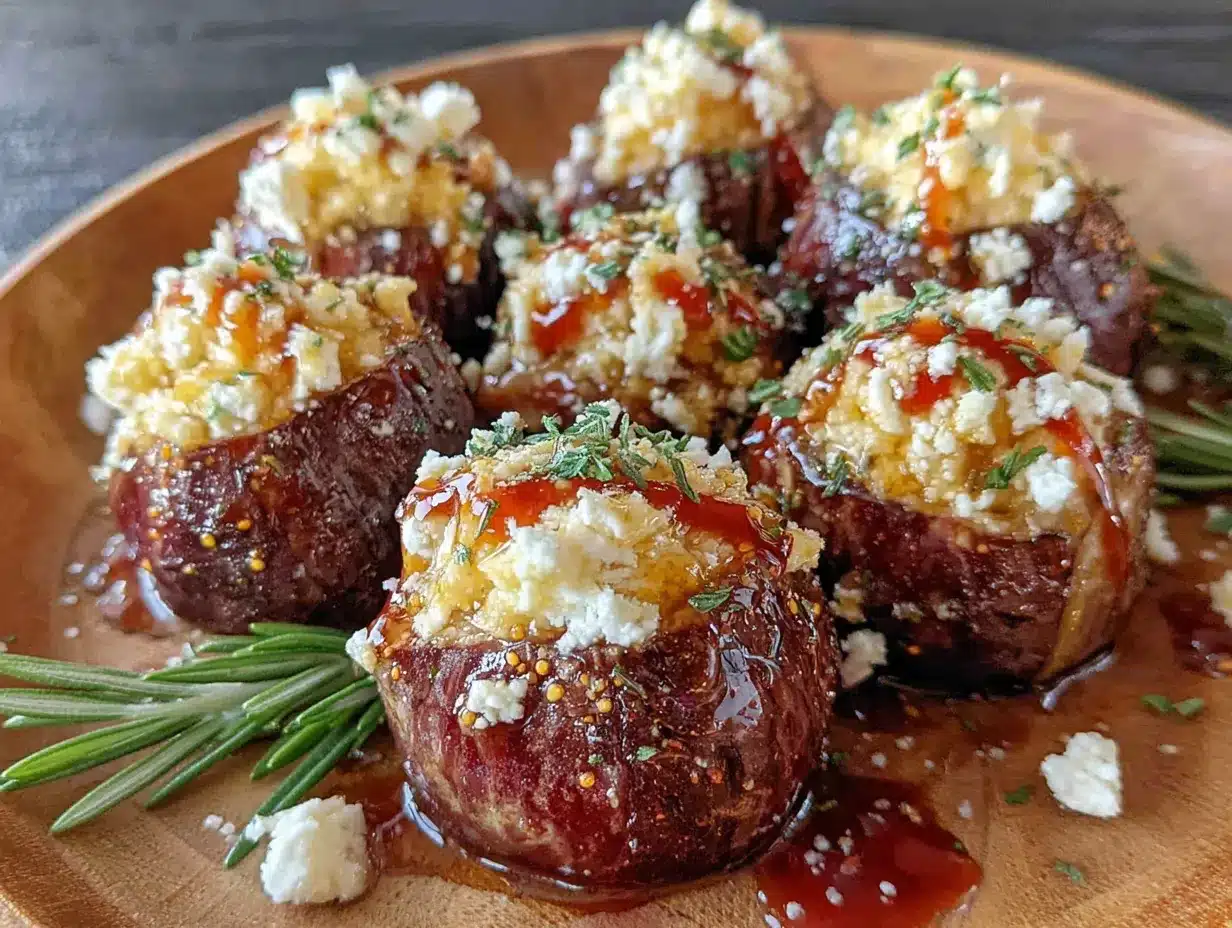
Let me walk you through how to make these honey balsamic baked figs with goat cheese. It’s simpler than you think, and I’ve included all my little tricks for perfect results every time.
- Preheat your oven to 375°F (190°C). While it’s heating up, line a baking sheet with parchment paper. This is important—the honey will bubble and caramelize, and parchment makes cleanup so much easier. I learned this the hard way after scrubbing a sticky pan for twenty minutes.
- Prepare the figs. Gently wash your figs and pat them dry. Cut each fig in half lengthwise, from the stem end down through the bottom. You want two equal halves. If your figs are very large, you can quarter them instead. The key is to handle them gently—figs are delicate, and you don’t want to squish them.
- Make the honey balsamic glaze. In a small bowl, whisk together 2 tablespoons of honey and 1 tablespoon of balsamic vinegar until well combined. This mixture will be your glaze. Set aside the remaining honey and balsamic for later.
- Arrange the figs on the baking sheet. Place the fig halves cut-side up on the parchment-lined sheet. Don’t crowd them—leave a little space between each fig so they caramelize evenly. I usually fit about 24 fig halves on one standard baking sheet.
- Brush with glaze. Using a pastry brush or a small spoon, brush the honey balsamic mixture over the cut surface of each fig. Be generous—this is where all the flavor comes from. Let any excess glaze pool slightly in the center of each fig.
- Add the goat cheese. Take your cold goat cheese log and crumble it into small pieces. You want pieces about the size of a pea. Don’t overdo it—a little goes a long way. Sprinkle the crumbled goat cheese over the figs, pressing it gently into the center of each fig half. I use about a teaspoon per fig half.
- Season and bake. Sprinkle fresh thyme leaves over the figs, then add a generous pinch of flaky sea salt. Place the baking sheet in the preheated oven and bake for 10-12 minutes, or until the figs are soft and slightly caramelized, and the goat cheese is warm and beginning to brown on the edges. The honey should be bubbling gently.
- Make the finishing drizzle. While the figs are baking, whisk together the remaining 1 tablespoon of honey and 1 tablespoon of balsamic vinegar in the same small bowl. This will be your finishing glaze.
- Finish and serve. Remove the figs from the oven and let them cool on the baking sheet for 2-3 minutes. Transfer them to a serving platter, then drizzle the finishing glaze over the top. Add a few more fresh thyme leaves and another pinch of flaky salt. If you’re using nuts, sprinkle them on now. Serve warm or at room temperature.
A quick note: The figs will be very hot right out of the oven, so let them rest for a few minutes. The goat cheese will be soft and creamy, almost like a warm spread. That’s exactly what you want.
Cooking Tips & Techniques
After making these honey balsamic baked figs with goat cheese more times than I can count, I’ve picked up a few tricks that make a real difference. Here are my top tips:
Choose the right figs. Ripe figs are essential, but they shouldn’t be too soft. If they’re mushy, they’ll fall apart in the oven. Look for figs that yield slightly to pressure but still hold their shape. Black Mission figs are my go-to because they’re naturally sweeter and hold up well to baking.
Keep the goat cheese cold. Cold goat cheese crumbles much more easily than room temperature cheese. I keep my goat cheese in the fridge until the last minute, then crumble it directly over the figs. This also helps the cheese hold its shape during baking rather than melting into a puddle.
Don’t skip the salt. I know it sounds strange to add salt to a sweet dish, but flaky sea salt is what makes these figs truly unforgettable. It balances the sweetness of the honey and figs and makes the goat cheese taste even tangier. Trust me on this one.
Watch the oven time. Every oven is different, so start checking your figs at the 10-minute mark. You want the figs to be soft and jammy, with the honey bubbling and the cheese slightly browned. If you leave them too long, the honey can burn and the figs can turn to mush. I’ve definitely made that mistake before—my kitchen smelled like burnt sugar for days.
Double the glaze. I always make extra honey balsamic glaze to drizzle over the finished figs. The first glaze gets baked in, creating that deep caramelized flavor, while the second glaze stays bright and fresh. The contrast is what makes this dish so special.
Variations & Adaptations
One of the best things about honey balsamic baked figs with goat cheese is how versatile they are. Here are some ways to change things up:
Dairy-Free Version: Swap the goat cheese for a dairy-free alternative like cashew cheese or a soft almond-based cheese. I’ve also used vegan cream cheese with good results—it doesn’t have the same tang, but it gets wonderfully creamy in the oven.
Nutty Crunch: Add a crunch factor by sprinkling chopped walnuts, pistachios, or pecans over the figs before baking. Toast the nuts first for extra flavor. I love pistachios because their green color looks beautiful against the deep purple figs.
Herb Variations: While thyme is my favorite, rosemary works beautifully too. Use about half the amount since rosemary is stronger. I’ve also tried fresh basil for a more Mediterranean vibe—it’s surprisingly good.
Balsamic Glaze Shortcut: If you don’t want to make your own glaze, you can use store-bought balsamic glaze. Just drizzle it over the figs before and after baking. I recommend the brand Nonna Pia’s—it’s thick, sweet, and has the perfect consistency.
Savory Twist: For a more savory version, skip the honey and use a drizzle of olive oil instead. Add a sprinkle of red pepper flakes for heat. This version is amazing served alongside grilled meat or roasted vegetables.
I once tried a version with blue cheese instead of goat cheese, and honestly, it was a mixed bag. Some people loved it, others found it too strong. If you’re a blue cheese fan, go for it—just use a milder variety like Gorgonzola dolce.
Serving & Storage Suggestions
These honey balsamic baked figs with goat cheese are best served warm, right out of the oven. The contrast between the warm figs, the creamy cheese, and the sticky glaze is absolutely perfect. That said, they’re also delicious at room temperature—I’ve served them at plenty of parties where they sat out for an hour and were still devoured.
For presentation, I love arranging the figs on a wooden board or a white ceramic platter. Drizzle the extra glaze over the top and finish with a sprinkle of fresh thyme and flaky salt. If you’re feeling fancy, add a few fresh figs alongside for visual contrast. They make a beautiful appetizer for holiday gatherings, dinner parties, or even a romantic date night at home.
These figs pair beautifully with a variety of dishes. Serve them alongside a cheese board with cured meats and crusty bread, or as a starter before a main course of roasted chicken or pork. For drinks, a crisp white wine like Sauvignon Blanc or a light red like Pinot Noir complements the sweetness perfectly. I also love them with a glass of sparkling water with lemon—it cuts through the richness.
Storage: Leftover baked figs can be stored in an airtight container in the refrigerator for up to 3 days. The texture will change slightly—the figs will soften more, and the glaze will thicken—but they’re still delicious. I actually love cold leftover figs straight from the fridge as a quick snack.
Reheating: To reheat, place the figs on a baking sheet and warm them in a 300°F (150°C) oven for 5-7 minutes. You can also microwave them for 15-20 seconds, but the texture won’t be as good. I don’t recommend freezing these—the figs become too mushy when thawed.
One thing I’ve noticed is that the flavors actually develop over time. If you make these a day ahead and reheat them, the honey balsamic glaze seeps deeper into the figs, and the goat cheese melds with the sweetness. They’re different from fresh-baked, but still wonderful in their own way.
Nutritional Information & Benefits
While these honey balsamic baked figs with goat cheese are definitely a treat, they do offer some surprising nutritional benefits. Here’s a rough estimate per serving (about 3 fig halves):
| Nutrient | Amount |
|---|---|
| Calories | 180-200 |
| Protein | 6g |
| Carbohydrates | 28g |
| Fiber | 4g |
| Sugar | 22g (natural from figs and honey) |
| Fat | 7g |
| Calcium | 8% DV |
| Iron | 4% DV |
Pin This Recipe!
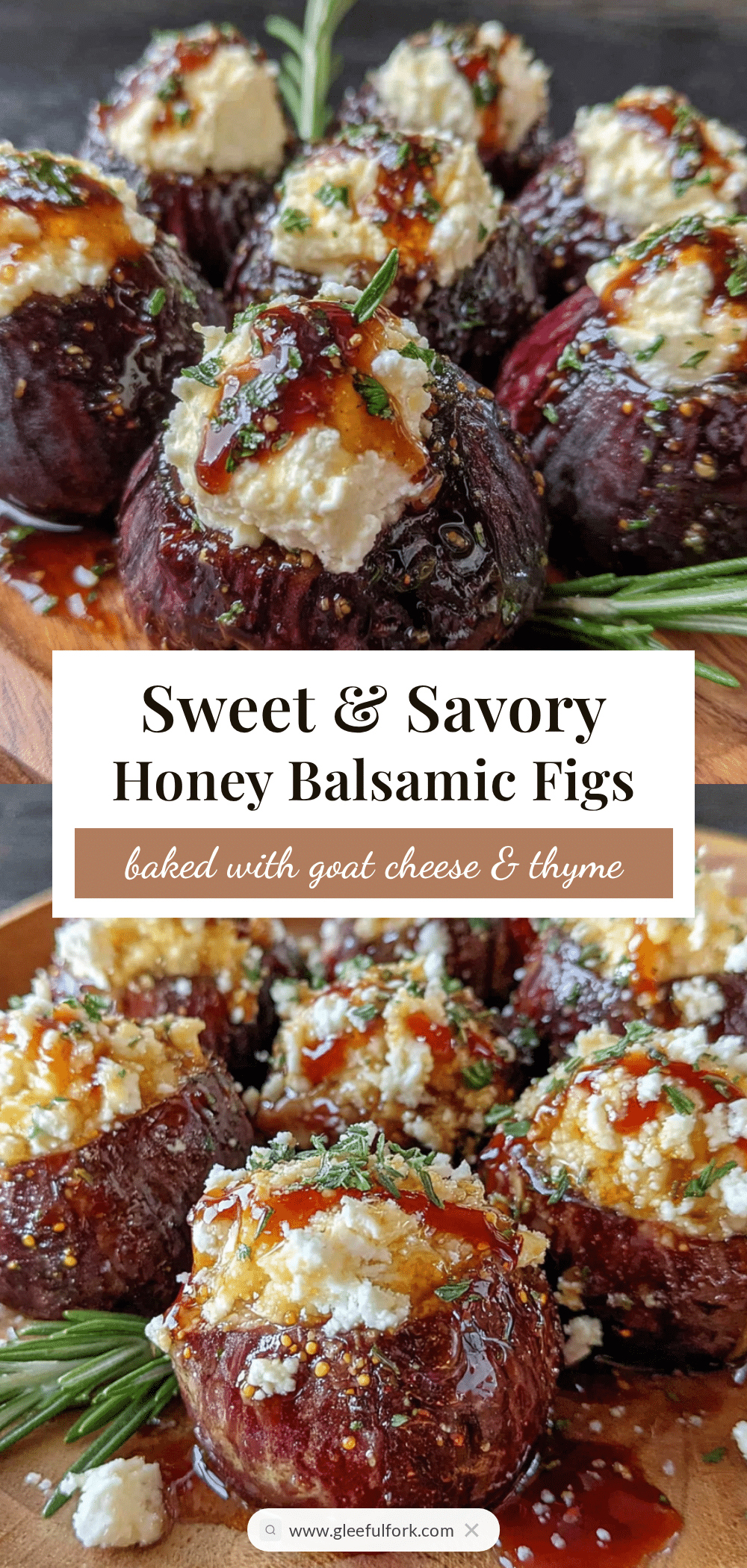
Best Easy Honey Balsamic Baked Figs with Goat Cheese
Warm, jammy figs topped with tangy goat cheese and a sweet-tart honey balsamic glaze, baked to perfection. This quick and easy appetizer is perfect for entertaining and always a crowd-pleaser.
- Prep Time: 10 minutes
- Cook Time: 12 minutes
- Total Time: 22 minutes
- Yield: 4 servings 1x
- Category: Appetizer
- Cuisine: Mediterranean
Ingredients
- 12–16 fresh figs (ripe but firm, such as Black Mission or Brown Turkey)
- 4 ounces (113g) soft fresh goat cheese (log style, cold)
- 3 tablespoons (60ml) honey (divided)
- 2 tablespoons (30ml) balsamic vinegar (divided)
- 1–2 teaspoons fresh thyme leaves (about 4–6 sprigs)
- 1 generous pinch flaky sea salt (e.g., Maldon or Fleur de Sel)
- Optional: extra balsamic glaze for serving, chopped walnuts or pistachios for crunch
Instructions
- Preheat your oven to 375°F (190°C). Line a baking sheet with parchment paper.
- Gently wash and pat dry the figs. Cut each fig in half lengthwise (from stem end through bottom). Handle gently to avoid squishing.
- In a small bowl, whisk together 2 tablespoons of honey and 1 tablespoon of balsamic vinegar until well combined. Set aside the remaining honey and balsamic for later.
- Arrange the fig halves cut-side up on the parchment-lined baking sheet, leaving space between each for even caramelization.
- Using a pastry brush or small spoon, brush the honey balsamic mixture over the cut surface of each fig. Let excess pool slightly in the center.
- Crumble the cold goat cheese into small pea-sized pieces and sprinkle over the figs, pressing gently into the center of each half (about 1 teaspoon per fig half).
- Sprinkle fresh thyme leaves over the figs, then add a generous pinch of flaky sea salt.
- Bake for 10-12 minutes, until the figs are soft and slightly caramelized, the goat cheese is warm and beginning to brown on the edges, and the honey is bubbling gently.
- While the figs bake, whisk together the remaining 1 tablespoon of honey and 1 tablespoon of balsamic vinegar in the same small bowl to make the finishing glaze.
- Remove the figs from the oven and let cool on the baking sheet for 2-3 minutes. Transfer to a serving platter, drizzle with the finishing glaze, and add more fresh thyme leaves and a pinch of flaky salt. If using nuts, sprinkle them on now. Serve warm or at room temperature.
Notes
For best results, keep goat cheese cold until ready to crumble. Don’t skip the flaky sea salt—it balances the sweetness. Watch the oven time; start checking at 10 minutes to prevent burning. The double-glaze technique (half baked in, half drizzled after) creates layers of flavor. Leftovers can be stored in an airtight container in the refrigerator for up to 3 days; reheat in a 300°F oven for 5-7 minutes.
Nutrition
- Serving Size: 3 fig halves
- Calories: 190
- Sugar: 22
- Sodium: 180
- Fat: 7
- Saturated Fat: 4
- Carbohydrates: 28
- Fiber: 4
- Protein: 6
Keywords: baked figs, honey balsamic, goat cheese, appetizer, easy, entertaining, fig recipe, gluten-free, vegetarian