Love this? Save it for later!
Share the inspiration with your friends
“You ever get that late-afternoon rumble, and all you want is something fast, comforting, and a little bit special?” That was me last Thursday, standing in my tiny kitchen, staring blankly at the fridge while my stomach staged a full protest. Honestly, I wasn’t planning on cooking anything fancy, just something quick. But then I remembered a chat I had with Kenji, the friendly cashier at my local Japanese market, who casually mentioned his go-to weeknight meal: Gyudon, a savory Japanese beef rice bowl that’s quick to make and insanely satisfying. I mean, I’m not usually one to take cooking advice from a cashier, but that day, it felt like a sign.
The sizzle of thinly sliced beef hitting the pan, the sweet and salty aroma of soy and mirin blending together—it was like a little instant getaway to a cozy Tokyo diner. I messed up the first batch (forgot the sugar—classic!), but that imperfect bowl only made me tweak the recipe until it was just right. Now, this Quick Savory Japanese Gyudon Beef Rice Bowl is my secret weapon when I want dinner on the table fast without sacrificing flavor. Maybe you’ve been there too—craving something hearty but not wanting to wrestle with complicated recipes. Let me tell you, this one stays with you.
Why You’ll Love This Recipe
After testing this recipe several times (and tweaking it with input from my Japanese cooking-loving friends), I’m confident this Gyudon is a winner for anyone looking for a quick, tasty meal. Here’s why it’s become a staple in my kitchen:
- Quick & Easy: Ready in under 20 minutes, perfect for those hectic weeknights or unexpected dinner guests.
- Simple Ingredients: Uses pantry staples and easy-to-find fresh items—no need for specialty stores unless you want to impress.
- Perfect for Solo Meals or Family Dinner: Whether you’re cooking just for yourself or feeding a small crowd, this recipe scales nicely.
- Crowd-Pleaser: The balance of savory, slightly sweet, and umami flavors gets rave reviews from both adults and kids.
- Unbelievably Delicious: The tender, thinly sliced beef with that glossy sauce over steaming rice hits all the comfort food notes.
What really sets this Gyudon apart is the use of dashi stock in the sauce, which gives it that authentic depth without extra fuss. Also, the quick caramelization of onions alongside the beef adds a subtle sweetness that complements the soy-mirin combo perfectly. Honestly, it’s not just another beef bowl; it’s my go-to for a reason—rich flavors with minimal effort. So, if you’re ready to whip up a satisfying Japanese classic that feels like it took hours (but really didn’t), you’re in the right place.
What Ingredients You Will Need
This Quick Savory Japanese Gyudon Beef Rice Bowl recipe relies on simple, wholesome ingredients that come together to create bold flavors and a satisfying texture without the fuss. Most of these are pantry staples or easy to find at your local grocery store or Asian market.
- Thinly Sliced Beef (about 1/2 pound / 225g): Look for ribeye or sirloin, thinly sliced. If you can’t find it pre-sliced, you can freeze a piece of beef slightly and slice it thinly yourself.
- Onion (1 medium, thinly sliced): Adds sweetness and texture to the dish.
- Cooked Japanese Short-Grain Rice (2 cups / 400g): Short-grain rice works best for that sticky, fluffy texture. I prefer Nishiki brand when I can get it.
- Dashi Stock (1 cup / 240 ml): The heart of authentic flavor. You can buy instant dashi powder or make your own from kombu and bonito flakes.
- Soy Sauce (3 tablespoons): Use a good quality soy sauce like Kikkoman for balanced saltiness.
- Mirin (3 tablespoons): Sweet rice wine that adds a gentle sweetness and gloss to the sauce.
- Sugar (1 tablespoon): Balances the savory elements perfectly.
- Fresh Ginger (1 teaspoon, grated): Optional but adds a lovely warmth.
- Green Onions (2 stalks, thinly sliced): For garnish and fresh bite.
- Pickled Red Ginger (beni shoga), optional: Adds a tangy contrast if you like a bit of zing.
Substitution tips: For a gluten-free option, use tamari instead of soy sauce. If you don’t have mirin, a tablespoon of honey mixed with a splash of rice vinegar can work in a pinch. For dairy-free needs, this recipe is naturally free of dairy.
Equipment Needed
- Non-stick skillet or frying pan: A medium-sized pan around 10 inches (25 cm) works best for even cooking and easy stirring.
- Rice cooker or pot: For perfectly cooked Japanese short-grain rice. I’ve found that a rice cooker takes the guesswork out, but a heavy-bottomed pot works fine too.
- Sharp knife and cutting board: For slicing beef and onions thinly and safely.
- Measuring spoons and cups: Accuracy helps keep the balance of flavors just right.
- Grater: For fresh ginger, although you can finely mince if needed.
If you don’t have a non-stick pan, a well-seasoned cast iron skillet can also do the job, but watch the heat closely to prevent sticking. Also, a slotted spoon or spatula helps when cooking the beef to separate thin slices easily. I recommend keeping your knives sharp, especially for thin slicing—makes a world of difference!
Preparation Method
- Prepare the Rice: Rinse 2 cups (400g) of Japanese short-grain rice under cold water until the water runs clear. Let it soak for 20-30 minutes, then cook according to your rice cooker or stovetop method. This usually takes about 30-40 minutes, so start this early.
- Slice the Beef and Onion: While the rice is soaking, thinly slice 1/2 pound (225g) ribeye or sirloin against the grain. Peel and thinly slice 1 medium onion. This step should take about 5-7 minutes.
- Make the Sauce: In a bowl, mix 1 cup (240 ml) dashi stock, 3 tablespoons soy sauce, 3 tablespoons mirin, 1 tablespoon sugar, and 1 teaspoon freshly grated ginger. Stir until the sugar dissolves. Set aside.
- Sauté the Onion: Heat 1 tablespoon of oil in a medium non-stick skillet over medium heat. Add the sliced onions and cook for 5 minutes, stirring occasionally, until translucent and slightly caramelized.
- Add the Beef: Increase heat to medium-high. Add the thinly sliced beef to the pan with the onions. Stir quickly, cooking until the beef just starts to brown but isn’t fully cooked—about 2-3 minutes.
- Pour the Sauce: Pour the prepared sauce over the beef and onions. Bring to a simmer, then reduce heat to medium-low. Let it cook for 5 minutes, stirring occasionally, until the beef is tender and the sauce thickens slightly.
- Final Touches: Taste and adjust seasoning if needed—sometimes a pinch more sugar or soy sauce balances it out. Remove from heat.
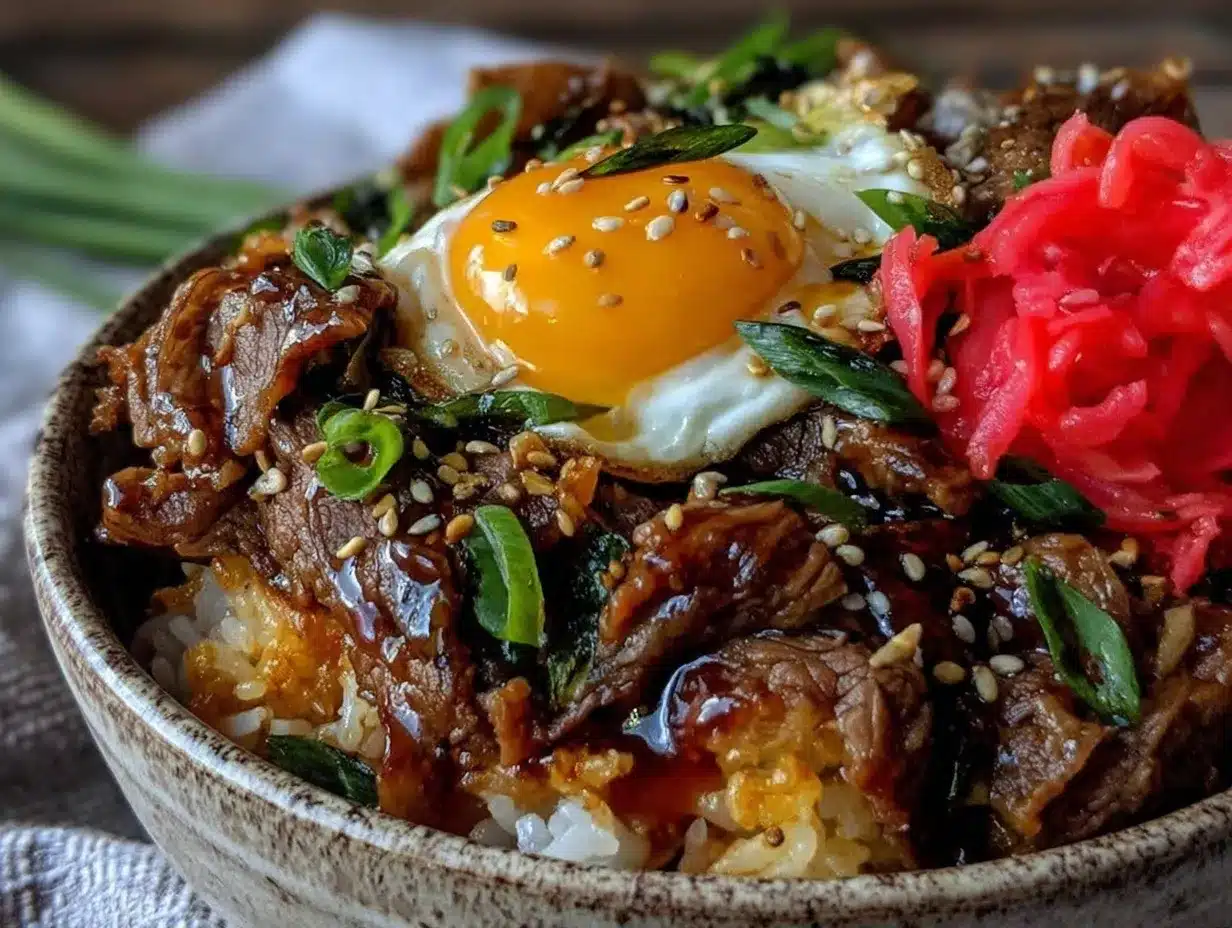
- Serve: Spoon freshly cooked rice into bowls. Top generously with the beef and onion mixture. Garnish with thinly sliced green onions and a few strips of pickled red ginger if desired.
Preparation notes: Don’t overcook the beef or it gets tough. The thin slices cook very fast, so keep an eye. If your sauce reduces too much, add a splash of water or dashi to loosen it. The aroma at step 6—when the sauce simmers—is honestly the best part!
Cooking Tips & Techniques
Cooking Gyudon might seem straightforward, but a few tricks can make your bowl shine every time. First, the key to tender beef is slicing it thin and cooking it briefly at a higher heat. I’ve learned the hard way by overcooking beef and ending up with chewy bites—lesson learned!
Using dashi stock instead of plain water or broth really deepens the umami flavor without overpowering the dish. If you can’t find instant dashi, kombu (kelp) and bonito flakes from an Asian market are the real deal.
Caramelizing the onions slowly before adding the beef adds sweetness that balances the salty soy sauce beautifully. If you’re short on time, cook onions over medium heat rather than high to avoid burning.
When simmering the sauce, watch it carefully because it can thicken quickly and stick. Stir often but gently so the beef slices stay intact and don’t clump together.
Finally, multitasking helps here—start the rice first since it takes the longest, then prep and cook the beef and sauce while the rice finishes. This way, everything comes together hot and fresh.
Variations & Adaptations
This Gyudon recipe is pretty flexible, so feel free to make it your own!
- Vegetarian Version: Swap beef for thinly sliced shiitake mushrooms or tofu strips. Use vegetable dashi or mushroom broth for the sauce base.
- Spicy Twist: Add a teaspoon of chili paste or sprinkle shichimi togarashi (Japanese seven-spice) over the finished bowl for a kick.
- Seasonal Veggies: Toss in some sliced carrots or snap peas with the onions for extra color and crunch.
- Low-Carb: Serve over cauliflower rice instead of white rice to cut carbs but keep the comforting bowl vibe.
- Slow Cooker Adaptation: Brown the beef and onions first, then transfer to a slow cooker with the sauce ingredients. Cook on low for 3-4 hours for a hands-off meal.
Once, I tried adding a splash of sake for extra depth, and it was delicious—just remember to reduce the salt slightly if you do. Honestly, this recipe is a great base to experiment with flavors that suit your tastes.
Serving & Storage Suggestions
Serve your Gyudon hot, fresh from the pan, over steaming rice. I like to garnish with plenty of green onions and a little pickled red ginger for contrast. It pairs beautifully with a simple side of miso soup or a crisp cucumber salad to balance the richness.
Leftovers store well in the refrigerator for up to 3 days. Keep the beef and rice in separate containers to retain texture. Reheat gently in a pan or microwave until warmed through. Adding a splash of water or broth during reheating helps loosen the sauce and keeps the beef tender.
Freezing is not ideal as the texture of the beef can change, but if you must, freeze only the beef mixture and defrost overnight in the fridge.
Flavors tend to deepen after resting, so leftovers can be surprisingly good—just watch the reheating to avoid drying out.
Nutritional Information & Benefits
This Quick Savory Japanese Gyudon Beef Rice Bowl offers a balanced meal with protein from the beef, carbohydrates from the rice, and a modest amount of fat. A typical serving has approximately 450-500 calories, with about 25 grams of protein, making it satisfying and energizing.
Dashi stock is low in calories but rich in umami compounds, which can help reduce the need for excess salt. The ginger adds antioxidants and can support digestion, while onions provide vitamin C and fiber.
This recipe can easily fit into gluten-free diets by swapping soy sauce for tamari, and the moderate portion sizes make it suitable for many meal plans.
Conclusion
This Quick Savory Japanese Gyudon Beef Rice Bowl is a fantastic weeknight dinner that’s both comforting and surprisingly easy to throw together. From the first time I made it following Kenji’s advice, it’s been a go-to when I want something warm, satisfying, and a little bit different from the usual stir-fry or pasta.
Feel free to tweak the sauce or add your favorite veggies—this recipe welcomes creativity. I hope it becomes a regular in your kitchen the way it is in mine.
When you try it, drop a comment below and tell me how you made it your own! Sharing these little kitchen wins keeps the joy of cooking alive.
Happy cooking and enjoy every savory bite!
FAQs
What cut of beef is best for Gyudon?
Thinly sliced ribeye or sirloin works best because they’re tender and cook quickly. If pre-sliced beef isn’t available, freeze a piece slightly to slice thinly yourself.
Can I make Gyudon without dashi stock?
You can substitute beef or chicken broth, but dashi provides a unique umami flavor that really makes the dish authentic. Instant dashi powder is an easy option.
Is Gyudon traditionally served with anything else?
Yes, it’s often paired with pickled ginger (beni shoga), miso soup, and sometimes a raw or soft-boiled egg on top.
How long can Gyudon leftovers be stored?
Store leftovers separately in the fridge for up to 3 days. Reheat gently to keep the beef tender and the sauce from drying out.
Can I freeze Gyudon?
Freezing isn’t recommended as the beef texture may change, but you can freeze the beef mixture alone. Thaw overnight in the fridge before reheating.
Pin This Recipe!
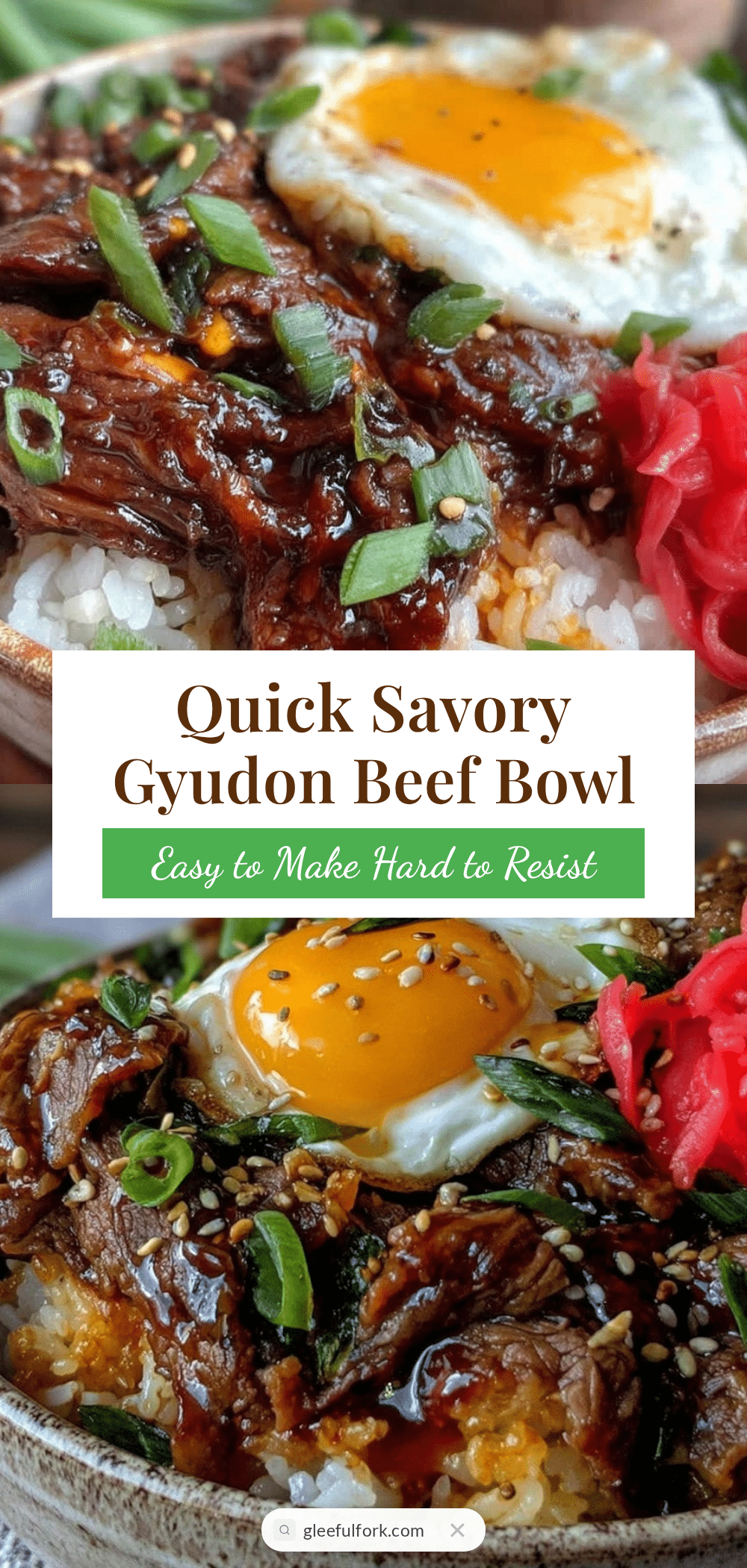
Quick Savory Japanese Gyudon Beef Rice Bowl Recipe Easy Homemade Meal

A quick and comforting Japanese beef rice bowl featuring thinly sliced beef simmered in a savory soy-mirin sauce served over fluffy Japanese short-grain rice. Ready in under 20 minutes, perfect for weeknight dinners.
- Prep Time: 10 minutes
- Cook Time: 15 minutes
- Total Time: 25 minutes
- Yield: 2 servings 1x
- Category: Main Course
- Cuisine: Japanese
Ingredients
- 1/2 pound (225g) thinly sliced ribeye or sirloin beef
- 1 medium onion, thinly sliced
- 2 cups (400g) cooked Japanese short-grain rice
- 1 cup (240 ml) dashi stock
- 3 tablespoons soy sauce
- 3 tablespoons mirin
- 1 tablespoon sugar
- 1 teaspoon fresh grated ginger (optional)
- 2 stalks green onions, thinly sliced (for garnish)
- Pickled red ginger (beni shoga), optional (for garnish)
- 1 tablespoon oil (for sautéing)
Instructions
- Rinse 2 cups (400g) Japanese short-grain rice under cold water until water runs clear. Soak for 20-30 minutes, then cook according to rice cooker or stovetop method (about 30-40 minutes).
- While rice soaks, thinly slice 1/2 pound (225g) ribeye or sirloin beef against the grain. Peel and thinly slice 1 medium onion.
- In a bowl, mix 1 cup (240 ml) dashi stock, 3 tablespoons soy sauce, 3 tablespoons mirin, 1 tablespoon sugar, and 1 teaspoon grated ginger until sugar dissolves. Set aside.
- Heat 1 tablespoon oil in a medium non-stick skillet over medium heat. Add sliced onions and cook for 5 minutes, stirring occasionally, until translucent and slightly caramelized.
- Increase heat to medium-high. Add thinly sliced beef to the pan with onions. Stir quickly and cook until beef just starts to brown but is not fully cooked, about 2-3 minutes.
- Pour prepared sauce over beef and onions. Bring to a simmer, then reduce heat to medium-low. Cook for 5 minutes, stirring occasionally, until beef is tender and sauce thickens slightly.
- Taste and adjust seasoning if needed. Remove from heat.
- Spoon cooked rice into bowls. Top generously with beef and onion mixture. Garnish with sliced green onions and pickled red ginger if desired.
Notes
Do not overcook the beef to avoid toughness; thin slices cook quickly. If sauce reduces too much, add a splash of water or dashi to loosen. Use dashi stock for authentic umami flavor. Caramelize onions slowly for sweetness. Keep knives sharp for thin slicing. Leftovers keep well for up to 3 days if stored separately and reheated gently.
Nutrition
- Serving Size: 1 bowl (approximatel
- Calories: 475
- Sugar: 10
- Sodium: 900
- Fat: 15
- Saturated Fat: 5
- Carbohydrates: 55
- Fiber: 2
- Protein: 25
Keywords: Gyudon, Japanese beef bowl, quick dinner, savory beef rice bowl, easy Japanese recipe, weeknight meal, dashi, mirin, soy sauce