Love this? Save it for later!
Share the inspiration with your friends
“The power went out halfway through baking my very first Colomba di Pasqua,” I remember thinking as I scrambled to keep the dough warm in the chilly kitchen. It was the Saturday before Easter, and honestly, I wasn’t sure if this Italian Easter tradition was going to survive my clumsy attempt. But you know what? That imperfect moment only made this Classic Colomba di Pasqua Italian Easter Dove Bread with Candied Orange more memorable. Maybe you’ve been there—trying to recreate a beautiful heritage recipe with nothing but a stubborn oven and half a mind on the holiday chaos around you.
This bread isn’t just another loaf; it’s a symbol of celebration and hope in Italy, shaped like a dove to represent peace. I stumbled upon the recipe tucked inside a worn notebook I’d picked up at a flea market in Florence, scribbled in shaky handwriting by a baker who clearly loved the ritual as much as the taste. The candied orange pieces add a sweet, zesty surprise that cuts through the bread’s rich, buttery crumb. I’ve since made plenty of messes and missteps, but every time, this bread comes through with a golden crust and a soft, fragrant inside that reminds me why I keep trying.
Whether you’re new to Italian baking or a seasoned bread maker looking to impress your Easter guests, this recipe will guide you step-by-step. Let me tell you, there’s something about the warmth of a freshly baked Colomba, the way the citrus scent fills your kitchen, that turns a simple holiday into a cozy celebration. So grab your apron, and let’s bring a slice of Italy into your home this Easter.
Why You’ll Love This Recipe
This Classic Colomba di Pasqua recipe has been my go-to for Easter celebrations—here’s why it might become yours too:
- Traditional yet approachable: It’s a genuine Italian Easter bread recipe, tested multiple times to be doable in a home kitchen without fancy tools.
- Rich, buttery crumb: Thanks to a slow fermentation and the perfect mix of butter and eggs, the texture is tender and melt-in-your-mouth.
- Candied orange zest: These little pops of citrus bring brightness and balance the sweetness, making every bite interesting.
- Impressively festive: Its distinctive dove shape makes it a stunning centerpiece without complicated decorating skills.
- Flexible timing: You can prepare the dough ahead and bake fresh on the day you need it, fitting right into busy schedules.
- Family-approved: From my picky neighbor who rarely eats sweets to my extended family, this bread always disappears fast.
What makes this recipe different? It’s not just about the ingredients but the method—slow, careful rising and folding that builds flavor and structure. I’ve also added practical tips to avoid common pitfalls, like over-proofing or dry crumb, which I learned the hard way. Honestly, once you get the feel for it, you might find yourself baking this bread year-round, not just at Easter.
What Ingredients You Will Need
The magic of this Classic Colomba di Pasqua lies in its simple, high-quality ingredients. Each one plays a role in that tender crumb and fragrant finish:
- All-purpose flour (500g / 4 cups) – The base of the bread; I prefer a high-protein brand like King Arthur for strength and softness.
- Active dry yeast (7g / 2 1/4 tsp) – For the perfect rise; make sure it’s fresh.
- Granulated sugar (150g / 3/4 cup) – Adds sweetness without overpowering.
- Unsalted butter (150g / 2/3 cup), softened – Brings richness and moisture.
- Whole milk (200ml / 3/4 cup), warmed – Helps activate the yeast and tenderize the dough.
- Large eggs (3), room temperature – Bind and enrich the dough.
- Salt (1 tsp) – Balances the sweetness and strengthens gluten.
- Candied orange peel (100g / 3.5 oz), chopped – Adds that signature citrus zing. You can find it in Italian specialty stores or online.
- Vanilla extract (1 tsp) – Enhances flavor depth.
- Orange zest (from 1 large orange) – Fresh zest brightens the dough aroma.
- Almond flour (optional, 50g / 1/2 cup) – Sometimes used in the topping for extra texture and nutty flavor.
- Powdered sugar (for dusting) – Adds a pretty finish after baking.
If you prefer a dairy-free version, swap the milk for almond or oat milk and use a plant-based butter alternative, but keep the eggs for structure unless you want to experiment with flax eggs. For a gluten-free twist, substituting all-purpose flour isn’t straightforward here due to the dough’s delicate rise, but you could try a blend designed for enriched breads. I recommend fresh, organic eggs and real vanilla extract for the best aroma and taste. This recipe calls for patience with the dough, but the ingredient list remains straightforward and pantry-friendly.
Equipment Needed
To make Classic Colomba di Pasqua at home, having the right tools really helps:
- Stand mixer with dough hook attachment – While you can mix by hand, this makes kneading much easier and faster. I’ve tried both, and honestly, the mixer saves your wrists and speeds things up.
- Large mixing bowls – For proofing the dough comfortably without crowding.
- Colomba-shaped paper mold – These are special dove-shaped molds that give the bread its iconic look. You can order them online or substitute with a large loaf pan if necessary, though the shape won’t be quite the same.
- Pastry brush – For applying the egg wash or butter glaze.
- Cooling rack – Essential for letting the bread cool evenly and preventing sogginess.
- Kitchen thermometer (optional) – Helpful to check milk temperature and baking doneness.
If you’re on a budget, a simple hand whisk and a wooden spoon can work for mixing, and you can hand-knead on a floured surface, though it’s more labor-intensive. I’ve found that keeping your dough warm during rising phases is crucial, so a proofing box or a warm spot in the kitchen (like near a radiator or inside an oven with just the light on) makes a big difference. Make sure to clean and dry your equipment thoroughly to avoid unwanted dough stickiness or uneven rising.
Preparation Method
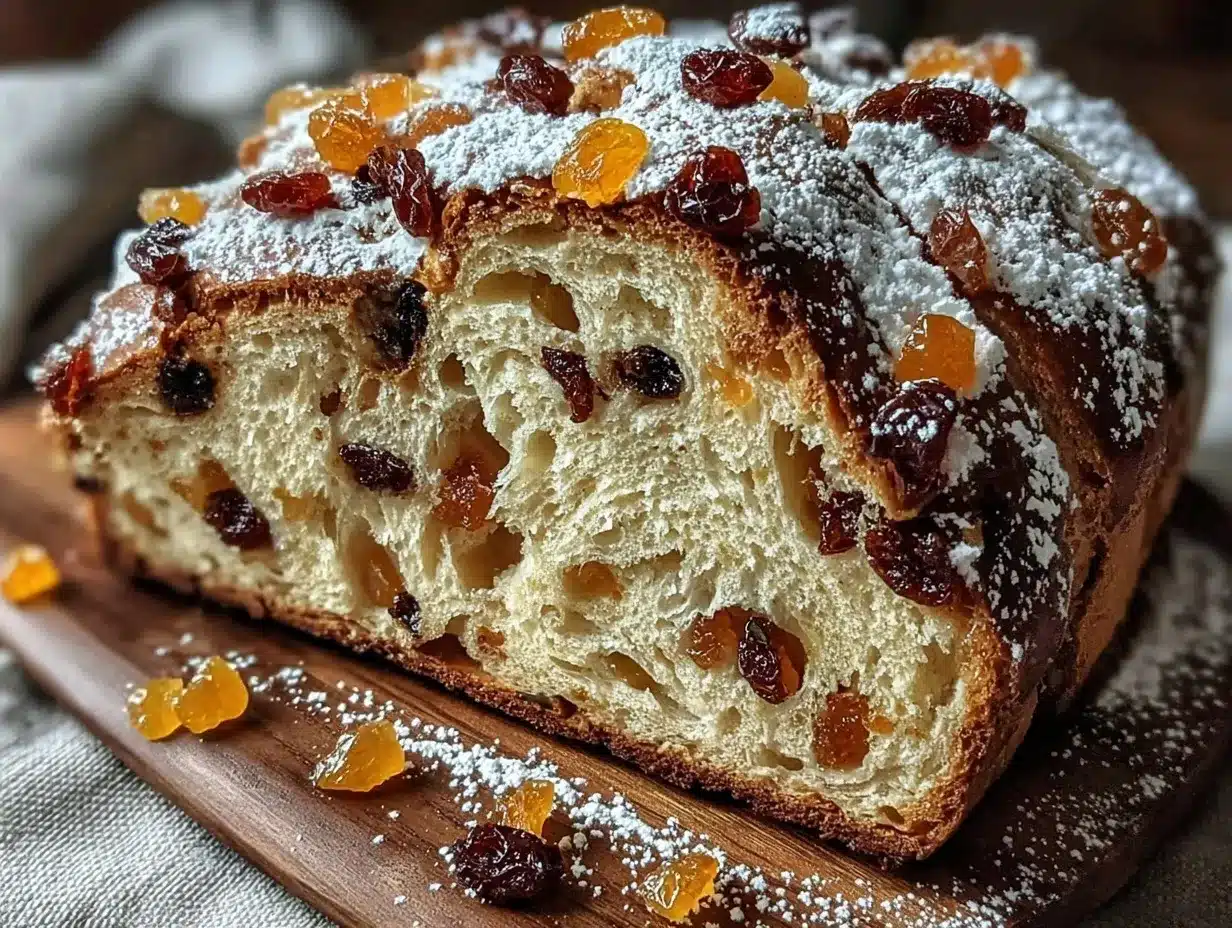
- Activate the yeast (10 minutes): Warm the milk to about 100°F (38°C). In a small bowl, combine the warm milk, yeast, and a teaspoon of sugar. Stir gently and let it sit until it becomes frothy and bubbly.
- Mix the dough (15 minutes): In your stand mixer bowl, combine the flour, remaining sugar, and salt. Add the activated yeast mixture, eggs, softened butter, vanilla extract, and orange zest. Using the dough hook, mix on low speed until the dough starts to come together, then increase to medium speed and knead for about 10 minutes. The dough should be smooth, elastic, and slightly tacky but not sticky.
- First rise (1.5 to 2 hours): Transfer the dough to a lightly greased bowl, cover with a damp towel, and let it rise in a warm place until doubled in size. You’ll know it’s ready when gently pressing the dough leaves a slight indentation.
- Incorporate candied orange (5 minutes): Gently fold the chopped candied orange peel into the dough by hand, taking care not to deflate it too much.
- Shape the dough (10 minutes): Divide the dough into two parts: a larger portion for the body and a smaller for the wings. Roll the larger piece into an oval shape and place it into the bottom of the Colomba mold. Shape the smaller piece into two wing shapes and place on top of the body, pressing gently to adhere.
- Second rise (1 hour): Cover the shaped dough and let it rise again until puffed and almost doubled.
- Preheat oven to 350°F (175°C).
- Prepare topping (optional, 5 minutes): Mix almond flour with a bit of sugar and egg white to brush on the top for a crunchy, nutty crust.
- Bake (35-40 minutes): Place the mold on a baking sheet and bake until golden brown and a skewer inserted into the center comes out clean. If the top browns too quickly, tent loosely with foil.
- Cool (at least 1 hour): Remove from the oven, let it cool in the mold for 10 minutes, then transfer to a wire rack to cool completely.
Pro tip: Keep an eye on your yeast activation—if it doesn’t foam, your yeast might be old, which will affect the rise. Also, don’t rush the rising times; this bread rewards patience. When folding in the candied orange, be gentle—you don’t want to knock out all the air you just worked so hard to build.
Cooking Tips & Techniques
Making Colomba di Pasqua can be a bit intimidating at first, but a few insider tips make all the difference:
- Temperature matters: Use room temperature eggs and softened butter so they incorporate smoothly without shocking the yeast.
- Don’t over-knead: The dough should be elastic but still slightly soft. Over-kneading can make the bread dense, which is the last thing you want.
- Proof in a warm, draft-free spot: Yeast loves cozy conditions. I sometimes use my oven with just the light on for steady warmth.
- Use a kitchen scale: Measuring flour by weight ensures consistency, especially with enriched doughs like this one.
- Watch your baking time carefully: Every oven is different. If your bread browns too fast, shield it with foil to avoid burning).
- Practice shaping: The dove shape is unique—don’t stress if yours isn’t perfect the first time. It still tastes amazing!
- Don’t rush cooling: This bread is delicate; cooling on a rack helps keep the crust crisp and crumb tender.
Honestly, I’ve burned a few before I got it right, and once I learned to trust the dough’s feel over the clock, my results improved. Also, multitasking by preparing the topping while the dough rises saves time and keeps you in the baking flow. If you want to experiment, try a touch of anise extract for a classic Italian flavor twist. You might even like pairing this bread with a spread of ricotta and honey for breakfast, which is an old favorite of mine.
Variations & Adaptations
This Classic Colomba recipe is a great canvas for creativity. Here are a few ways you can make it your own:
- Gluten-Free Version: Use a gluten-free flour blend designed for bread and add xanthan gum. Proof times might be shorter.
- Chocolate Chip Colomba: Swap candied orange for mini dark chocolate chips for a kid-friendly twist.
- Nutty Delight: Add toasted chopped almonds or pistachios into the dough or sprinkle on top before baking.
- Seasonal Fruits: In spring, try swapping candied orange with dried cherries or apricots.
- Dairy-Free Adaptation: Replace butter with coconut oil and milk with almond milk, but keep eggs unless veganizing.
One variation I love is mixing in a tablespoon of orange blossom water for a floral aroma—makes the bread feel extra festive. For an easier shaping method, you can bake the dough in a loaf pan and dust with powdered sugar for a simple but delicious Easter treat. If you want to try a citrus glazed brioche next time, it shares some techniques with this bread and is equally impressive.
Serving & Storage Suggestions
Serve your Classic Colomba di Pasqua at room temperature, sliced thick to showcase the tender crumb and candied orange peeking through. It pairs wonderfully with a cup of rich espresso or a glass of sweet dessert wine like Moscato.
For Easter brunch, serve alongside fresh ricotta, honey, and seasonal berries for a spread that feels indulgent but balanced. Leftovers keep well stored in an airtight container at room temperature for up to 3 days.
To freeze, wrap tightly in plastic wrap and then foil; thaw at room temperature before serving. Reheat gently in the oven at 300°F (150°C) for 10 minutes to refresh the crust. The flavors actually deepen after a day or two, so don’t be surprised if you find the bread tastes even better the next morning.
When serving, a light dusting of powdered sugar adds a snowy touch perfect for the holiday table. For a festive touch, try spreading mascarpone cheese mixed with a bit of honey on each slice—trust me, it’s a delightful combo that’s hard to resist!
Nutritional Information & Benefits
A typical slice of Classic Colomba di Pasqua (about 80g) contains roughly 280 calories, 8g of fat, 40g of carbohydrates, and 6g of protein. The butter and eggs provide good-quality fats, while the candied orange adds a modest amount of natural sugars and antioxidants.
Using real ingredients means no preservatives or artificial flavors, which makes this a wholesome treat for special occasions. The orange zest contributes vitamin C, and eggs provide essential nutrients like vitamin D and B12.
This bread is naturally gluten-containing, so it’s not suitable for those with gluten intolerance unless adapted. It’s a comforting indulgence that pairs nicely with fresh fruit or yogurt for a balanced breakfast or snack.
From a wellness standpoint, I appreciate that this recipe keeps sugar moderate and focuses on quality fats, avoiding overly processed ingredients. It reminds me that special treats can be nourishing and satisfying without going overboard.
Conclusion
If you’re looking for a recipe that brings tradition, flavor, and a bit of baking adventure to your Easter table, this Classic Colomba di Pasqua Italian Easter Dove Bread with Candied Orange is a winner. It’s rich, fragrant, and just sweet enough to feel festive without being overpowering.
Feel free to tweak the candied orange amount or try one of the variations to suit your taste. I keep coming back to this recipe year after year because it feels like a warm hug from Italy itself—comfort food with history and heart.
Give it a go, share your results, and don’t be shy about experimenting. I’d love to hear how your baking journey goes or any creative spins you add. Happy baking and Buona Pasqua!
FAQs
What is Colomba di Pasqua?
Colomba di Pasqua is a traditional Italian Easter bread shaped like a dove, symbolizing peace and renewal. It’s sweet, enriched with butter and eggs, and studded with candied orange peel.
Can I make this bread without a Colomba mold?
Yes! While the mold gives the classic shape, you can bake the dough in a loaf pan or shape it into a round loaf. It won’t look like a dove but will taste just as delicious.
How long does the dough need to rise?
The dough typically needs about 1.5 to 2 hours for the first rise and around 1 hour for the second rise, depending on room temperature. The key is to let it double in size.
Can I prepare the dough in advance?
You can prepare the dough the day before, refrigerate it after the first rise, and then shape and bake it the next day. This slow fermentation can even improve flavor.
Is there a vegan version of Colomba di Pasqua?
Traditional Colomba contains eggs and butter, but vegan versions use plant-based butter and egg substitutes like flax eggs or commercial replacers. Texture and rise may vary, so some experimentation is needed.
Pin This Recipe!
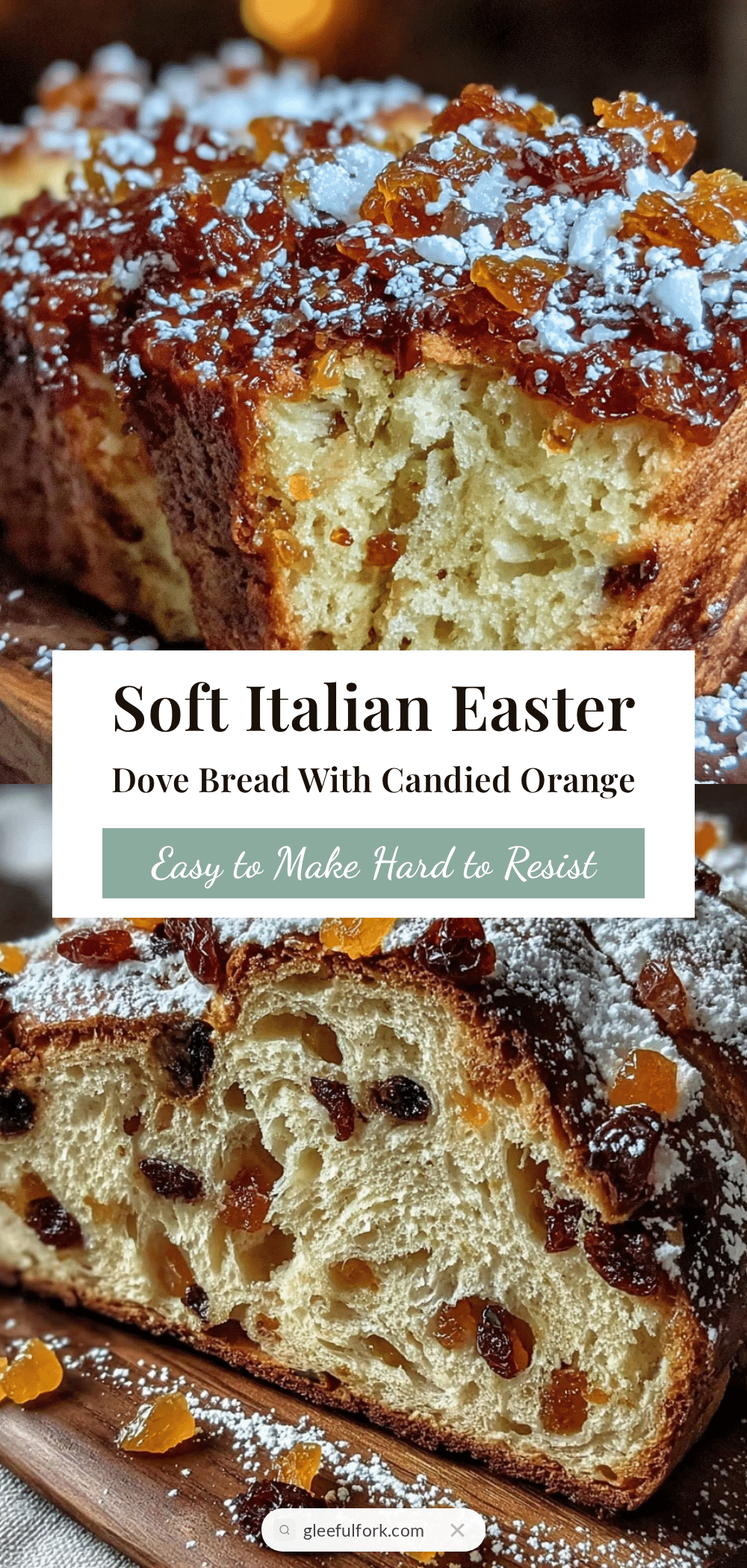
Classic Colomba di Pasqua Recipe Easy Homemade Italian Easter Dove Bread with Candied Orange
A traditional Italian Easter bread shaped like a dove, enriched with butter and eggs, and studded with candied orange peel for a rich, fragrant, and festive treat.
- Prep Time: 30 minutes
- Cook Time: 40 minutes
- Total Time: 4 hours 15 minutes
- Yield: 8 servings 1x
- Category: Bread
- Cuisine: Italian
Ingredients
- 4 cups (500g) all-purpose flour
- 2 1/4 tsp (7g) active dry yeast
- 3/4 cup (150g) granulated sugar
- 2/3 cup (150g) unsalted butter, softened
- 3/4 cup (200ml) whole milk, warmed
- 3 large eggs, room temperature
- 1 tsp salt
- 3.5 oz (100g) candied orange peel, chopped
- 1 tsp vanilla extract
- Zest of 1 large orange
- 1/2 cup (50g) almond flour (optional, for topping)
- Powdered sugar (for dusting)
Instructions
- Activate the yeast (10 minutes): Warm the milk to about 100°F (38°C). In a small bowl, combine the warm milk, yeast, and a teaspoon of sugar. Stir gently and let it sit until frothy and bubbly.
- Mix the dough (15 minutes): In a stand mixer bowl, combine flour, remaining sugar, and salt. Add the activated yeast mixture, eggs, softened butter, vanilla extract, and orange zest. Mix on low speed until dough starts to come together, then knead on medium speed for about 10 minutes until smooth, elastic, and slightly tacky but not sticky.
- First rise (1.5 to 2 hours): Transfer dough to a lightly greased bowl, cover with a damp towel, and let rise in a warm place until doubled in size. Dough is ready when a gentle press leaves a slight indentation.
- Incorporate candied orange (5 minutes): Gently fold chopped candied orange peel into the dough by hand, being careful not to deflate it.
- Shape the dough (10 minutes): Divide dough into two parts: larger for the body and smaller for the wings. Roll the larger piece into an oval and place in the bottom of the Colomba mold. Shape the smaller piece into two wing shapes and place on top, pressing gently to adhere.
- Second rise (1 hour): Cover shaped dough and let rise again until puffed and almost doubled.
- Preheat oven to 350°F (175°C).
- Prepare topping (optional, 5 minutes): Mix almond flour with a bit of sugar and egg white to brush on top for a crunchy, nutty crust.
- Bake (35-40 minutes): Place mold on a baking sheet and bake until golden brown and a skewer inserted in the center comes out clean. Tent with foil if top browns too quickly.
- Cool (at least 1 hour): Remove from oven, let cool in mold for 10 minutes, then transfer to a wire rack to cool completely.
Notes
Use room temperature eggs and softened butter for best incorporation. Avoid over-kneading to keep bread tender. Proof dough in a warm, draft-free spot. Use a kitchen scale for accurate flour measurement. Tent bread with foil if browning too fast. Cool completely on a rack to maintain crust crispness. Variations include gluten-free flour blends, chocolate chips, nuts, or seasonal fruits. Dairy-free substitutions possible with plant-based milk and butter.
Nutrition
- Serving Size: 1 slice (about 80g)
- Calories: 280
- Fat: 8
- Carbohydrates: 40
- Protein: 6
Keywords: Colomba di Pasqua, Italian Easter bread, candied orange bread, traditional Italian bread, Easter bread recipe, homemade Colomba, festive bread